

Governance and Societies
States remain essential pillars of the international system, even if they are not the only players. Governance is a local, national and international issue.
Related Subjects


Another Story from the "Refugee Crisis". Resettlement in Small Towns and Rural Areas in France
Since 2015, refugee resettlement programmes have grown significantly in Europe becoming a key component of European asylum strategy. In 2017, Emmanuel Macron committed to resettle in France 10,000 refugees until the end of 2019. Refugees from Syria and Africa are increasingly welcome in small towns and rural areas.
Migration and Cohesion in Europe: a Challenge, not a Contradiction
The eighth position paper of the Daniel Vernet Group addresses immigration, integration and cohesion in Europe where migration is often perceived as a threat to cohesion within societies and also among states. In the paper, the Daniel Vernet Group argues that migration and cohesion are not contradictory. However, Germany and France need to develop common approaches in order to encourage the finding of European answers to these challenges.
The Waning of Universalism
During the 19th century, Westerners provided ideological justifications for their colonization, namely spreading the Enlightenment across the globe. This project was received favorably until the second half of the 20th century. Over the last 20 years, it has met new hostility. The “universal values” promoted by the West are viewed today as a form of imperialism to be opposed – especially by China, Russia and Turkey.
Between Concentration and Dispersion: A Promising Future for Power Relations
The notion of power has long been a topic of study in international relations. In the coming decade, the evolution of power will be characterized by the dynamics of concentration and dispersion. On the one hand, the global system will be marked by the clash of two superpowers, the United States and China. On the other hand, capacity for individual action will proliferate through information and communication technologies.
After the Demographic Explosion
Demographic forecasting is not an exact science. UN projections, which suggest that the world population may rise to 11.2 billion in 2100, could be overestimates. Indeed, fertility could fall more rapidly and life expectancy may rise less than expected. The Sahel is set to experience the most spectacular demographic explosion, but this will not necessarily lead to massive migration to Europe.
The Waning of Universalism
During the 19th century, Westerners provided ideological justifications for their colonization, namely spreading the Enlightenment across the globe. This project was received favorably until the second half of the 20th century. Over the last 20 years, it has met new hostility. The “universal values” promoted by the West are viewed today as a form of imperialism to be opposed – especially by China, Russia and Turkey.
Tackling the Root Causes of Displacement: the German Discourse
In Germany, an important role is ascribed to development policy when considering the question of how to deal with the causes of displacement and irregular migration. Development policy seeks to enable (potential) migrants to enjoy brighter prospects in their countries of origin through job creation measures so that they do not embark on the dangerous journey to Europe (or Germany) in the first place.
The Global Compact for Migration. Towards Global Governance of International Migration?
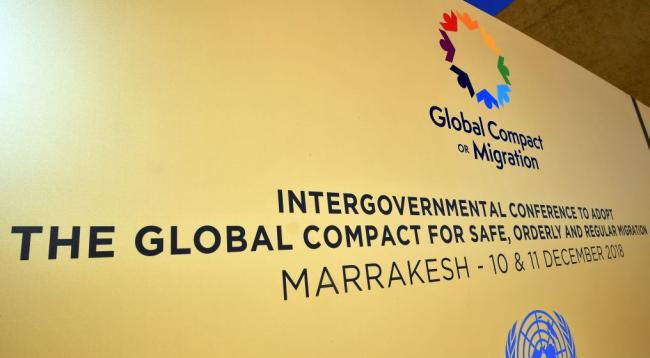
The “Global Compact for Safe, Orderly and Regular Migration” was adopted in Marrakesh on 10 and 11 December 2018, after 18 months of consultation and negotiation. It is presented as the first United Nations’ agreement on a comprehensive approach to international migration in all its aspects.

Rohingya: Can the Crisis be Resolved?
The Rohingya issue involves a complex national and regional history.

The Niger-Libya Border: Securing It without Stabilising It?
Often described as an “ungoverned area”, the Niger-Libya border is nevertheless at the centre of major economic, political and security challenges. Both the Libyan authorities and the Nigerien state are struggling to establish tight control over this particularly isolated area.
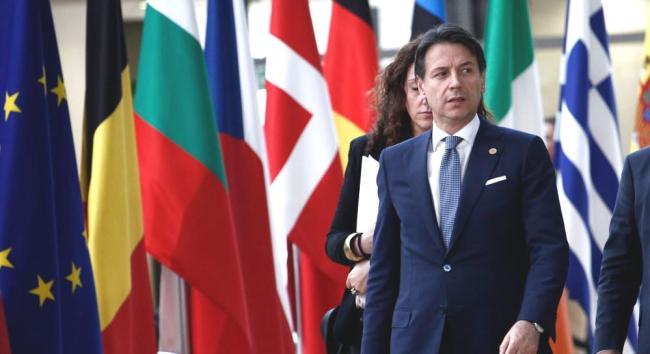
Immigration: Europe in the Face of an Italian Crisis
Since the Italian election held on March 4th, 2018, immigration policy has become a hotter-than-ever issue both at national and European level. The Aquarius incident has brought to light the question of European solidarity regarding immigration issues.
Five theses on the "refugee crisis" in Germany
The term "refugee crisis" is not uncontroversial in Germany; it is indeed accused of presenting the refugees as being responsible for the crisis. The events that have occurred since the summer of 2015 should rather be called "crisis of the authorities", given that Germany could have anticipated the massive increase in the number of refugees. The use of the term "refugee crisis" in this article is axiologically neutral and reflects its present common use in politics, the media and specialised literature.
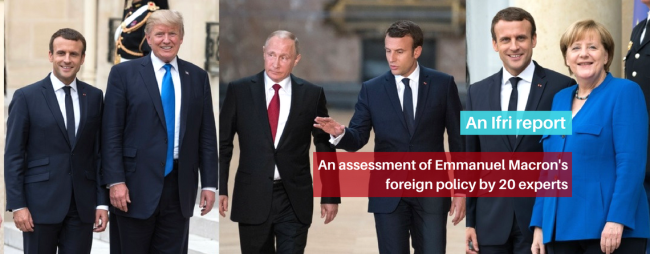
Macron, Diplomat: A New French Foreign Policy?
How can we define Emmanuel Macron’s foreign policy since he took office? After Nicolas Sarkozy’s brazen style of “gutsy diplomacy” and François Hollande’s “normal diplomacy”, the eighth president of the Fifth Republic seems to have opted for an agile classicism. In substance, he makes no claim to any radical break with the past, but sees his approach as being in line with historical tradition.
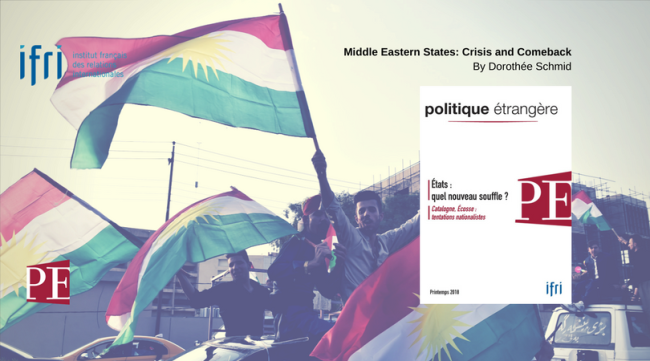
Middle Eastern States: Crisis and Comeback
The Arab Spring has shaken dysfunctional states that were built upon the recurrent use of violence.
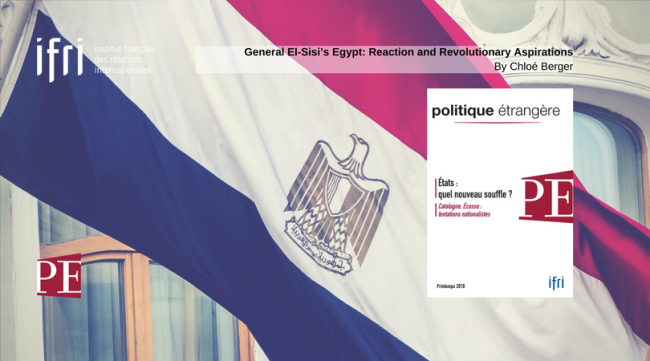
General El-Sisi’s Egypt: Reaction and Revolutionary Aspirations
The Egyptian presidential election of spring 2018 will, in all likelihood, result in Abdel Fattah El-Sisi maintaining power, given the tight control over the opposition.

European Union Partnerships with African Countries on Migration: A Common Issue with Conflicting Interests
Since 2015 and the refugee crisis, the dialogue between the European Union (EU) and African countries on migration issues has assumed a new intensity.
Chinese Think Tanks: Ambitions and Contradictions
Since Xi Jinping became president of China, the number of think tanks has considerably increased.
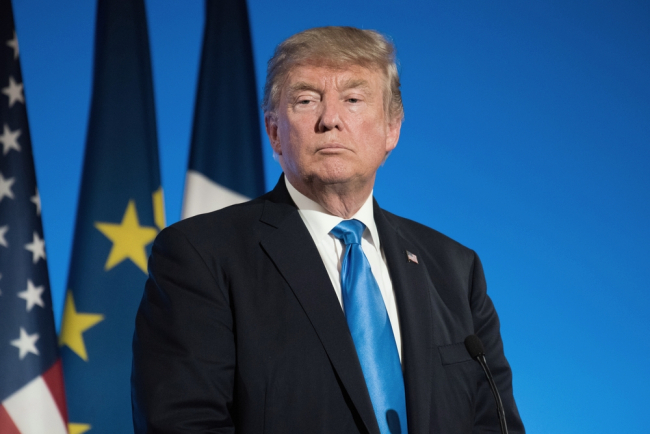
Trump, un an après. Un monde à l'état de nature ?
In the week following Trump’s election, Ifri published a study to identify the likely changes in U.S. foreign policy. From the outset, this election appeared as a change in the U.S.’ trajectory, with consequences on the power relations and functioning of the international system.
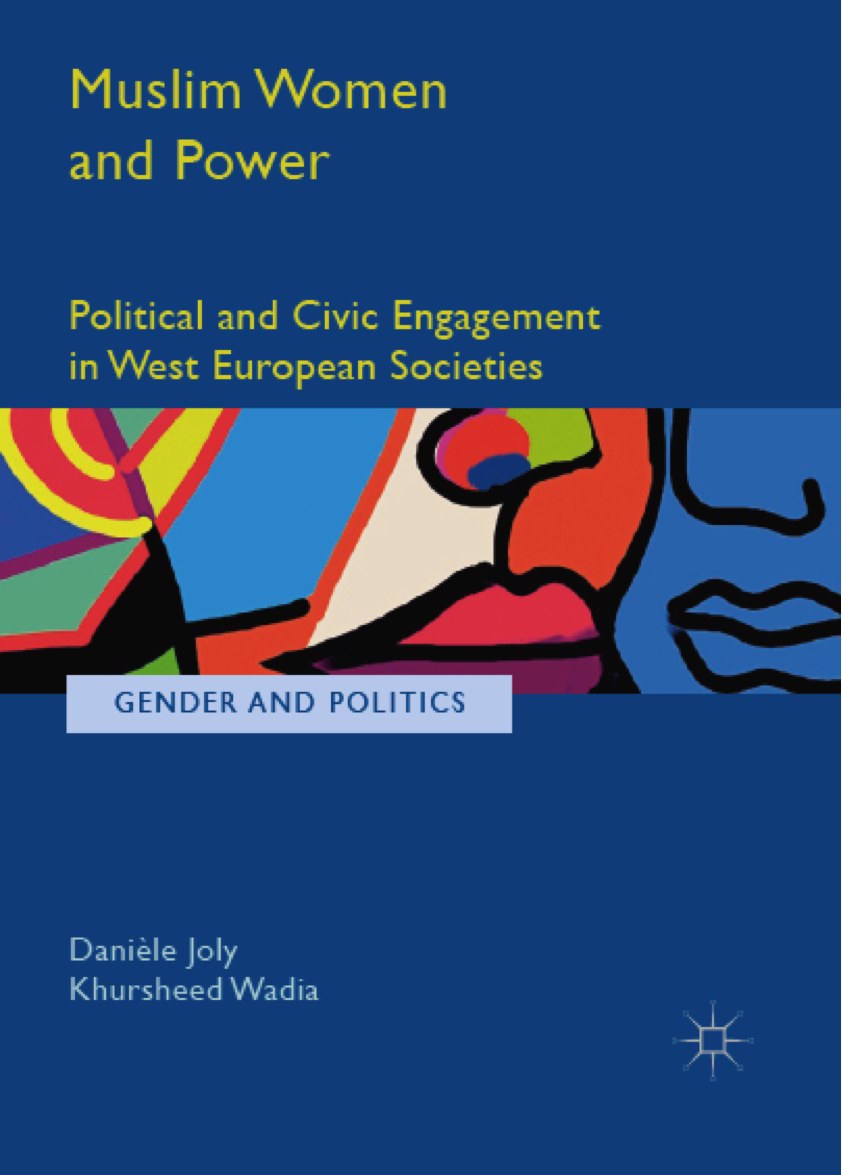
Muslim Women and Power: Political and Civic Engagement in West European Societies
This book explores Muslim women’s political and civic engagement in Britain and France.
Migration in Eastern Africa: Regional Challenge, Global Issue
An interview with Jeffrey LABOVITZ, International Organization for Migration (IOM) Nairobi Regional Director

First Year of Lula: Overview of the Political Situation in Brazil
This Briefing offers an analysis of Brazil's political and economic situation and prospects at the end of 2023. It also examines Brazil's position on certain international relations issues, thirteen months after Lula's election.
Europe and Africa
In this special issue of Politique étrangère devoted to the proceedings of the conference organized by Ifri on April 10, 2019, in the Grand Amphitheater of the Sorbonne, on the occasion of its fortieth anniversary, discover the conversation between Louise Mushikiwabo, Secretary General of La Francophonie and Thierrry de Montbrial, Founder and Executive Chairman of Ifri.
What Can Europe Hope to Achieve in Tomorrow's World?
In this special issue of Politique étrangère devoted to the proceedings of the conference organized by Ifri on April 10, 2019, in the Grand Amphitheater of the Sorbonne, on the occasion of its fortieth anniversary, discover the debate moderated by Christine Ockrent between Franziska Brantner, Jean-Louis Boulanges, Bernardino Leon, and Igor Yurgens.
New Global Challenges and European Security
In this special issue of Politique étrangère devoted to the proceedings of the conference organized by Ifri on April 10, 2019, in the Grand Amphitheater of the Sorbonne, on the occasion of its fortieth anniversary, discover the debate moderated by Nicole Gnesotto between Julian King, Jean-Marie Guéhenno, Wolfgang Ischinger, Nathalie Tocci, Hubert Védrine.
The Future of Think Tanks
In this special issue of Politique étrangère devoted to the proceedings of the conference organized by Ifri on April 10, 2019, in the Grand Amphitheater of the Sorbonne, on the occasion of its fortieth anniversary, discover the debate moderated by Bassma Kodmani between Thomas Bagger, Thomas Gomart, Robin Niblett, and Daniela Schwarzer.
The Waning of Universalism
During the 19th century, Westerners provided ideological justifications for their colonization, namely spreading the Enlightenment across the globe. This project was received favorably until the second half of the 20th century. Over the last 20 years, it has met new hostility. The “universal values” promoted by the West are viewed today as a form of imperialism to be opposed – especially by China, Russia and Turkey.
Between Concentration and Dispersion: A Promising Future for Power Relations
The notion of power has long been a topic of study in international relations. In the coming decade, the evolution of power will be characterized by the dynamics of concentration and dispersion. On the one hand, the global system will be marked by the clash of two superpowers, the United States and China. On the other hand, capacity for individual action will proliferate through information and communication technologies.
After the Demographic Explosion
Demographic forecasting is not an exact science. UN projections, which suggest that the world population may rise to 11.2 billion in 2100, could be overestimates. Indeed, fertility could fall more rapidly and life expectancy may rise less than expected. The Sahel is set to experience the most spectacular demographic explosion, but this will not necessarily lead to massive migration to Europe.
The Waning of Universalism
During the 19th century, Westerners provided ideological justifications for their colonization, namely spreading the Enlightenment across the globe. This project was received favorably until the second half of the 20th century. Over the last 20 years, it has met new hostility. The “universal values” promoted by the West are viewed today as a form of imperialism to be opposed – especially by China, Russia and Turkey.
Russia’s Immigration Policy: New Challenges and Tools
A new stage in the development of Russia's migration policy is upon us. Since 2010, legal amendments and the Concept of Migration Policy of the Russian Federation to 2025, adopted in June 2012, marked a clear change in how migration flows are regulated, the aim being now to maximise the economic benefit of labour migration.
Ifri, a foundation recognized as being of public utility, relies largely on private donors – companies and individuals – to guarantee its sustainability and intellectual independence. Through their funding, donors help maintain the Institute's position among the world's leading think tanks. By benefiting from an internationally recognized network and expertise, donors refine their understanding of geopolitical risk and its consequences on global politics and the economy. In 2026, Ifri partners with over 90 French and international companies and organizations.