



China
China's diplomatic, military, economic and technological assertiveness, as well as its growing rivalry with the United States, raise certain apprehensions among its neighbors and Europeans alike.
Related Subjects
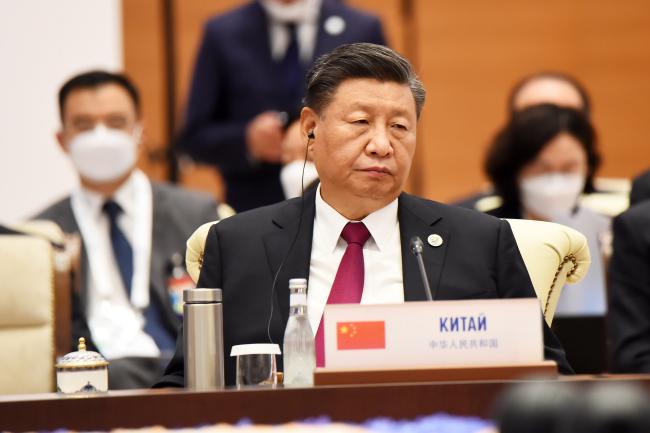
Whither China After 10 Years of Economic Policies Guided by Xi?
As the 20th national congress of the Chinese Communist Party (CCP) draws closer, this is an opportune moment to appraise China’s economic achievements over the past decade under President Xi Jinping’s guidance and to identify the challenges the country will have to address during the next five years.
The European Union Industrial Strategy: Reconciling Competition and Geoeconomic Challenges
The EU’s basic assumptions, on which it grounds its economic and trade power, are being steadily cast into doubt. The EU’s main trade partners, the US and China, increasingly set their sights on securing their supply chains, which may further a potential decoupling.


Japan’s Africa aid rivals China in terms of ‘quality over quantity’: analysts
Japan has been investing in the continent for longer than China and applies international standards to its infrastructure financing, analysts said. Its pockets may not be as deep, but its support of good governance and democratic principles makes it a tempting development partner for African states.

The War in Ukraine: Echoes of Korea?
The war in Ukraine has revived discussion about the Washington-Beijing-Moscow triangle as well as Europe’s place in the geopolitical power struggles.
War in Ukraine: A New World?
Beyond the tactical sphere, the conflict in Ukraine has already had numerous repercussions, and its conclusion will provoke many more in the global system. In this special issue, Politique étrangère explores some potential outcomes.
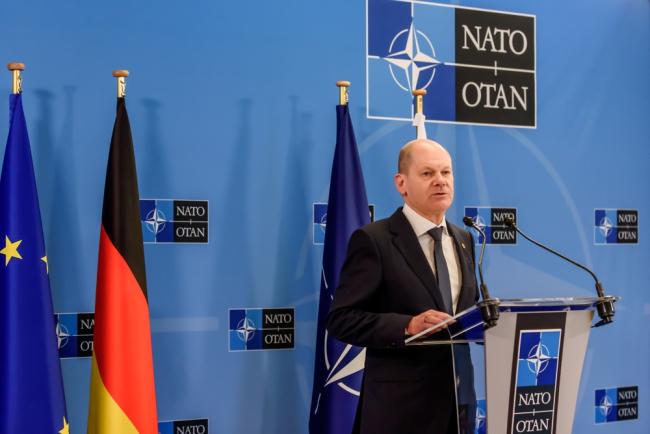
Germany, the “Zeitenwende” and the Future of NATO
Chinese Nuclear Force Modernization and Doctrinal Change
Dating back to the first test in 1964, the Chinese nuclear force modernization process is motivated by other nuclear powers’ modernization across the years, mostly from the United States and the Soviet Union, but also by domestic factors such as economic debates and tensions in the scientific community.

Cyberspace Governance in China: Evolution, Features and Future Trends
As China’s political relations with most of the world’s technologically advanced states have worsened, Beijing has put in place the world’s most comprehensive regulatory and administrative system for governing cyberspace.
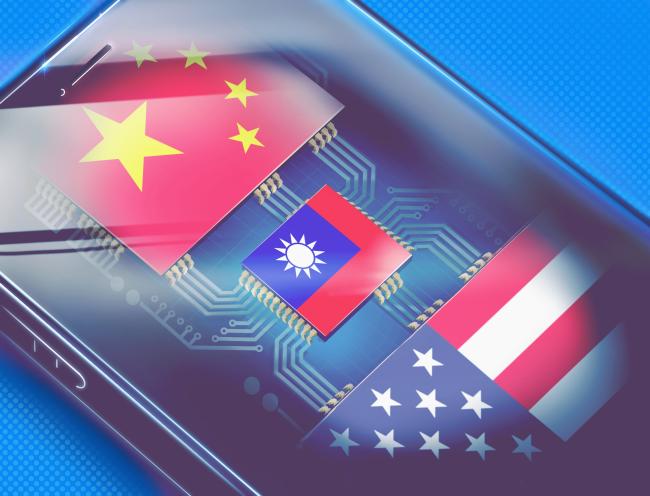
Implications of the Global Supply Chain Reform: A Taiwanese Perspective
How have both the private and public sectors in Taiwan sought to mitigate the challenges posed by the reform agenda for global supply chains (GSCs)?


Meet the woman researching the geopolitics of technology
Alice Pannier is leading a new programme looking at the relationship between technology and geopolitical alliances. Recent events have proven this to be more important than ever.
Sino-American Climate Diplomacy
During COP26, Beijing and the Biden administration committed to reviving Sino-American cooperation on climate issues, in the name of their common interest in climate stability.
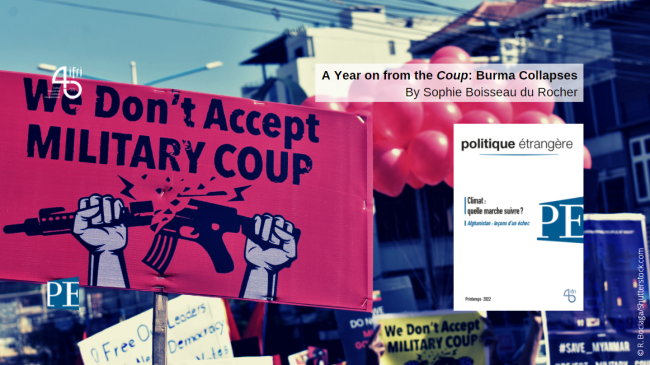
A Year on from the Coup: Burma Collapses
The February 2021 coup encountered a level of resistance that the military did not expect: demonstrations, boycotts, and a slide toward an armed resistance against repression from the authorities.

China's Quantum Dream: A Giant's Aspirations in the Infinitely Small
Quantum physics, a field little known to the general public and relatively difficult to grasp as its laws are counter-intuitive, constitutes nevertheless a critical field of international strategic competition.
The Direction of France’s Foreign Policy over the Next Thirty Years
A foreign policy points to a united society that manages its relationships with its surroundings while defending its own interests.
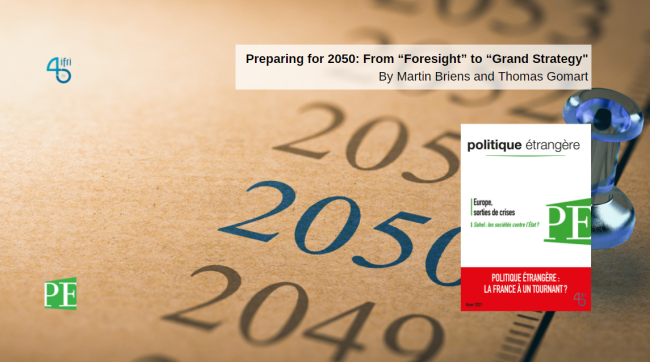
Preparing for 2050: From “Foresight” to “Grand Strategy”
China and the United States both have a “grand strategy”: Beijing aspires to be the world’s leading power in 2049, while Washington plans to remain primus inter pares.
China's Rising Trade Activism in ASEAN: Implications for the EU
As the world’s center of gravity has shifted to Asia, the European Union must also be present in the region. In particular, it must develop its relations with Asian countries that have long been neglected to the sole benefit of China -- namely India, but above all the countries of Southeast Asia, where China has invested heavily and will continue to gain influence.
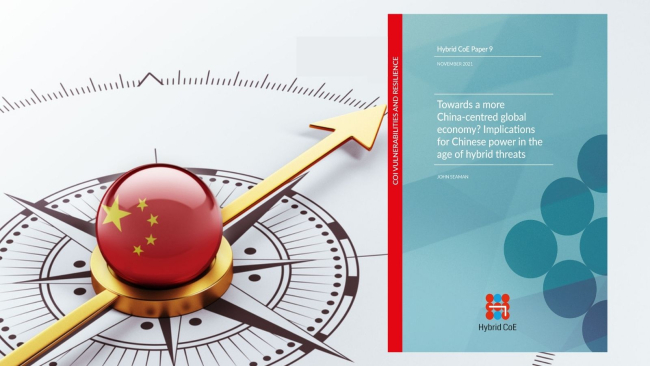
Towards a more China-centred global economy? Implications for Chinese power in the age of hybrid threats
An era of hyper globalization is giving way to an age of geoeconomics wherein China seeks a decisive seat at the table.
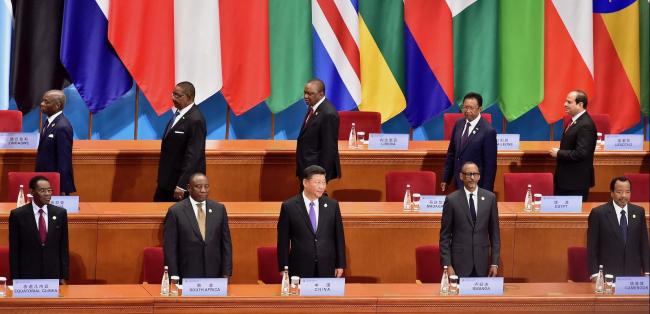
Chinese Influences in Africa. 1. The Political and Diplomatic Tools of the "Great Developing Country"
China and Africa have enjoyed a strong relationship since the wave of African independences in the 1960s. Nevertheless, relations between China and Africa have significantly expanded since the late 1990s and have been fueled by a growing discourse centered on a “win-win” partnership between China and Africa.

Qatar and the US-China Rivalry: The Dilemmas of a Gulf Monarchy
Like its neighbors in the Arabian Peninsula, Qatar finds itself increasingly confronted with a difficult dilemma: while its economy is looking to the East, more specifically towards China, the security and stability of the country still depend on the United States.

France returns its ambassador to Australia, but years of antagonism lie ahead
France is eager to prevent the crisis from spiralling further as it recognises it is in its national interest, and President Macron’s favour, to end it. But damage has been done, writes Ahmed Aboudouh.
Ifri, a foundation recognized as being of public utility, relies largely on private donors – companies and individuals – to guarantee its sustainability and intellectual independence. Through their funding, donors help maintain the Institute's position among the world's leading think tanks. By benefiting from an internationally recognized network and expertise, donors refine their understanding of geopolitical risk and its consequences on global politics and the economy. In 2026, Ifri partners with over 90 French and international companies and organizations.

The European Think-tank Network on China (ETNC) is a gathering of China experts from a selection of European research institutes. It is devoted to the policy-oriented study of Chinese foreign policy and relations between China and European countries as well as China and the EU. It facilitates regular exchanges among participating researchers with a view to deepening the understanding within the European policy and research community and the broader public of how Europe, as a complex set of actors, relates with China and how China’s development and evolving global role is likely to impact the future of Europe. The network’s discussions and analyses take a decidedly ‘bottom-up’ approach, accounting for the various aspects of bilateral relations between European countries and China, and the points of convergence and divergence among EU member states in order to examine EU-China relations in a realistic and comprehensive way. The views presented in ETNC reports are the sole responsibility of the signed authors and do not in any way represent the views of all members of the ETNC, its participating institutions, nor the institutions with which the authors are affiliated.
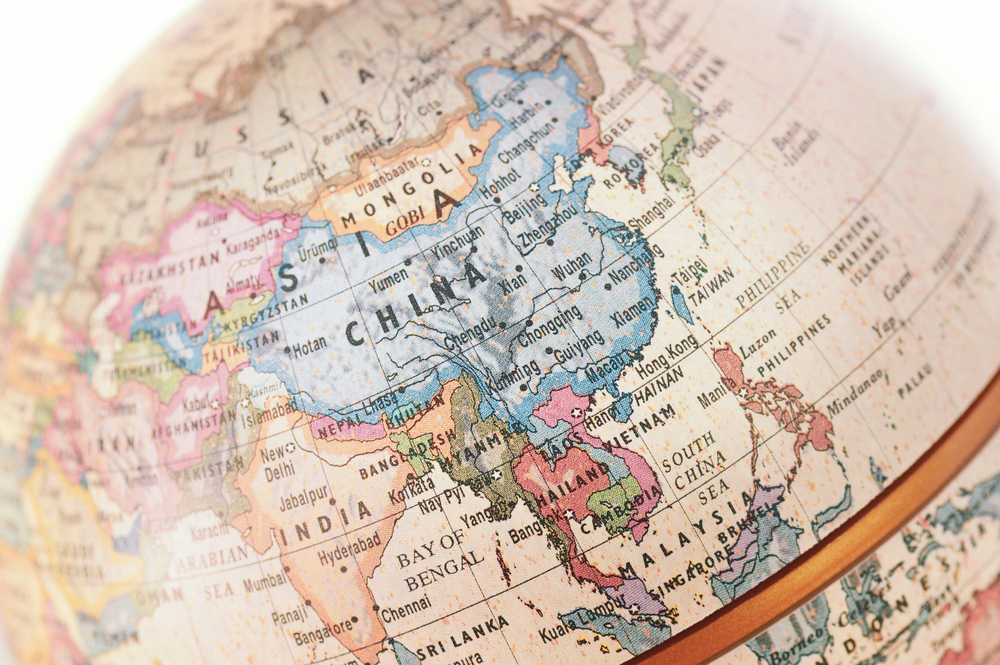
Asia is a nerve center for multiple global economic, political and security challenges. The Center for Asian Studies provides documented expertise and a platform for discussion on Asian issues to accompany decision makers and explain and contextualize developments in the region for the sake of a larger public dialogue.
The Center's research is organized along two major axes: relations between Asia's major powers and the rest of the world; and internal economic and social dynamics of Asian countries. The Center's research focuses primarily on China, Japan, India, Taiwan and the Indo-Pacific, but also covers Southeast Asia, the Korean peninsula and the Pacific Islands.
The Centre for Asian Studies maintains close institutional links with counterpart research institutes in Europe and Asia, and its researchers regularly carry out fieldwork in the region.
The Center organizes closed-door roundtables, expert-level seminars and a number of public events, including an Annual Conference, that welcome experts from Asia, Europe and the United States. The work of Center’s researchers, as well as that of their partners, is regularly published in the Center’s electronic journal Asie.Visions.