





China
China's diplomatic, military, economic and technological assertiveness, as well as its growing rivalry with the United States, raise certain apprehensions among its neighbors and Europeans alike.
Related Subjects
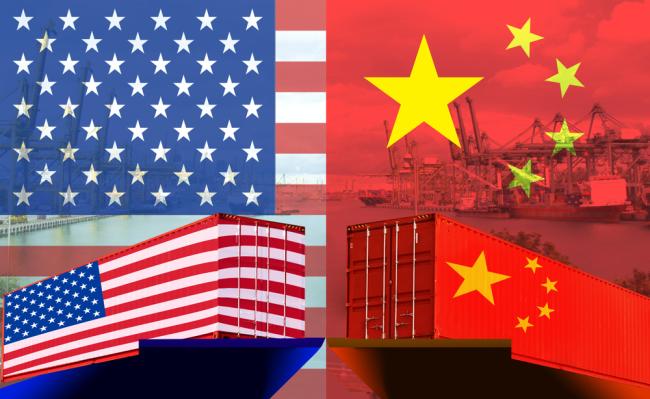
The US-China Trade War: What Is the Outcome after the Trump Presidency?
One of Donald Trump’s campaign promises in 2016 was to end China’s “cheating” on trade and to reduce America's trade deficit by imposing significant tariffs on U.S. imports of Chinese products. This study draws up a first assessment of his policy - and of the "trade war" which stemmed from it.
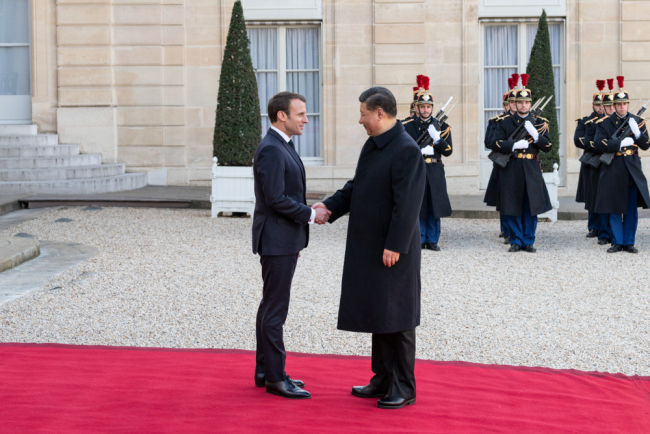
France’s incoherent China policy confuses partners
On 21 July 2020, French Minister of Economy and Finance Bruno Le Maire participated remotely in the High Level Economic and Financial Dialogue with Chinese Vice Premier Hu Chunhua.
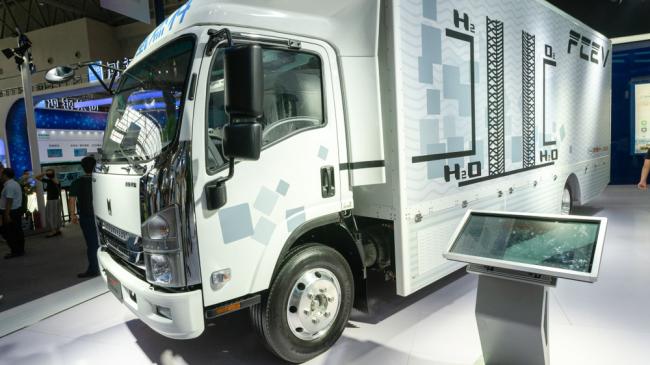
Prospects of a Hydrogen Economy with Chinese Characteristics
This study assesses the prospects of a hydrogen economy with Chinese characteristics. Against the backdrop of an escalating US-China trade war and the ongoing novel coronavirus (COVID-19) pandemic, key Chinese stakeholders become increasingly interested in moving the hydrogen economy agenda forward.
Turkey-China Relations: Ambitions and Limits of the Economic Cooperation
At first glance, China and Turkey have many interests to cooperate. The deployment of the Chinese Belt and Road Initiative (BRI), Turkey's colossal investment and financing needs, as well as President Erdogan's mistrust of the West, appear as many converging interests. Yet economic cooperation between the two countries is struggling to achieve its full potential. Political differences persist, particularly the question of the Uyghurs.
Ambitious New Climate Goals Shouldn't Let China off the Hook
Xi Jinping’s announcement of carbon neutrality is impeccably timed, but the hard part lies ahead.

COVID-19 and the End of Technological Innocence
COVID-19 acts as a catalyst in international relations.
The Belt and Road: China's "Community of Destiny" for Southeast Asia?
As a frontline zone and a pivot, Southeast Asia is both a testing ground and a showcase of China’s ambitions in developing a grand cooperative scheme. Creating mutually positive linkages is crucial for both partners, if not for the same reasons.
Economy and Diplomacy: China’s two Challenges in the Post-Covid-19 World
Will China rise stronger from the pandemic? A flow of media reports and op-eds have recently flourished, forecasting the decline of the West and the triumph of China on the world stage amid the COVID-19 pandemic. Some have declared the dawn of a “post-Western world”.

China's Mix of Aggressive and Charming Coronavirus Diplomacy could Worsen Europe's Fractures, Report warns
A prominent French think tank has warned that China's so-called "mask diplomacy" amid the COVID-19 coronavirus pandemic threatens to further exacerbate divisions within the European Union, with Beijing tailoring its approach to suit different nations. The French Institute of International Relations (IFRI) published a new report Thursday detailing how coronavirus could alter EU-China relations, both during the outbreak and in the long-term.
Perspectives on European integration and China-Europe cooperation
Françoise Nicolas, director of Ifri's Asian Studies Center, spoke during a webseminar on European integration and China-Europe cooperation, organized by Chinese think tank CCG.


Coronavirus: China wants to lead the fight against Covid-19, but can it overcome the mistrust?
With the United States gripped by a domestic struggle with Covid-19, China appears to have stepped into its shoes as a global provider.
China wants its diplomats to show more fighting spirit. It may not be intended to win over the rest of the world
The rise of the so-called ‘wolf warriors’ heralds a more aggressive approach to promoting the country’s official line. Analysts warn this is likely to harm the country’s image even if their careers benefit as a result.
China and the New Geopolitics of Technical Standardization
China is rapidly emerging as a formidable power in the development of technical standards, transforming the international standard-setting landscape and reintroducing an element of geopolitics into what are too often considered as benign, technical processes.
The Future of Think Tanks
In this special issue of Politique étrangère devoted to the proceedings of the conference organized by Ifri on April 10, 2019, in the Grand Amphitheater of the Sorbonne, on the occasion of its fortieth anniversary, discover the debate moderated by Bassma Kodmani between Thomas Bagger, Thomas Gomart, Robin Niblett, and Daniela Schwarzer.
The World of Yesterday and Tomorrow
In this special issue of Politique étrangère devoted to the proceedings of the conference organized by Ifri on April 10, 2019, in the Grand Amphitheater of the Sorbonne, on the occasion of its fortieth anniversary, discover the speech by Thierry de Montbrial, Founder and Executive Chairman of Ifri.
The Future of Europe in the Context of Sino-American Competition - Foreword
In this special issue of Politique étrangère devoted to the proceedings of the conference organized by Ifri on April 10, 2019, in the Grand Amphitheater of the Sorbonne, on the occasion of its fortieth anniversary, discover the speech by Bruno Le Maire, Minister of Economy and Finance.
The Future of Europe in the Context of Sino-American Competition - Conclusions
In this special issue of Politique étrangère devoted to the proceedings of the conference organized by Ifri on April 10, 2019, at the Grand Amphitheater of the Sorbonne, on the occasion of its 40th anniversary, read the speech by Jean-Yves Le Drian, French Minister of Europe and Foreign Affairs.
The Future of Europe from the US and Asian Point of View
In this special issue of Politique étrangère devoted to the proceedings of the conference organized by Ifri on April 10, 2019, in the Grand Amphitheater of the Sorbonne, on the occasion of its fortieth anniversary, discover the debate moderated by Sylvie Kauffmann between John Allen and Kishore Mahbubani.
The Future of Europe in the Context of Sino-American Competition - Foreword
In this special issue of Politique étrangère devoted to the proceedings of the conference organized by Ifri on April 10, 2019, in the Grand Amphitheater of the Sorbonne, on the occasion of its fortieth anniversary, discover the speech by Bruno Le Maire, Minister of Economy and Finance.

China’s Smart Cities: The New Geopolitical Battleground
“Smart city” development has become a fashionable policy and research topic. A growing number of central and local governments in Europe, Asia, Africa and Latin America, in partnership with companies from diverse sectors (construction, transport, energy, water, etc), consulting firms, NGOs and experts, are now developing smart-city-related projects.
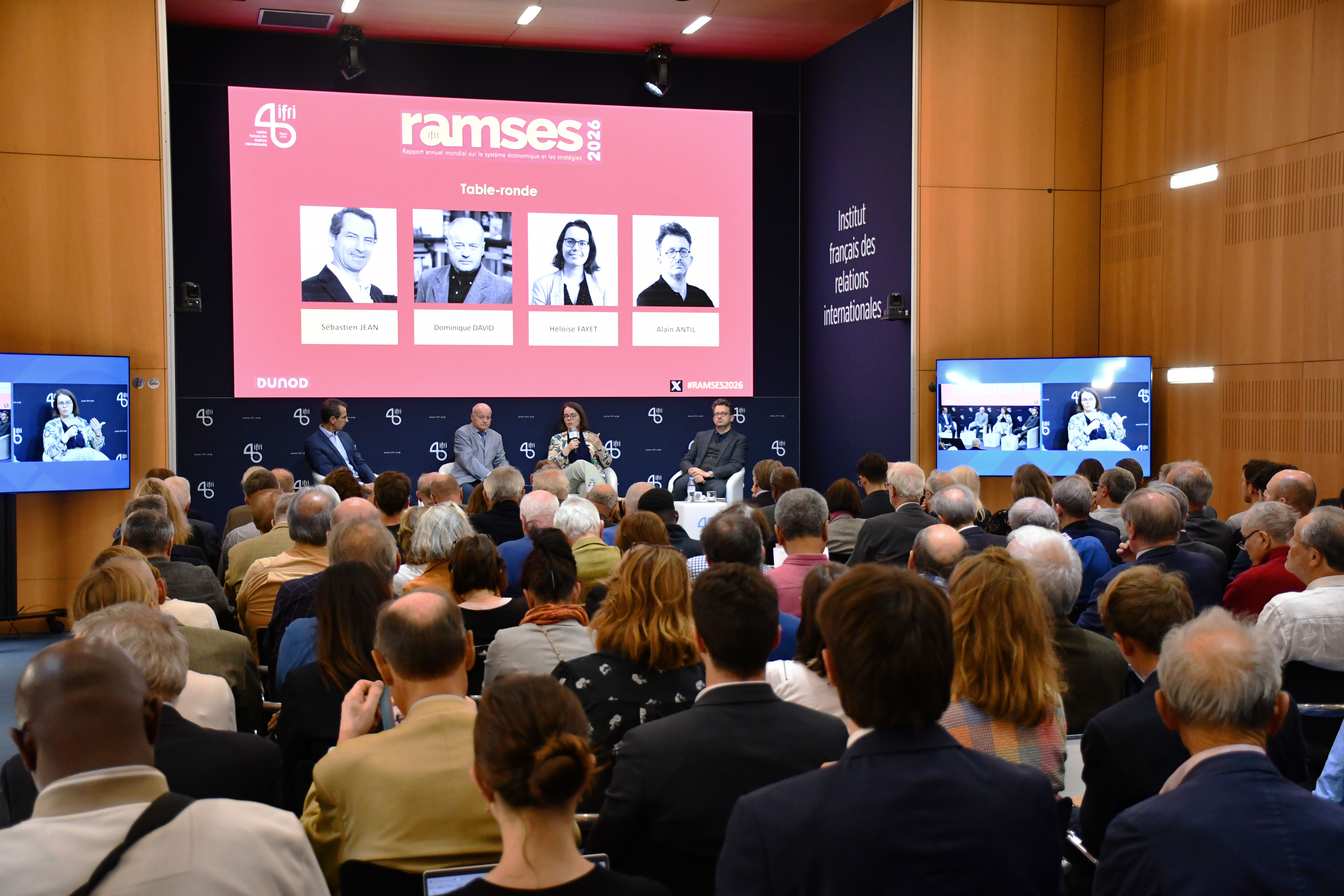
Ifri, a foundation recognized as being of public utility, relies largely on private donors – companies and individuals – to guarantee its sustainability and intellectual independence. Through their funding, donors help maintain the Institute's position among the world's leading think tanks. By benefiting from an internationally recognized network and expertise, donors refine their understanding of geopolitical risk and its consequences on global politics and the economy. In 2026, Ifri partners with over 90 French and international companies and organizations.
The European Think-tank Network on China (ETNC) is a gathering of China experts from a selection of European research institutes. It is devoted to the policy-oriented study of Chinese foreign policy and relations between China and European countries as well as China and the EU. It facilitates regular exchanges among participating researchers with a view to deepening the understanding within the European policy and research community and the broader public of how Europe, as a complex set of actors, relates with China and how China’s development and evolving global role is likely to impact the future of Europe. The network’s discussions and analyses take a decidedly ‘bottom-up’ approach, accounting for the various aspects of bilateral relations between European countries and China, and the points of convergence and divergence among EU member states in order to examine EU-China relations in a realistic and comprehensive way. The views presented in ETNC reports are the sole responsibility of the signed authors and do not in any way represent the views of all members of the ETNC, its participating institutions, nor the institutions with which the authors are affiliated.
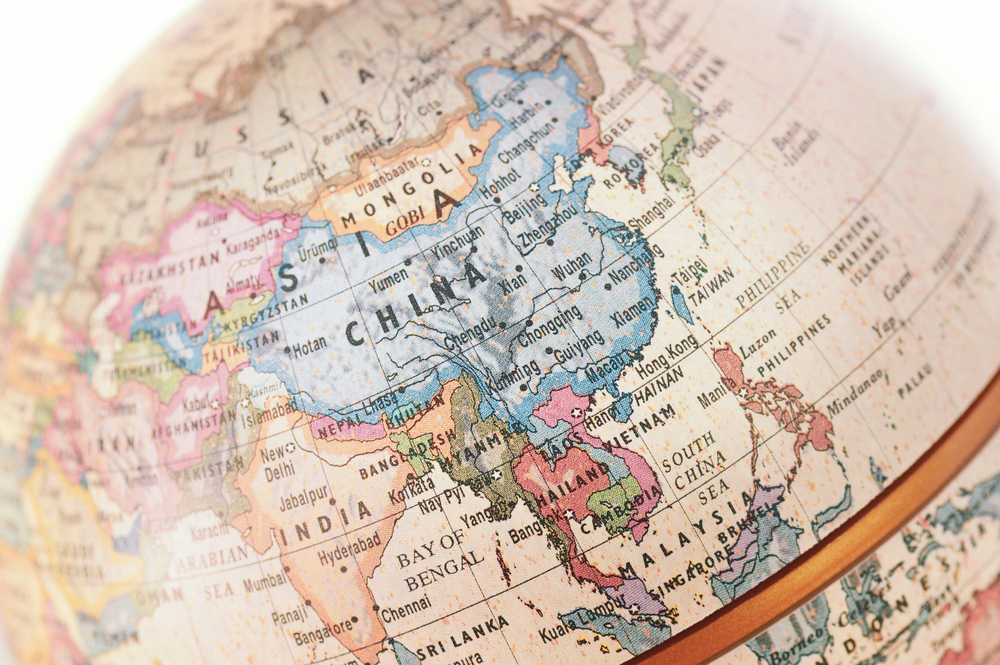
Asia is a nerve center for multiple global economic, political and security challenges. The Center for Asian Studies provides documented expertise and a platform for discussion on Asian issues to accompany decision makers and explain and contextualize developments in the region for the sake of a larger public dialogue.
The Center's research is organized along two major axes: relations between Asia's major powers and the rest of the world; and internal economic and social dynamics of Asian countries. The Center's research focuses primarily on China, Japan, India, Taiwan and the Indo-Pacific, but also covers Southeast Asia, the Korean peninsula and the Pacific Islands.
The Centre for Asian Studies maintains close institutional links with counterpart research institutes in Europe and Asia, and its researchers regularly carry out fieldwork in the region.
The Center organizes closed-door roundtables, expert-level seminars and a number of public events, including an Annual Conference, that welcome experts from Asia, Europe and the United States. The work of Center’s researchers, as well as that of their partners, is regularly published in the Center’s electronic journal Asie.Visions.