

France to spell out nuclear plan
A researcher said that ‘the balance is shifting, including in countries such as Germany’ on the role of nuclear weapons in Europe’s strategic ambitions.
France, the EU’s sole nuclear power since Britain’s exit from the bloc, was to unveil how it intends to use its atomic arsenal as a deterrent. French President Emmanuel Macron, in an address to military officers graduating in Paris yesterday, was expected to recommit to upgrading France’s capacity, at a time when NATO allies, who would ordinarily look to the US in a nuclear standoff, worry about Washington’s retreat from the multilateral stage.
European Identity/ies
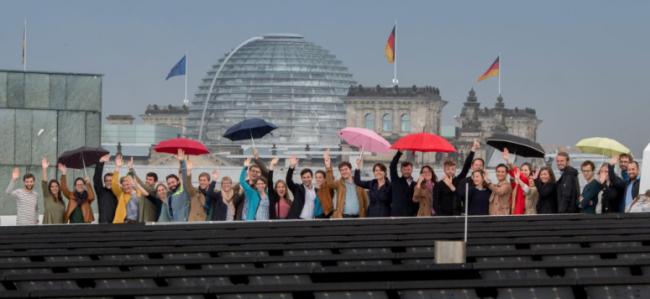
Europe is divided in many ways. Brexit and rising nationalism are striking examples of this existing fragmentation. But what unites us Europeans? The Franco-German Future Dialogue 2019 has met fellow Europeans in thirteen member states of the European Union to discuss questions of identity. Do farmers feel European? What role do languages play? Do European communities exist? Does the "Fridays for Future-Generation" feel European? How diverse are the institutions?

Europe in the Face of US-China Rivalry
Navigating the mounting tensions between the United States and China is a geopolitical minefield. Is Europe up to the challenge?
What Can Europe Hope to Achieve in Tomorrow's World?
In this special issue of Politique étrangère devoted to the proceedings of the conference organized by Ifri on April 10, 2019, in the Grand Amphitheater of the Sorbonne, on the occasion of its fortieth anniversary, discover the debate moderated by Christine Ockrent between Franziska Brantner, Jean-Louis Boulanges, Bernardino Leon, and Igor Yurgens.
New Global Challenges and European Security
In this special issue of Politique étrangère devoted to the proceedings of the conference organized by Ifri on April 10, 2019, in the Grand Amphitheater of the Sorbonne, on the occasion of its fortieth anniversary, discover the debate moderated by Nicole Gnesotto between Julian King, Jean-Marie Guéhenno, Wolfgang Ischinger, Nathalie Tocci, Hubert Védrine.
The Crucial Challenge of Cyberthreats
In this special issue of Politique étrangère devoted to the proceedings of the conference organized by Ifri on April 10, 2019, in the Grand Amphitheater of the Sorbonne, on the occasion of its fortieth anniversary, discover the debate moderated by Marc Hecker between Thomas Gomart and Jean-Louis Gergorin.
The Future of Europe in the Context of Sino-American Competition - Conclusions
In this special issue of Politique étrangère devoted to the proceedings of the conference organized by Ifri on April 10, 2019, at the Grand Amphitheater of the Sorbonne, on the occasion of its 40th anniversary, read the speech by Jean-Yves Le Drian, French Minister of Europe and Foreign Affairs.
Industry Response to New Protectionism
In this special issue of Politique étrangère devoted to the proceedings of the conference organized by Ifri on April 10, 2019, in the Grand Amphitheater of the Sorbonne, on the occasion of its fortieth anniversary, discover the debate moderated by Thierry de Montbrial between Jean-Paul Agon and Patrick Pouyané.
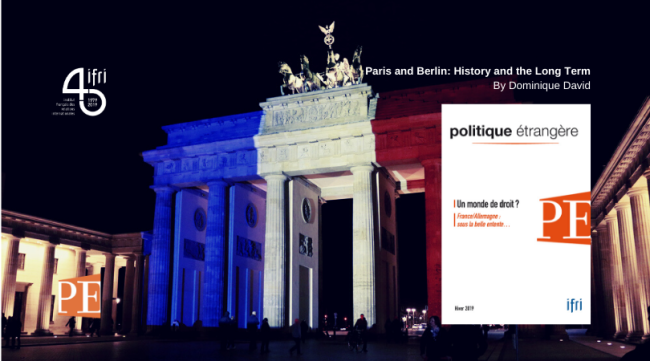
Paris and Berlin: History and the Long Term
Historically, the Franco-German “couple” provided a justification for the European project, and for the Europe that emerged from the collapse of the bipolar order.
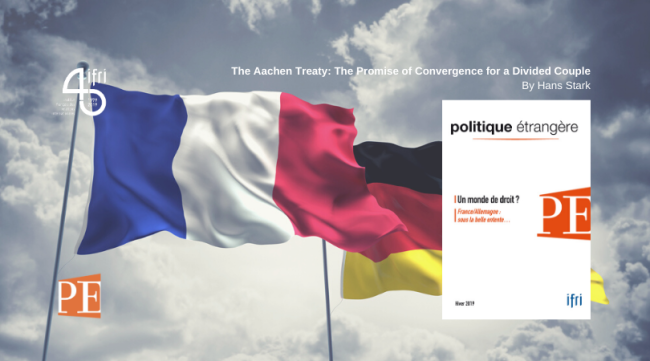
The Aachen Treaty: The Promise of Convergence for a Divided Couple
The numerous commitments made in the Aachen Treaty concealed a wide range of disagreements over defense, the future of the European Union, economic policies, relations with Russia, and so on.
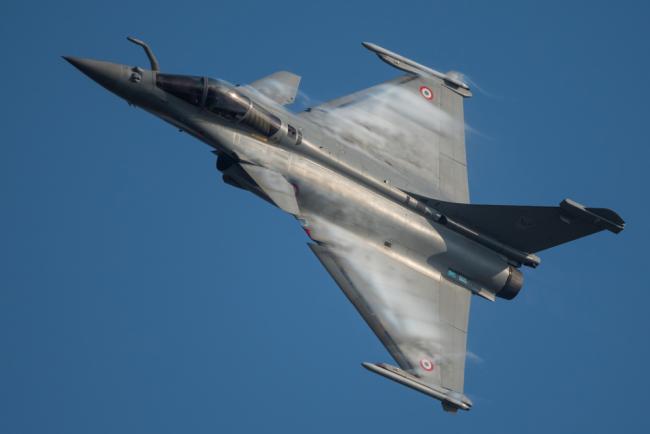
What Does It Mean to Be a European Defense Company Today?
In many ways, defense firms in Europe should be pleased with the recent uptick in defense spending.
Europe’s architecture of security in the current strategic environment: Taking the path toward "strategic autonomy"
As the world stage is marked by renewed great power competition, Europe lacks proper means to assert and defend its own independent political view. Despite this backdrop, the authors of this report contend that the current stalemate can be overcome with a collective and inclusive approach.
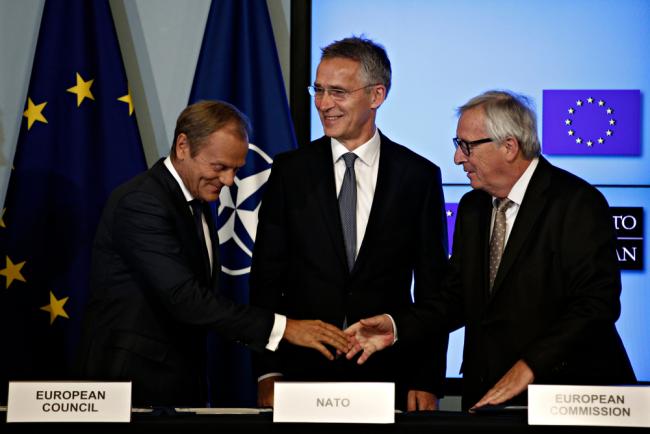
Mutual Reinforcement: CSDP and NATO in the Face of Rising Challenges
Over the past five years, several political and security developments have made it increasingly necessary to look at European Union (EU) / North Atlantic Treaty Organization (NATO) relations through a different lens.
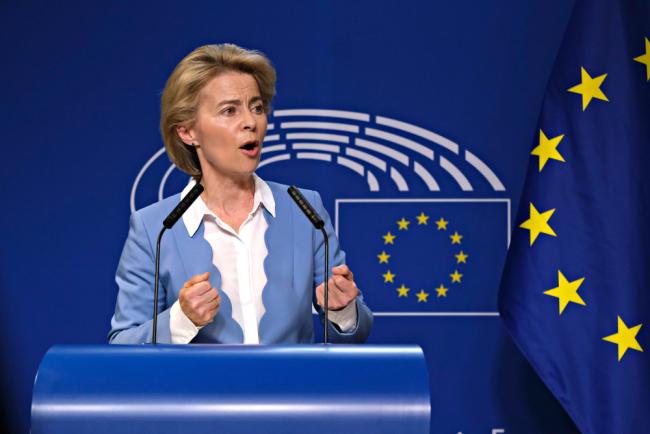
The War on Carbon. Five Priorities for the European Green Deal
2019 has marked a fundamental turning point in the energy transition of the European Union (EU).
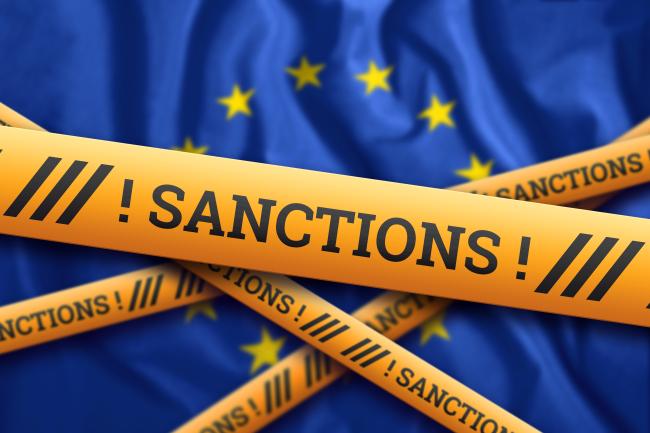
The Sanctions Policy of the European Union: Multilateral Ambitions Versus Power Politics
Restrictive measures are a major instrument of the European Union (EU)’s external action, which has emerged as one of the world’s leading sanctions emitters. The EU has thus leveraged the size of its market and its economic and financial clout (trade relations, aid policy and bilateral agreements).
Is the EU Better Prepared for the Next Migration Challenges?
The European Union did respond to the massive influx of migrants in 2015, but with short-term measures, which have widened the divisions between member states.
Prospects for the New EU Strategy on India: Game Changer or Business as Usual?
The new European Union (EU) strategy on India marks a major moment of departure in EU-India relations.
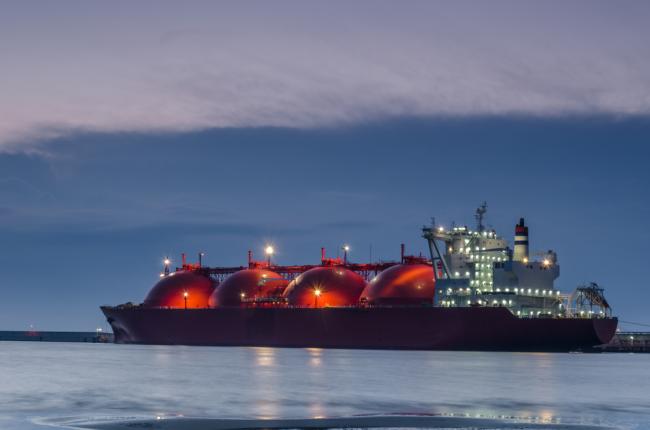
China’s Quest for Gas Supply Security: The Global Implications
The major transformations that are occurring on the Chinese gas market have profound repercussions on the global gas and LNG markets, especially on trade, investment and prices. In just two years, China has become the world’s first gas importer and is on track to become the largest importer of Liquefied natural gas (LNG).
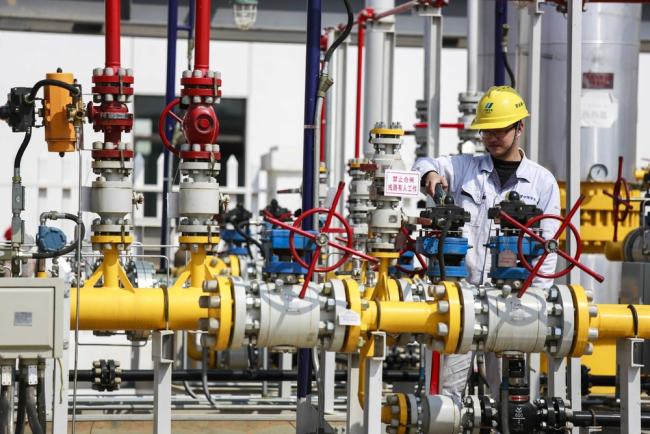
China’s Quest for Blue Skies: The Astonishing Transformation of the Domestic Gas Market
China’s gas industry has been moving into a new era. China’s natural gas demand has skyrocketed amid a state campaign that encourages coal-to-gas switching. In just two years, China added 75 billion cubic meters (bcm) to global gas demand, the equivalent of the UK gas market, the second largest European market. Despite steadily rising, Chinese gas production has not been able to cope with such a huge increase in demand and gas imports have also surged.
Democratization First. The Community Method in CFSP as a Precondition for a European Defense Policy
The recent calls for the militarization of the EU’s Common Foreign and Security Policy (CFSP) require first a comprehensive democratization of European foreign and security policy.
Juncker's 'last chance' Commission: Can he deliver?
Jean-Claude Juncker has made a surprisingly strong start. But behind the clear priorities and the innovative team set-up, his ability to restore trust in the EU remains to be seen.
The European Energy Policy: Building New Perspectives
“After 17 years of supranationality, we are still seeking how to define a common energy policy and what it might be. [...] Could we have done more in one generation? Or were goals only established to achieve a political balance which it was explicitly agreed to ignore, once the machinery began to operate? Historians will have a hard task to distinguish between excessive ambitions and national hypocrisies”.
The Lisbon Treaty and the Evolution of European Space Governance
Until the adoption of the Lisbon treaty in December 2007, there was no explicit reference to space in the EU’s constitutive documents. While the European Space Agency has been active in space since the mid-1970s, the Union’s policy remained without a legal basis for space activities. Parallel to the treaties’ evolution however, the EU’s competences never stopped expanding to new fields, bringing it ever closer to space and its various applications. Creativity and dynamic uses of these existing competences have allowed the EU to progressively interfere with the space sector and to get closer to ESA.
The European Refining Crisis: What is at stake for Europe?
The European Refining sector is in crisis. The wave of refineries closures has spared no EU Member States.
France, Germany and European defence: more pragmatism and less pathos, please
At the time of the 50th anniversary celebrations of the Elysée treaty in January 2013, the Franco-German defence cooperation is not at its best.
Kazakhstan and Eurasian Economic Integration: Quick Start, Mixed Results and Uncertain Future
Kazakhstan's economic integration with Russia and Belarus has been advancing at break-neck speed.
Ukraine at the Crossroads: Between the EU DCFTA and Customs Union
After serious decline in the 1990s, Ukraine's economy finally started its recovery and systemic reform in early 2000. While the economy rapidly grew by 2008, its transformation remained unfinished. Ukraine has three possible roads to development.
Commission Communication of the EU Energy External Policy: Was There an Alternative?
EU is the world’s largest net energy importer and consumer, so why do its Members continue to negotiate individually with the rest of the world rather than as one big market with a big voice?
The Use of Space for Maritime Security in Europe
The EU is currently developing a Maritime Security Strategy. Space should be integrated in that effort, given its potential for maritime surveillance.
Integration or Imitation? EU Policy towards its Eastern Neighbours
However, these considerations extend beyond current events and the EU calendar. There are aspects of the central question, namely: Is the EU capable of exporting its own model of governance? This question is currently more focused on the local than the global potential of the European Union. Can it continue the process of „making Europe wider‟?
Ifri, a foundation recognized as being of public utility, relies largely on private donors – companies and individuals – to guarantee its sustainability and intellectual independence. Through their funding, donors help maintain the Institute's position among the world's leading think tanks. By benefiting from an internationally recognized network and expertise, donors refine their understanding of geopolitical risk and its consequences on global politics and the economy. In 2026, Ifri partners with over 90 French and international companies and organizations.