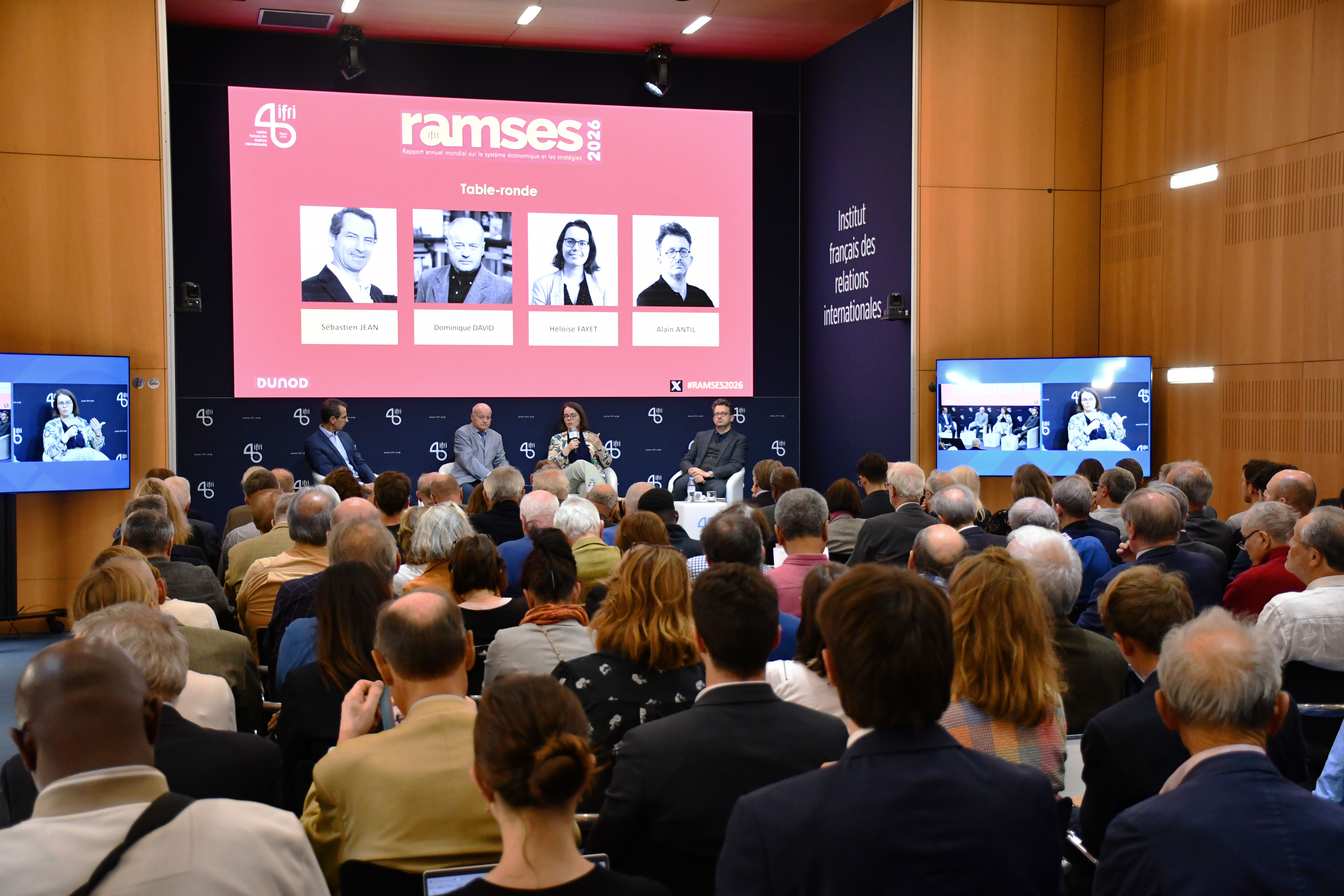

UK/EU Relations after Brexit: Why Breaking Up Is Hard to Do
Despite the posturing, both the United Kingdom and the European Union are trying to reach a deal. However, London’s cliffedge strategy and Brussels’ control of the agenda and progress of the negotiations could result in an “any deal is better than no deal”.
COVID-19 Reveals Europe’s Strategic Loneliness
The COVID-19 crisis has not only revealed a world that has moved into an age of interdependence and competition, it has also laid bare Europe’s strategic loneliness and vulnerability.
The Karlsruhe Court Judgment: A Thunderclap from a Clear Sky?
In its judgment of 5 May 2020, the German Federal Constitutional Court in Karlsruhe questioned the conditions under which the European Central Bank (ECB) had adopted a Public Sector Purchase Programme (PSPP), thus contradicting the position taken by the Court of Justice of the European Union in the same case.
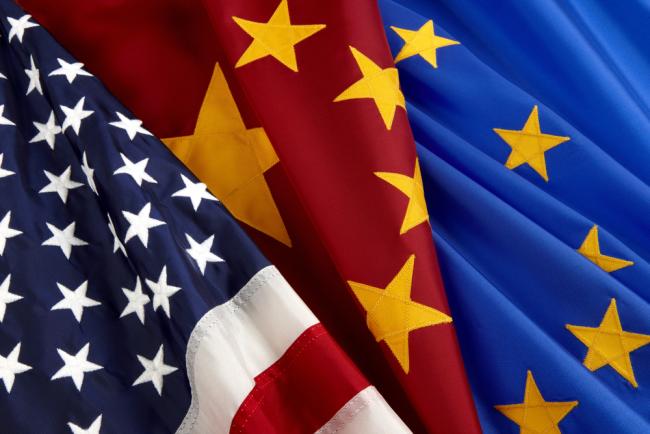
Technology Strategies in China and the United States, and the Challenges for European Companies
As international relations are increasingly reorganized around the US-China rivalry, the tensions between these two great powers are shaping a growing number of sectors, and the exchange of sensitive technologies in particular. This is a critical issue for European companies today.
German Economic Policy during the Corona-crisis. How Germany Intends to Support its Economy
Compared with other European countries, Germany’s management of the COVID-19 crisis has been efficient. Its health system has successfully coped with the challenge of the fight against the pandemic, the impact on employees has been mitigated thanks to allowances dedicated to furlough leave, business aids were important and quickly available, the government has been responsive.

The Renovation Wave: A Make or Break for the European Green Deal
European buildings are old and too often inefficient, past policies have not delivered and the amount of investment into energy efficiency must be scaled up dramatically to meet the 2030 targets and ultimately, the carbon neutrality objective.

Thirty Years after its Reunification, Germany's “European Moment”?
On October 3, 1990, after forty years of division, Germany once again became one state. Less than a year after the fall of the Berlin Wall, on November 9, 1989, the territories of the German Democratic Republic (GDR) became part of the Federal Republic of Germany (FRG) under Article 23 of its Basic Law.
Germany and the Economic and Monetary Union. Between the Search for Deeper European Integration and the Assertion of National Interests
Germany joined the creation of Economic and Monetary Union only with great hesitation and has tried to dictate the spirit and rules of operation of the Union.
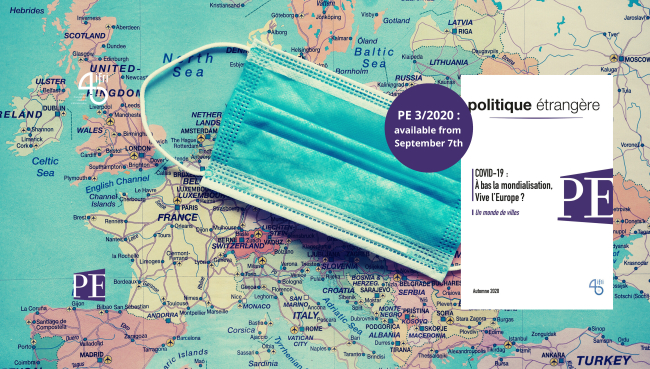
COVID-19: Down with Globalization, Long Live Europe?
Beyond national healthcare systems, COVID-19 questions major global balances, as well as the modes of cooperation underpinning them.

Europe beyond COVID-19
The recovery plan agreed upon by European Union leaders in July 2020 is unprecedented: for the first time, it creates a common debt that will help revive the economies impacted by the pandemic.
Support independent French research
Ifri, a foundation recognized as being of public utility, relies largely on private donors – companies and individuals – to guarantee its sustainability and intellectual independence. Through their funding, donors help maintain the Institute's position among the world's leading think tanks. By benefiting from an internationally recognized network and expertise, donors refine their understanding of geopolitical risk and its consequences on global politics and the economy. In 2026, Ifri partners with over 90 French and international companies and organizations.