




Economy
The economy is an essential attribute of power and a major component of international relations. While geopolitical tensions are on the rise, economic interdependence remains strong.
Related Subjects
Algeria’s Permanent State of Economic Crisis (1999-2015)
When President Bouteflika came to power in 1999, he sought to liberalise the country’s economy. But these reforms were reversed after only a few years.
TISA, TTIP: How Trading is Done on Europe’s Behalf
The way in which bargaining mandates are granted to the Commission for the purpose of leading the European Union’s commercial negotiations make it a unique negotiator.
The “One Belt, One Road” – Strategic Implications of a Chinese Infrastructure Network in Eurasia
China’s “One Belt, One Road” project, also known as the “New Silk Road”, aims to create a vast infrastructure network connecting three continents, with China playing the central role.
Economics in Narendra Modi’s Foreign Policy
A distinct feature of Prime Minister Narendra Modi’s first year in office was the remarkable speed and alacrity with which he moved on external engagement. During his first twelve months as Prime Minister, he travelled to almost twenty countries in different parts of the world. Indeed, Modi appeared to be guided by the impression that high rates of economic growth cannot be generated only by domestic policies and initiatives.
Leaving to Come Back: Russian Senior Officials and the State-Owned Companies
When Dmitry Medvedev announced in late 2014 that the presence of ministers and other officials should be sharply increased on the boards of public companies, observers were surprised, considering that four years before the former President started a campaign to remove them from the very same structures.
Shanghai’s stock market woes hit European financial centers
Claude Meyer answers Jean-Baptiste Boursier’s questions in “le Grand Angle” on BFMTV.

China’s growth declines, stock markets fall: what consequences should we be worried about?
All the European stock exchanges declined on Monday, as concerned investors looked with pessimism at China’s slowing growth. Paris lost 5.35 %. Claude Meyer discusses what consequences can be expected.

The economic consequences of Tianjin’s explosions
Five days after Tianjin’s impressive explosions, Toyota announced a three-day stop in the production of its city’s sites. The Japanese company is far from being the only one concerned.
The region, also known as Beijing’s maritime gateway, is one of the most dynamic in the country. No less than 540 million tones of merchandise transit through its harbor every year, making it the fourth biggest in the world.
“Tianjin is one of the spearheads of the Chinese economy”, summarizes Claude Meyer. “This catastrophe concerns about 300 multinationals among the world’s most important ones”. What will be the impact of these explosions on the Chinese economy?

"The Yuan isn’t ready to replace the Dollar"
China’s ambition is to become a great financial power. But the necessary reform of its financial system and its will to act progressively could mean that it will be a long time before its exchange rate system is liberalized. Can the Yuan realistically become an international currency?
Devaluation of the Yuan: Claude Meyer answers Yves Bourdillon
Is the sudden devaluation of the Yuan a sign of some form of panic from Beijing following the slowed growth of the Chinese economy?
Does this decision create deflationary risks for the global economy?
What prospects for the Yuan’s international status?

China and Africa: the Honeymoon is Over
For the new geopolitical reality called “Chinafrica”, the future may not be destined to be as radiant as the official win-win rhetoric would have us believe. Although the beginning of the century was notable for the exponential development of Sino-African trade (which grew from $10 billion in 2000 to $210 billion in 2013), a series of emerging problems seem to be signalling that the Sino-African honeymoon is over and that we are back with the harsh realities of the globalised economy.

Understanding China’s Financial Expansion
In this interview, Claude Meyer underlines the three major vulnerabilities of the Chinese economy, and describes the investments China has made since the early 2000’s to address them.
Agreement on the Trans-Pacific Partnership (TPP) in Atlanta. TPP and TTIP: Power Games in the U.S. Congress
Our analysis on the Agrement on the Trans-Pacific Partnership (TPP) in Atlanta: President Obama is now seeking approval from Congress. He might be getting more support from the Republicans.
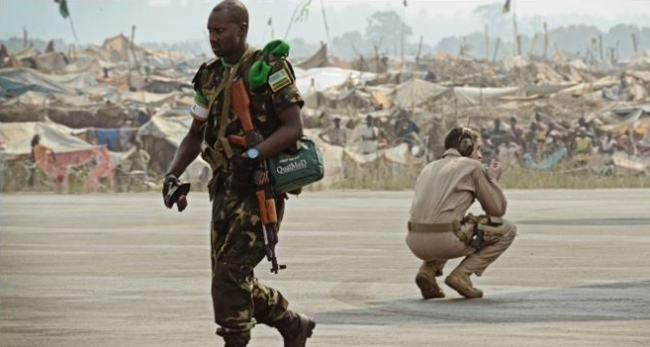
Thinking and Anticipating the Socio-Economic Impacts of the Humanitarian Response in the Central African Republic
Nowadays, the Central African Republic (CAR) is a country dependent on international aid.

The German Debate on TTIP
The German economy is characterized by a very high degree of international openness – much more so than in other European countries such as France. Its economic success hence largely depends on the intensity with which it trades with the rest of the world, and in particular the United States who play a crucial role. Against this backdrop, it would seem logical that Berlin would welcome signing a free-trade agreement between the U.S. and the European Union.
Blaming El Norte: The Economic Realities of Anti-Americanism South of the Rio Grande
For more than half a century, Cuba captured America’s attention as a symbol of anti-Americanism right in its own backyard. As normalized relations between the United States and Cuba bring these iconic hostilities to a close, many wonder if Castro’s Cold War rhetoric is finally dead. Borne primarily by Venezuela and Ecuador, Latin America's anti-Americanism has in fact merely transformed into an equally aggravating but less consequential trend today. Economic dependency tempers this new thorn in the United States’ side.

Why is the United States so worried about Greece's exit from the eurozone?
- Le 8 juin, lors du G7 en Bavière, Barack Obama invitait ses partenaires européens à trouver un accord rapide pour résoudre la crise grecque.
- Mercredi, c'est le secrétaire d'État au Trésor, Jack Lew, qui s'est inquiété des « chocs extérieurs » qu'entraînerait un échec.
- Hier, les États-Unis ont dépêché un membre du département d'État à Athènes en pleine négociation avec ses créanciers.
COP21: What Are the Odds for Success?
Since Copenhagen, negotiations have been in stalemate. Progress can only be made if there is a significant attempt to create a transnational carbon market.
Vladimir Putin’s Non-Economic Logic
Russia’s economic crisis was not caused by decisions taken by the West following the Russia-Ukraine conflict. It was predicted and widely mediatized.
The Country Risk Concept
The expression “country risk” emerged in the United States in the 1960s. Its meaning has evolved over time, without any definition ever really being settled on.
Coming in from the Cold? An Update on North Korea's External Economic Relations
This brief analysis of the current external economic relations of the Democratic People’s Republic of Korea (DPRK) leads to a number of conclusions.
The Future of the European Monetary Fund: Any Prospects?
The European summit last week has resulted in a compromise short-term agreement for aid to Greece.
Comparing Aid public policies in France and Germany
European Aid Ministers qualified 2008 as 'crucial for the development and the achievement of the Millennium Development Goals (MDO)'. So, the French presidency of the EU council devotes a part of its activities to Aid cooperation, mostly based on initiatives launched by Germany in 2007. In this article, both authors firstly compare Aid systems and their natures, and then explain why French and German approaches are often similar. Drawing up a panorama of these aid policies, also with common policies and projects, the authors would like to present common challenges that France and Germany are facing. Thus, they are looking for new leads to develop French-German cooperation in the field of Development.
Assertive Pragmatism: China's Economic Rise and its Impact on Chinese Foreign Policy
Proliferation Papers, No. 15, Fall 2006
Why and How Differentiate Developing Countries in the WTO? Theoretical Options and Negotiating Solutions
Anne-Sophie Novel and Jean-Marie Paugam (English written paper, to be release in hard copy in the beginning of 2006)
European Governance and European Public Opinion on Trade and Sustainable Development
Based on the Conclusions of the SUSTRA Workshop on 'European Governance and European Public Opinion on Trade and Sustainable Development', 03-04 June 2004, IFRI, Paris (France)
FDI as a Factor of Economic Restructuring: The Case of South Korea
Françoise Nicolas, in A. Bende-Nabende, (ed.), International Trade, Capital Flows and Economic Development in East Asia: The Challenge in the 21st Century, London, Ashgate, 2003
Governance Issues in the Digital Economy
The expansion of the Internet as a major component of the knowledge-based society has been one of the more important economic, social and political developments of the past decades. It is commonly claimed that this “revolution” has been unplanned by any government and has flourished precisely because the Net and its users have been largely free of regulation by any government. Actually, rules have been set quite rapidly in cyberspace, and contrary to what the cyber-libertarians have been arguing, digital technologies have not severed the historical links between market and state.
Foreign Direct Investment in Developing Countries: Leveraging the Role of Multinationals
Why did the governments of developing and emerging countries reach a more favorable assessment of the role of multinationals? The major evolution is the deepening economic integration brought by globalization. Globalization accentuates the importance of the international economy for developing countries. And in this context, foreign direct investment (FDI) has become one of the most dynamic flows of resources to developing countries.
Going Multinational: The Korean Experience of Direct Investment
The broad aim of this book is to explore the pattern and determinants of Korean foreign direct investment. The main focus is on Outward Direct Investment, but data and analysis are provided on both inward and outward flows in developed and developing counties in order to arrive at a better understanding of the dynamics at work.
Ifri, a foundation recognized as being of public utility, relies largely on private donors – companies and individuals – to guarantee its sustainability and intellectual independence. Through their funding, donors help maintain the Institute's position among the world's leading think tanks. By benefiting from an internationally recognized network and expertise, donors refine their understanding of geopolitical risk and its consequences on global politics and the economy. In 2026, Ifri partners with over 90 French and international companies and organizations.


To analyze the impact of power rivalries and tensions on globalization, this initiative combines economic and political expertise. In the face of growing geopolitical risk, the goal is to decipher the dynamics of reconfiguration: protectionist pressures, sanctions, restrictions, industrial policies, and economic security concerns are redefining the rules of international trade. These tensions are also transforming international financial relations by undermining the foundations of trust and reshaping the global monetary system. They raise questions about the role of several key players: sovereign wealth funds, central banks, digital platforms, multilateral institutions, and financial infrastructure operators. In a context of profound disruption, simply refining existing approaches is no longer sufficient. The initiative is designed as a flexible model, drawing on diverse expertise to offer both broad overviews and targeted analyses. It also provides a platform for stakeholders and experts from various backgrounds to debate these issues freely.