Russia
Russia is asserting itself as an imperial power. Isolated since its invasion of Ukraine, it is seeking to strengthen its ties with non-Western countries. At home, Vladimir Putin's regime is hardening.
Related Subjects
What evolution of US-Russia relationship after Trump’s election? A Russian point of view
3 questions to Andrey KORTUNOV, Director General of the Russian International Affairs Council (RIAC).
What evolution of US-Russia relationship after Trump’s election? An American point of view
3 questions to Stephen SZABO, Executive Director, Transatlantic Academy.
Does Russia still have an "energy weapon"?
What are the Current Challenges for Gazprom and Russia’s Energy Policy? What are the Gas Risks for Europe? Is the Nord Stream-II a Risk or an Opportunity for Europe?
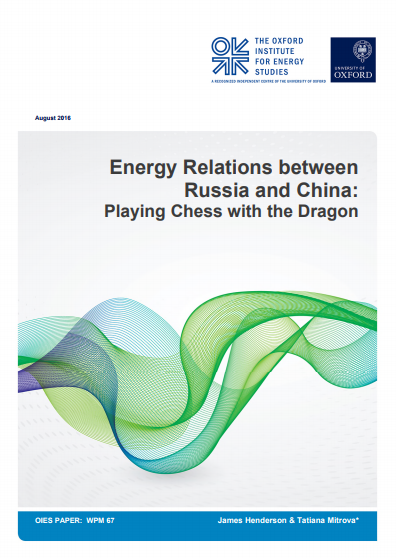
Energy Relations between Russia and China: Playing Chess with the Dragon
Post-sanctions Russia-China energy relations: what expectations?
The Far Right in the Conflict between Russia and Ukraine
From the very beginning, the armed conflict that broke out in the Donbass in the spring of 2014 drew in right-wing radicals, on the Ukrainian as well as on the Russian side. Organised ultra-nationalist groups and individual activists established their own units of volunteers or joined existing ones.

Russia in the Middle East: Back to a “Grand Strategy” – or Enforcing Multilateralism?
Russian military intervention in Syria was not an attempt to exert dominance as a hegemonic power in the Middle East.
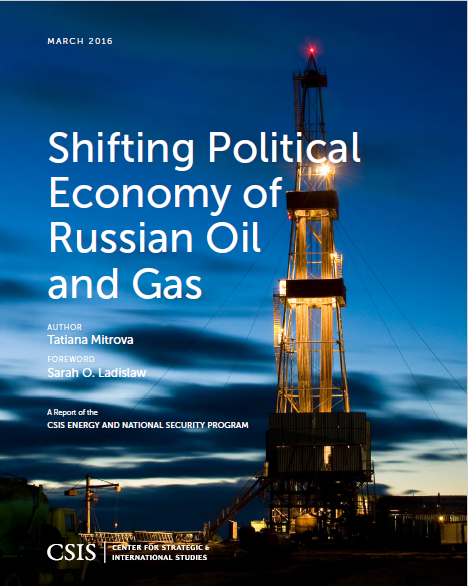
Shifting Political Economy of Russian Oil and Gas
Dramatic changes in the Russian energy strategy and energy-based political alliances are to be expected due to the evolution of the domestic oil and gas market resulting from the economic crisis and sanctions linked to the annexation of Crimea.
Russia’s Immigration Policy: New Challenges and Tools
A new stage in the development of Russia's migration policy is upon us. Since 2010, legal amendments and the Concept of Migration Policy of the Russian Federation to 2025, adopted in June 2012, marked a clear change in how migration flows are regulated, the aim being now to maximise the economic benefit of labour migration.
War’s Indirection or the Return of the Limited War
Over the last few years both the United States and Russia seem to have changed their conception of how to deploy force.
Russia's 'dictatorship-of-the-law' approach to internet policy
Julien Nocetti outlines the new geopolitical challenges posed by the current stand-off between Russia and the West over Ukraine, which have added to the general defensive leitmotiv in the Russian domestic internet governance with a tighter grip on online communications and transactions, which often contradicts the announced goals of economic stimulation in the information and communications technologies (ICTs) area as one of the vehicles of non-commodity based growth.
Cross-Domain Coercion: The Current Russian Art of Strategy
This paper traces the evolution of Russian views on the art of coercion, and on the role of nuclear weapons in it, from the post-Cold War “regional nuclear deterrence” thinking to the current “Gerasimov Doctrine”.
There Will Be Gas: Gazprom’s Transport Strategy in Europe
The key role of Ukraine in the transportation of Russian gas and the underground gas storage facilities are a legacy of the Soviet era. From the mid-1990s onwards, Gazprom has repeatedly tried to control gas transit through Ukraine and other infrastructures from the Soviet era without success.
The Political and Commercial Dynamics of Russia's Gas Export Strategy
A wide-ranging look at the way Gazprom interacts with an increasingly challenging global gas market for Russia.
Russia’s New Energy Alliances: Mythology versus Reality
This brief paper analyzes the energy relations between Russia and its “new” energy partnerships – with China and Turkey – that the Kremlin tends to publicly promote as an alternative to energy relations with the West.
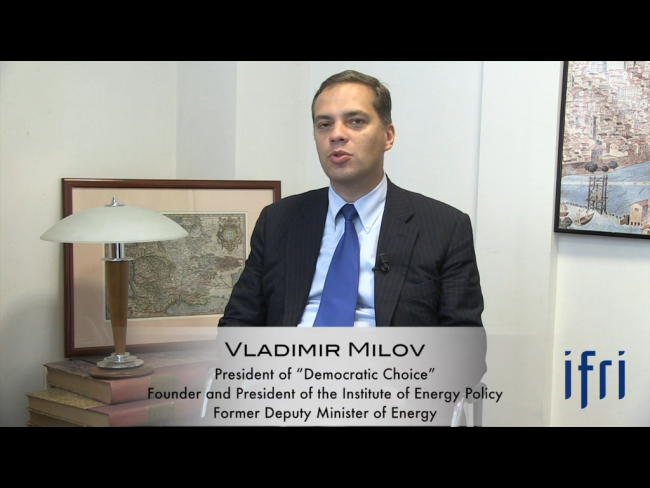
"Russia New Energy Alliances: Mythology versus Reality", Interview with Vladimir MILOV
"Past year has been marked not only with the Ukrainian crisis and unprecedented tensions in political relations between Russia and the West, but also with somewhat radical change of Moscow’s approach to international energy affairs. Widely promoted new energy partnerships with countries like China and Turkey were supposed to demonstrate that Russia has a choice of alternatives for mass-scale international energy cooperation, as compared to previous domination of European dimension, and if West wishes to cut ties with the Kremlin, Russia has somewhere else to go.
Does Russia really have an option of developing new international energy partnerships comparable in scale and significance to those with Europe as the consumer of energy, and with Western IOCs as key agents helping to secure further exploration and development of Russian oil & gas resources?"
Defeating Daesh: A Financial and Military Campaign
The Islamic State has considerable income, mostly from taking control of banks; managing trafficking networks – particularly hydrocarbons – and from external support.
Russia, a Revisionist Power?
From the incident at Pristina airport (1999) to the seizure of Crimea (2014), Moscow is trying to demonstrate that it will not abide by rules set by others, nor resign itself to the place of a second-tier power.
Crimea: The Contradictions of Russia’s Line
After denying Russian intervention in Crimea, President Putin ultimately recognized that it indeed happened and then used fallacious arguments to justify it.

Potemkin observers
Rebel commander Alexander Zakharchenko smiled only slightly on hearing that he had won this weekend's elections in Donetsk, Ukraine (pictured). The results were never in doubt: Mr Zakharchenko's nominal opponents openly supported him, and his face was the only one on campaign billboards. Nonetheless, eastern Ukraine's separatist republics went through the motions of democracy, including inviting international election observers. Those proved hard to find: while Russia has said it will respect the vote, America, the European Union, and the United Nations have all condemned it.
Ifri, a foundation recognized as being of public utility, relies largely on private donors – companies and individuals – to guarantee its sustainability and intellectual independence. Through their funding, donors help maintain the Institute's position among the world's leading think tanks. By benefiting from an internationally recognized network and expertise, donors refine their understanding of geopolitical risk and its consequences on global politics and the economy. In 2026, Ifri partners with over 90 French and international companies and organizations.