



United States of America
Despite polarized domestic politics and social tensions, the United States remains a major player in international relations, on the economic, military and diplomatic levels.
Related Subjects
Le programme économique des Républicains, quelles idées pour 2016 ?
Republican candidates in the 2016 primaries have trouble standing out on economic issues. Indeed, they all embrace the same conservative tenets, namely the reduction (at all costs) of federal power in the name of liberty ; and tax cuts for the wealthy in the name of "trickle-down economics", a theory already put forward by the Reagan administration.
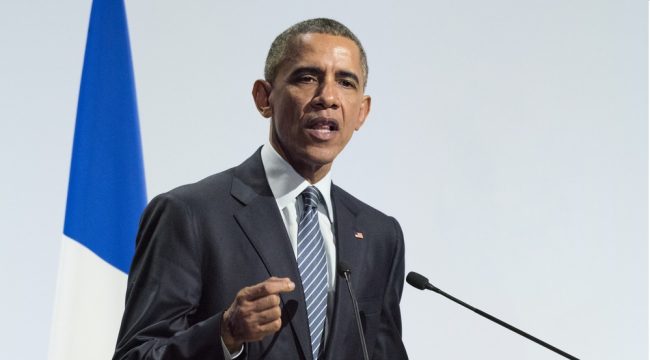
Après Paris et San Bernardino, le terrorisme dans le débat américain
Both the Paris attacks and the San Bernardino shooting reopened the wound of terrorism in the United States. Although President Obama has not shifted his stance or his strategy on the issue, public opinion is worried and populist rhetoric is ever more present in the campaign for the 2016 election.
American Presidential Elections: What the Primaries are Telling us
The presidential primaries have begun, and have quickly become a target for much criticism.

DRC : Fluid Mechanisms. Political Reorganization Just Before the 2016 Elections
The Democratic Republic of Congo (DRC) is currently at a key moment in its political history. Careful observation of the changes in the Congolese political landscape is necessary to grasp the nuances, challenges and opportunities, with regard to a peaceful political changeover which is a condition for lasting peace.


Washington and Beijing, between competition and interdependence
During his state visit in the United States, the Chinese President Xi Jinping called for a new model of relations between the two countries. In Alice Ekman’s opinion, the notion of a “new type of major power relations” invoked by China implies the establishment of a relationship that would put the country on an equal footing with the United States.
Comment votent les Américaines ?
Are women going to vote massively for Hillary Clinton in 2016, the same way African-Americans voted for Barack Obama in 2008 and 2012? This paper examines the different aspects of the gender gap in the US, social debates around women's issues and the way the Democratic candidate may approach the different segments of the American electorate.
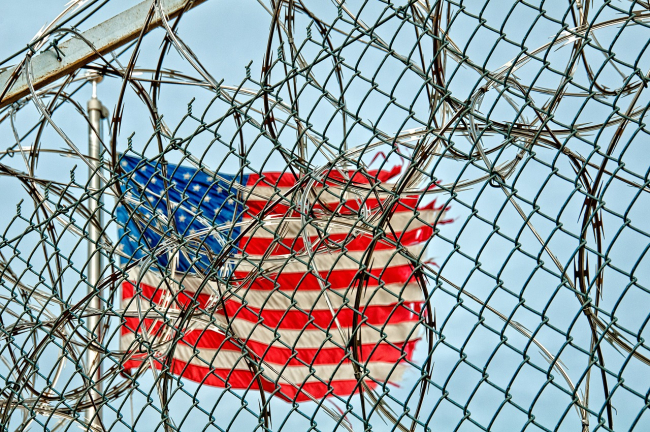
Sentencing Reform in the United States
Since the 1980's the incarceration rate in the United States has climbed to unprecedened levels. Today, the United States incarcerates a higher proportion of its population than any other country in the world. Activists have long called for sentencing reform, recognizing the criminal justice system's racial bias and failure to rehabilitate. President Obama's recent call to action propelled the debate on the issue forward at an unprecedented pace but will proposed reforms be enough to end mass incarceration ?
Best friends, eh? The Arctic, Keystone XL and the Canada-United States Relationship in 2015
Canada and the United States enjoy one of the most fruitful relationship in the world. Yet, several points of contention have appeared in recent years over the Northwest Passage and, more importantly, the Keystone XL pipelines. Such disagreements must be analyzed in order to fully grasp the state of the bilateral relationship in 2015.
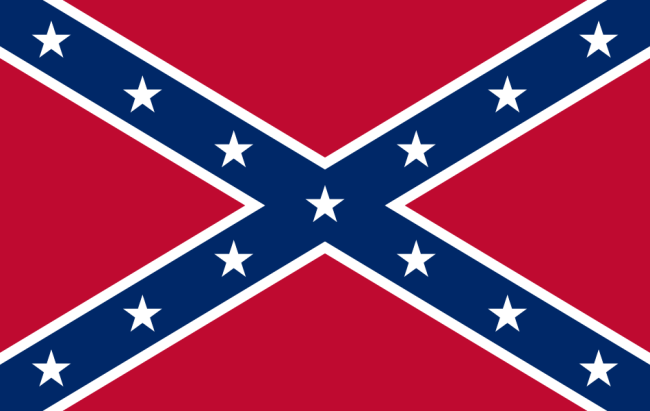
Rethinking the Confederate Legacy
The battle flag of General Robert E. Lee’s famed Army of Northern Virginia, commonly known as the Confederate Flag or the Southern Cross, has become the symbol of the 1861-1865 Southern secession and the most widespread sign of Southern regional identity. Today it can be found flying across the South and on everything from clothing to bumper stickers.
Agreement on the Trans-Pacific Partnership (TPP) in Atlanta. TPP and TTIP: Power Games in the U.S. Congress
Our analysis on the Agrement on the Trans-Pacific Partnership (TPP) in Atlanta: President Obama is now seeking approval from Congress. He might be getting more support from the Republicans.
Blaming El Norte: The Economic Realities of Anti-Americanism South of the Rio Grande
For more than half a century, Cuba captured America’s attention as a symbol of anti-Americanism right in its own backyard. As normalized relations between the United States and Cuba bring these iconic hostilities to a close, many wonder if Castro’s Cold War rhetoric is finally dead. Borne primarily by Venezuela and Ecuador, Latin America's anti-Americanism has in fact merely transformed into an equally aggravating but less consequential trend today. Economic dependency tempers this new thorn in the United States’ side.
The American Campaign
Où en est la campagne américaine ? on France Culture, with Christine Okrent

Donald Trump, candidat à la présidentielle des Etats-Unis
Donald Trump, American presidential candidate: Where is the campaign? with Laurence Nardon, head of the United States program at the French Institute for Intenational Relations (IFRI).

Foreign Policy : Obama's America without a Compass

NSA : can Americans talk privately?
Anne Giudicelli, founder of TERR(o)RISC, Laurence Nardon, researcher and head of the United States program at IFRI, Benaouda Abdeddaïm, columnist at BFM Business and Romain Zerbib, strategic management researcher with IGS, share their thoughts on privacy as the Patriot Act expires.
Les Décodeurs de l'éco, from June 1st, hosted by Fabrice Lundy, on BFM Business.

François Hollande to Cuba
Understand François Hollande's trip to Cuba with commentary by Daniela Ordonez, economist specializing in Spain, Portugal, Latin America and the Carribean at Euler Hermes; Benaouda Abdeddaim, economic editor of BMF Business; Laurence Nardon, researcher and United States specialist at IFRI; Karel Negrete, professor of political theory at the University of Havana and co-author of "Cuba: révolution dans la révolution"; and Philippe Gautier, Assistant Director of Medef International. - Les Décodeurs de l'éco, on May 11 is hosted by BFM Business.

USA and the negociations with Iran 2/2 : U.S. views on the true nature of the Iranian regime
Robert Litwak from the Wilson Center joined Ifri on April 22, 2015 for a seminar on the U.S.-Iranian nuclear negotiations. In this video, he analyzes the different views on Iran and its regime.
Robert Litwak is the Vice President for Scholars and Director of International Security Studies at the Woodrow Wilson International Center for Scholars.

USA and the negociations with Iran 1/2 : How does each side understand nuclear diplomacy?
Robert Litwak is the Vice President for Scholars and Director of International Security Studies at the Woodrow Wilson International Center for Scholars.
Obama's new world, what's next?
Cuba, Iran, Yemen... the White House is fighting on the front lines of multiple diplomatic offensives. In the midst of continuing nuclear negotiations with Iran, Washington has decided to support the Saudi intervention in Yemen while engaging in a new showdown with Iran. The United States won't just sit back with its arms crossed. Incoherent strategy or reestablishing leadership on the international stage? In the final straightaway of Obama's last term, is "Obama the hesitant" looking to rewrite history? And if Hillary Clinton were to succeed him tomorrow, would the former Secretary of State follow in his ideological footsteps?
- Laurence Nardon, head of the United States program at IFRI
- Bertrand Badie, professor at Sciences Po, researcher at Ceri
- John R. MacArthur, by telephone from NYC, Director of Harper’s Magazine

Historic Meeting between Obama and Raul Castro
The thaw between Cuba and the United States reaches a head at the Summit of the Americas in Panama and the normalization of relations has begun as the White House removed Cuba from the state-sponsored terrorism list. Laurence Nardon, head of the United States program at IFRI comments on U.S.-Cuba relations as well as Hillary Clinton's presidential campaign kickoff.
Ifri, a foundation recognized as being of public utility, relies largely on private donors – companies and individuals – to guarantee its sustainability and intellectual independence. Through their funding, donors help maintain the Institute's position among the world's leading think tanks. By benefiting from an internationally recognized network and expertise, donors refine their understanding of geopolitical risk and its consequences on global politics and the economy. In 2026, Ifri partners with over 90 French and international companies and organizations.

Ifri's work on the Americas region focuses mainly on the United States. Indeed, for more than 20 years, Ifri's Americas Program has provided keys to understanding American society and domestic policy while shedding light on developments in the country's foreign policy, including transatlantic relations and trade issues.
Since 2023, a specific axis on Latin America structures more actively Ifri's research on this region.
Ifri's Canada program was active in 2015 and 2016.