




3463 publications
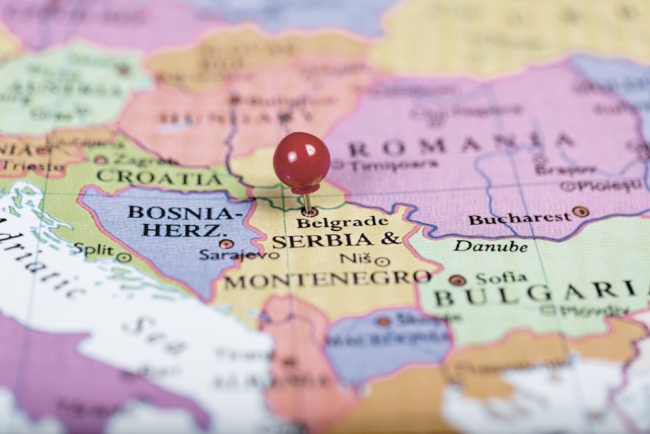
The Western Balkans : a touchstone for German and European foreign policy
China’s rise: the view from South Korea
Monitoring China-South Korea relations is key for the EU, as both countries have been designated strategic partners. Moreover, the Union has important economic ties to both, and signed a free trade agreement (FTA) with the Republic of Korea (ROK) in 2011.
États-Unis : La Cour suprême en balance
The first few months of this year have been eventful and dramatic for legal and judicial matters on either sides of the Atlantic: while France renewed a third of its magistrates - which has gone largely unnoticed - US Supreme Court Justice Antonin Scalia's sudden death caused a political earthquake.
The European Union : When the Commission and Governments put the Future of Electricity Producers at Stake
RWE, EON, EDF, ENGIE and other large utilities are in financial turmoil. This situation, which would have been unlikely twenty years ago, is related to several failures in governance within the EU as well as to global evolutions. This Edito Energie analyses the situation of large European electricity producers in light of the European energy policy.
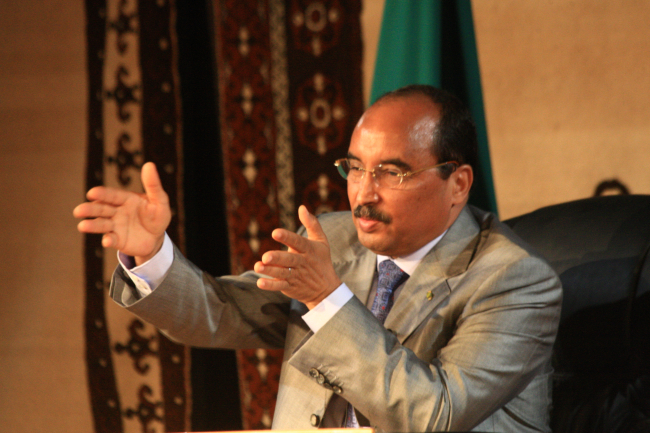
The faded star of President Mohamed Ould Abdel Aziz
The Mauritanian President, Mohamed Ould Abdel Aziz, was elected in 2009. The architect of two successful coups: in 2005 against President Maaouya Ould Sid’Ahmed Taya, and in 2008 against President Sidi Ould Cheikh Abdellahi, nowadays he is in his second and last term of office according to the Mauritanian constitution. He is viewed by the country's partners as one of the key figures in the stability of the Sahel. However, the international community does not see, or pretends not to see, the weakening of his regime.
Russia's Diplomacy in the Middle East: Back to Geopolitics
Moscow's approach to the Middle East has undergone real changes from Soviet times to the present day: it evolved from creating zones of influence against the background of confrontation with the West to seeing the region through the prism of mainly economic interests, and, finally, to Moscow’s current pragmatic view.
Retours sur Sangaris. Entre stabilisation et protection des civils
In December 2013, France launched its operation Sangaris in the Central African Republic. What conclusions can be drawn for the stabilization of the country and the protection of civilians?
CETA: the Making of the Comprehensive Economic and Trade Agreement Between Canada and the EU
Once ratified, the Comprehensive and Economic Trade Agreement (CETA) could ultimately eliminate all tariff barriers between the European Union and Canada. CETA is also a new generation Free-Trade Agreement: it includes the opening of public procurement, the facilitation of cross investments and cooperation in the area of regulation. Its long negotiation process illustrated important changes that are happening in the way trade agreements are negotiated, both in Canada and in the EU.