Elections
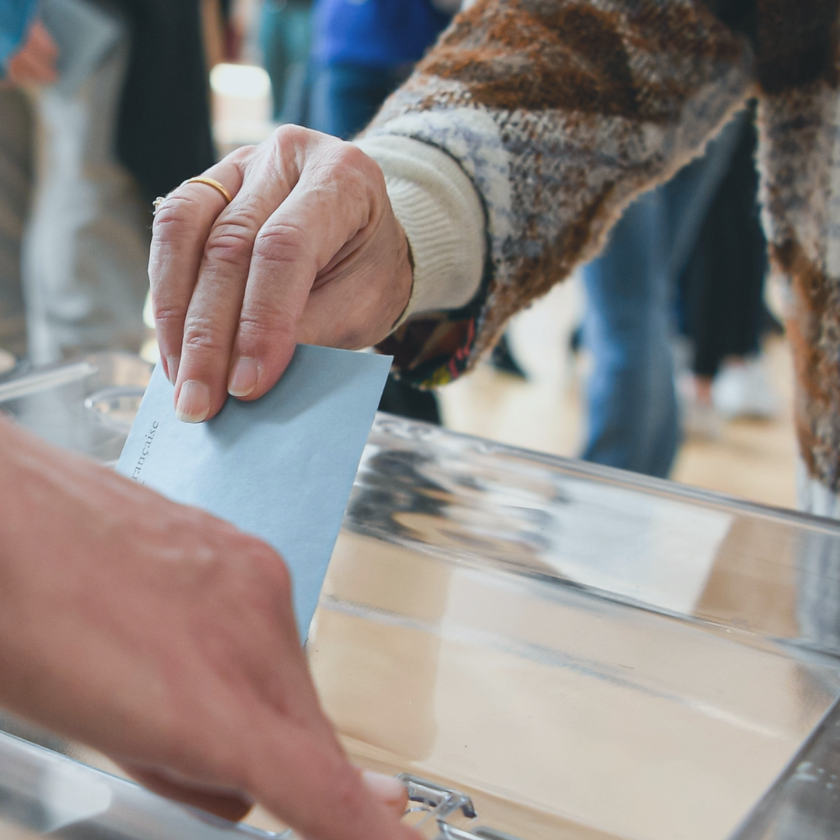
The electoral process sets the pace for democratic life and international news. In some countries, elections are no more than a façade for democracy.
États-Unis : les nominations à la Cour suprême, enjeu des élections de 2016
With the death of Justice Antonin Scalia on February 13, 2016, the Supreme Court of the United States lost a beacon of conservative thought and one of the most influential American jurists of the last thirty years. The question of his replacement immediately became an issue as the United States looks forward to the presidential election in November. While past nominations to the Supreme Court have been relatively uncontentious, nominations today are affected by the polarization of American politics.
Hillary Clinton's Email "Scandal": How Will It Affect the Election?
With the Democratic Presidential Nomination in sight, Hillary Clinton must still contend with a continuous conversation about her email practices. How will this scandal, or non-scandal, affect the presidential race yet to come? A look at the perspectives of the American constituency and pending investigations may predict Clinton's likely future... and the future of the American presidency.

A facist America?
Are the United States at risk of giving into a totalitarian drift embodied by Donald Trump?
The faded star of President Mohamed Ould Abdel Aziz
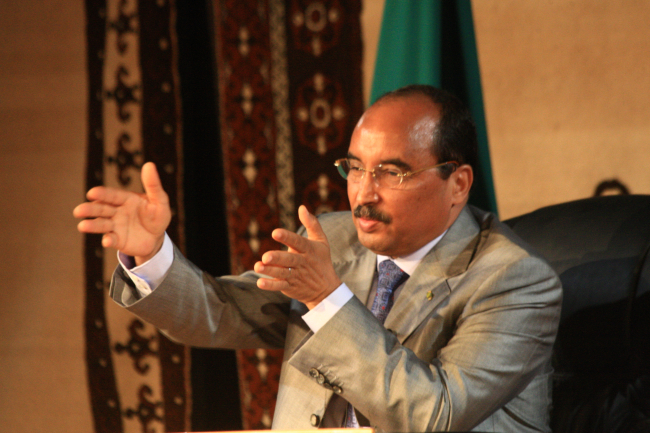
The Mauritanian President, Mohamed Ould Abdel Aziz, was elected in 2009. The architect of two successful coups: in 2005 against President Maaouya Ould Sid’Ahmed Taya, and in 2008 against President Sidi Ould Cheikh Abdellahi, nowadays he is in his second and last term of office according to the Mauritanian constitution. He is viewed by the country's partners as one of the key figures in the stability of the Sahel. However, the international community does not see, or pretends not to see, the weakening of his regime.
Najib Razak’s Malaysia: A solid economy on a foundation of political tension
Najib Razak began his term as Prime Minister of Malaysia in 2009 amidst a severe global economic crisis, concern over spiraling public debt and fears the country would fall into the ominous “middle income trap”.
Présidentielles 2016: le Parti républicain et la politique étrangère
Three Republican presidential candidates have proposed a foreign policy agenda worthy of examination. Marco Rubio (who withdrew from the race on 15 March 2016) and Ted Cruz present well-defined political projects pertaining to different traditions of American foreign policy theory. Donald Trump’s approach is less clear-cut but also less traditional, between isolationism and profitability.
Assessing the Achievements of International Criminal Justice / A New Era of Oil Abundance?
Born from the ashes of two world wars, the concept of international criminal justice took nearly half a century to become anchored in institutions and legal concepts that are independent of specific conflicts. The International Criminal Tribunal for the former Yugoslavia, that for Rwanda, and the creation of the International Criminal Court, among others, bear witness to the real progress made during the 1990s. This issue of Politique étrangère offers a series of articles that shed light on these achievements and their limits.
American Presidential Elections: What the Primaries are Telling us
The presidential primaries have begun, and have quickly become a target for much criticism.

DRC : Fluid Mechanisms. Political Reorganization Just Before the 2016 Elections
The Democratic Republic of Congo (DRC) is currently at a key moment in its political history. Careful observation of the changes in the Congolese political landscape is necessary to grasp the nuances, challenges and opportunities, with regard to a peaceful political changeover which is a condition for lasting peace.
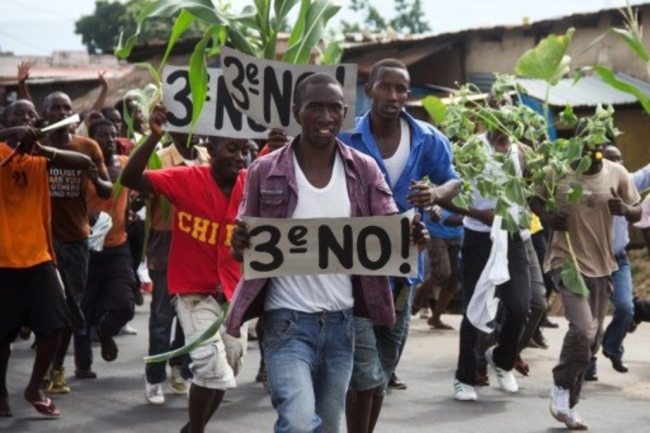
Burundi: Unravelling the Peace
Since achieving independence in 1962, Burundi has experienced several episodes of civil war, the last of which came to end when the Arusha Accord was signed in 2000. The gradual return to peace in the wake of the Arusha Accord has been jeopardised by Pierre Nkurunziza’s announcement on 25th April 2015 that he would stand as a candidate for the presidency.
Les élections fédérales d'octobre 2015 au Canada : dynamiques et enjeux
The federal elections in Canada will take place this coming October 19th, 2015. This ballot could be a turning point in the political life of the country, because it already appears as a referendum to assess the "Harper decade".

The Election of Mmusi Maimane as Leader of the Democratic Alliance: a New Era for the Opposition in South Africa
At the end of the Democratic Alliance (DA)’s federal congress held in Port Elizabeth on Sunday 10th May 2015, Helen Zille was replaced by Mmusi Maimane after eight years as leader of South Africa’s largest opposition party. This passing of the baton had a significant impact both nationally and internationally because of the colour of Mmusi Maimane’s skin: for the first time, the party will actually be led by a black man. More than 20 years after the end of apartheid it may seem surprising that this event has excited people’s curiosity and interest, but it demonstrates that until now South African politics have often been polarized along race lines.

Coalition or snap poll: What next for Turkey?
Turkish President Recep Tayyip Erdogan’s AKP suffered a stunning defeat in the latest parliamentary poll with the party losing its absolute majority for the first time in 13 years. The question now is whether it can hold on to power.

Nigeria's 2015 Presidential Election: Deciphering a High-risk Operation
Nigeria is entering a new electoral cycle, holding its sixth general elections since the restoration of civilian rule in 1999. The elections were initially scheduled for February 14 (presidential elections) and 28 (governorship elections), 2015. The first round has now been postponed until March 28. The issue of the threat posed to Nigeria by Boko Haram is not, as one might expect, at the heart of the debate surrounding the presidential campaign in the country. Nevertheless, the peculiar security context in which the forthcoming elections will take place, as well as the changes under way in Nigeria's political landscape, make this vote unique. It is therefore essential to analyze the various issues at stake in the country's sixth general elections.

Potemkin observers
Rebel commander Alexander Zakharchenko smiled only slightly on hearing that he had won this weekend's elections in Donetsk, Ukraine (pictured). The results were never in doubt: Mr Zakharchenko's nominal opponents openly supported him, and his face was the only one on campaign billboards. Nonetheless, eastern Ukraine's separatist republics went through the motions of democracy, including inviting international election observers. Those proved hard to find: while Russia has said it will respect the vote, America, the European Union, and the United Nations have all condemned it.
Iran's Presidential Election: a Distorted Western Perspective?
The election of a religious leader at the presidency of the Islamic Republic of Iran contradicts many of the analyses of western media and experts on Iranian politics.
Algeria: Cosmetic Change or Actual Reform?
Algeria has emerged as something of an “exception” across the Middle East and North Africa (MENA) region, and while the recent elections have been marred by widespread allegations of fraud, the results have effectively consolidated the regime’s grip on power thus ensuring its complete monopoly over the country’s reform process.
Updating the Debate on Turkey in France, on the 2009 European Elections' Time
Turkey has become a recurrent issue in France's domestic political debate, following the referendum campaign on the European Constitutional Treaty in spring 2005. While the question of Turkish EU membership is itself a point of discussion, evoking Turkey also touches on other sensitive political issues in France. It elicits controversy that goes beyond the Left-Right cleavage. In this article, Alain Chenal* studies the trend in the evolution of the debate during the campaign for the European elections in June 2009.
Dorothée Schmid, Head of the Contemporary Turkey Program at the IFRI
Ifri, a foundation recognized as being of public utility, relies largely on private donors – companies and individuals – to guarantee its sustainability and intellectual independence. Through their funding, donors help maintain the Institute's position among the world's leading think tanks. By benefiting from an internationally recognized network and expertise, donors refine their understanding of geopolitical risk and its consequences on global politics and the economy. In 2026, Ifri partners with over 90 French and international companies and organizations.