3391 publications
France's Return into NATO: French Military Culture and Strategic Identity in Question
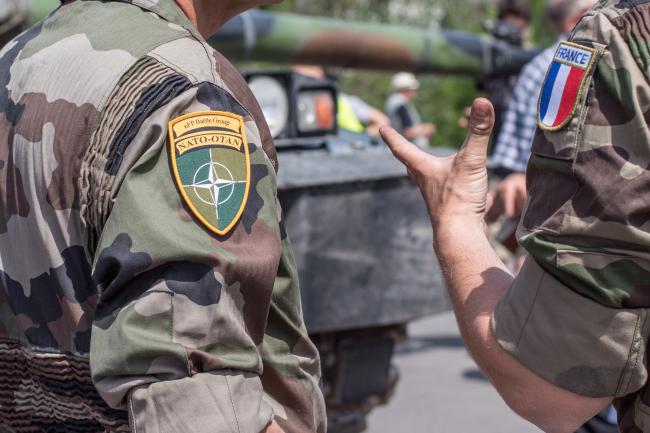
More than 40 years after the unilateral decision by General de Gaulle to withdraw French forces from NATO's integrated military command, President Sarkozy decided that France would reintegrate the Atlantic Alliance’s military structure, based on "full and complete participation". The decision was endorsed by Parliament and has generated little debate in France, while a majority of French people appear to approve of it.
Wind Power: a Victim of Policy and Politics?
In December 2008, as part of the fight against climate change, the European Union adopted the Energy and Climate package that endorsed three objectives toward 2020: a 20% increase in energy efficiency, a 20% reduction in GHG emissions (compared to 1990), and a 20% share of renewables in final energy consumption.
Evolution of the Australia-Japan Security Partnership: Toward a Softer Triangle Alliance with the United States?
This paper examines how and why the Australia-Japan defense and security partnership has evolved, what policy implications this new partnership has for the U.S.-Japan alliance system, and what constraints the further advancement of trilateral security cooperation faces.
Electric Cars: the Orient and the Occident
China is looking ahead and thinking electric. The Chinese government recently announced the release of $15 billion in a “Manhattan-style” venture to support electric vehicle (EV) research, standardization and development as part of its five-year plan and to meet its seemingly unattainable objective of introducing 500 000 “clean” vehicles per year by 2011.
French-American Relations in Intelligence and Counterinsurgency during the First Indochina War
Nordstream: Just-in-time?
Last week the gritty Russian/Ukrainian gas relationship was back in the press. This time the issue appeared to be Ukraine’s efforts to secure lower prices for its consumers - perhaps even on a par with Russia’s domestic consumers. The Ukrainians must surely know that to qualify for those kinds of special prices available previously only to politically compliant neighbors - Ukraine would have to return to some form of pre-Orange Revolution relationship with Mother Russia.
Spat in the East China Sea Offers Lesson on Raw Material Dependence
There is a valuable lesson to be learned about raw material dependence from the tensions between China and Japan in the East China Sea. It’s not about the oil and gas that is thought to be stored under the seabed in disputed waters, but rather the so-called “rare earth elements”, of which China produces 97% of the global supply.
Migrations, Remittances and Development - Comparing Experiences from Mexico and Maghreb
The potential synergy between development and migration has become a key feature of most international migration politics. However, this relationship is far from evident.
China-India Relations: Strategic Engagement and Challenges
Sino-Indian relations have become increasingly significant and produced widespread implications. The evolving bilateral relationship is reasonably seen as a result of their shifting strategies and the ever-changing global politico-economic situation. On the political front, high-level interaction plays an important role in improving Sino-Indian ties. The political willingness to improve relations helps kick-start the significant process of building confidence and trust in different areas and at various levels.
Obama : Carter ou Cicéron ?
Between dignity and racial prejudice, empathy and weakness, intelligence and paralysis, will the talents of the presidential candidate become handicaps for the 44th president?
Les Noirs américains : Amour, gloire et pauvreté
After hurricane Katrina in 2005, images of the miserable and abandoned black community of New Orleans surfaced. This portrait of a black underclass mired in poverty is not thoroughly representative of African Americans in the U.S., however.
Lessons Learned from Oily Pelicans? A Comparative Policy Paper on Maritime Oil Spill Disasters
Turn on the news or open the paper and sure enough there will be mention of the disastrous oil spill in the Gulf of Mexico. Although it has retreated from the big headlines, the disaster still looms large as people deal with the aftermath of the BP catastrophe.
Rare Earths and Clean Energy: Analyzing China's Upper Hand
An ominous resource crunch in the so-called “rare earth elements” is now threatening the development of a number of key industries from energy to defense to consumer electronics. As key components in the latest generation of technologies, including specialized magnets for windmills and hybrid cars, lasers for range finders and “smart” munitions, and phosphors for LCD screens, demand for these rare metals is expected to grow rapidly in the years to come.
Entente or Oblivion : Prospects and Pitfalls of Franco-British Co-operation on Defence
Carbon Dioxide Emissions: 17 Years ans still Talking
The 15th annual Conference of the Parties in Copenhagen last year saw delegations from 192 countries come together in an attempt to establish a global climate agreement for 2012 before the end of the first commitment period of the Kyoto protocol (2008-2012). This paper will examine how these figures have changed since Kyoto base year 1990, before looking at certain countries" proposals for the future of their carbon dioxide emissions.
RAMSES 2011. Un monde post-américain ?
RAMSES (Le Rapport annuel mondial sur le système économique et les stratégies), is a yearly publication that provides in-depth reviews and prospective analysis on current events, providing readers with indispensable insights and perspectives for understanding contemporary geopolitics on the global scale. Edited by Thierry de Montbrial and Philippe Moreau Defarges, RAMSES relies on the expertise of Ifri’s research team and its network of associates.
Russia's Far East Policy: Looking Beyond China
Russian writers like Dmitri Trenin have called developing the Russian Far East (RFE) a civilizational task. At the same time Moscow has acknowledged that developing the RFE is the foundation for any successful Russian claim to an independent great power status in Asia.
German Military Engagement in Afghanistan: Conditions, Assessment, Outlook
Since the beginning of 2010, German authorities have become conscious of the fact that they cannot continue to maintain the Bundeswehr’s involvement in Afghanistan with a majority of the German population opposing it. It is clearly understood that the federal government and the Bundestag will adhere to President Obama’s plans to gradually withdraw national troops from ISAF, starting in the summer of 2011, and to hand over complete control of the country’s security to Afghani authorities.
The EU's Major Electricity and Gas Utilities since Market Liberalization
A major change has taken place in the company structure of the European electricity and gas markets. Twenty years ago, national or regional monopolies dominated the markets and there was strictly no competition between utilities. But since the liberalization of EU energy markets began in the 1990s, companies like E.ON, GDF Suez, EDF, Enel, and RWE have become European giants with activities in a large number of Member States.
Results of the "Reset" in US-Russian Relations
The administrations of Barack Obama and Dmitry Medvedev have committed to a process of "resetting" US-Russian relations on a foundation of mutual interests and pragmatic collaboration.
An Analysis of North Korea's Principal Trade Relations
The Direction of Trade Statistics by IMF is the most representative statistical data for bilateral trade with North Korea. However, IMF statistics underestimate North Korea's international trade since they do not classify inter-Korean trade as international trade. Therefore, this study restructures statistics on North Korea by combining the IMF and inter-Korean trade data, and it analyzes the structure of North Korea's international trade. In addition, it conducts a unique analysis of trade structures, since other studies have not analyzed production processes in North Korean trade.
This analysis identifies six main characteristics of North Korea's trade:
Fiscal Deficit, Crowding Out, and the Sustainability of Economic Growth: The Case of the Indian Economy
This study examines the long-run relationship between the fiscal deficit, the crowding out of private capital formation and net exports for the Indian economy during the period from 1980-81 to 2008-09.
Potential Strategic Consequences of the Nuclear Energy Revival
Renewed interest throughout the globe in harnessing nuclear energy has raised concern about security threats from states and non-state actors while holding out the promise of more electricity for more people.
Developments in Space Programmes and Technologies Throughout the World and in Europe
An Azeri-Turkish deal on gas - a partnership renewed
The package of the Azeri-Turkish gas agreements signed in Istanbul on June 7, 2010, in the presence of President Ilham Aliyev and Prime Minister Recep Erdogan certainly makes cooperation easier in a sector which both parties consider to be strategic. It does not, however, specify all details of the sale and transit of gas (see e.g. EurasiaNet, 7 June). The documents above all have important political significance.
Russian Gas Diplomacy
Thank goodness our early warning systems during the cold war were not structured so we could see the flash at the same time we heard the warning. On Monday, the Russians notified the Europeans under an “Early Warning” agreement negotiated after the last Ukrainian gas cutoff that they had already cut gas flows to Belarus by 15% and that would increase cuts to 85% by the end of the week. Not very good news for the Belarusians who enjoy the most gasified economy in the world - everything there runs on gas.
Maghreb Countries' Economic Projection on Sub-Saharan Africa
While largely interrupted by the colonial period premise, trade relations between the Maghreb and sub-Saharan Africa have enjoyed a new boom with the independence era. However, until the end of the 1990s, the African policy of the three Maghreb countries significantly impacted their economic projection.
Chinese and Indian Economic Presence in the Maghreb
One of the major events of the last couple of decades has been the rise of China and India, reflected by their increasingly important economic presence in the world, both in terms of trade flows and of foreign direct investments.
Africa, which has long remained the former colonial powers" “private hunting ground”, does not seem to escape from Indian and Chinese presence and activity, hence worrying Africa"s traditional partners.
The United States' Economic Strategy and Presence in the Maghreb
Before the 9/11 events, US-Maghreb relations were growing stronger, especially after the United States had long left the floor to the Maghreb’s “natural” European partner. Therefore, the American action in this region was in line with a mechanism previously set off by Clinton Administration member, Stuart Eizenstat, which aimed at reducing intra-regional obstacles and stimulating American investments towards an area where Americans were little-represented. Hence Washington seemed more involved in promoting the emergence of a strong, world-economy-integrated Maghrebi market.
The Gulf Cooperation Council in the Maghreb: Exchange and Investment Strategies
The Gulf Cooperation Council (GCC) is a regional organization which was created in 1981, reassembling six Arab countries together: Saudi Arabia, Kuwait, Bahrain, Oman, Qatar, and the United Arab Emirates (UAE). Thanks to their oil income, GCC countries have enjoyed economic boom since 2002, hence breaking with the 1990s economic slow-down.
Tuaregs' Relations to States: The Case of Algeria and Libya
The industrial revolution underwent by Europe in the 18th century has triggered the need for the major colonial powers to find new markets for their manufactured products. It is in this colonial competitive framework that European explorers delivered information about the different access roads, as well as the Tuareg tribes, notably the Kel Ajjer and the Kel Ahaggar.
Arabs and Tuaregs in Colonial and Malian Armed Forces: A Story in Trompe-l'Oeil
This contribution consists in analyzing the unifying or opposing relations between the central State-power and the southern part of central-Saharan populations, mainly Arabs and Tuaregs, within the relational framework of colonial and Malian armed forces. The French Colonial State and the Malian independent State (from the 1960 independence movement) are both considered by Arabs and Tuaregs as external entities, whatever the form of their relation, good or bad.
Trafficking in the Sahel-Saharan Zone: Features and Stakes
On November 5th 2009, a cocaine-loaded Boeing 727 aircraft arriving from Venezuela was discovered torched and emptied on a makeshift airstrip in the Malian desert (Gao region). The Sahel-Saharan area is clearly a contact zone between very distant worlds.
Morocco and its "New Border". A Critical Lecture of Morocco's Economic African Strategy
Since Mohammed VI came into power, Morocco’s African policy has undergone notable change in comparison to his predecessor’s period.
Controlling Trafficking or Losing the North : Notes on Trafficking in Mauritania
Our interest in this topic stems both from our annual visits to Mauritania which started fifteen years ago, and the tiny amount of research noticed on trafficking in this country.
Ampo at 50: The Faltering US-Japan Relationship
For the last 50 years the governance of the US-Japan alliance has often been characterized by secret diplomacy and discretionary choices. In the post-war period Japan's strategic choices have given overall priority to sustaining a strong security alliance with the United States.