3391 publications
The Outsider: Russia in the Race for Artificial Intelligence
When analyzing the global state of play around artificial intelligence (AI), Russia so far looks like an “outsider” compared to the two technological leaders, the United States and China.
Brexit: The Trouble of Breaking Up
On the brink of Brexit, what form will it take? British and European negotiators might prefer a bad deal to no deal, but would this avoid the significant disruption in trade with the European Union that no new trade deal could make up for?
UK/EU Relations after Brexit: Why Breaking Up Is Hard to Do
Despite the posturing, both the United Kingdom and the European Union are trying to reach a deal. However, London’s cliffedge strategy and Brussels’ control of the agenda and progress of the negotiations could result in an “any deal is better than no deal”.
COVID-19 in Africa: A Continent’s Response to a Global Crisis
The COVID-19 pandemic has struck Africa less than expected.
Latin America and the COVID-19 Challenge
Latin American governments have not responded consistently to the COVID-19 pandemic.
Turkey: An Emerging Power without the Resources to Match Its Ambitions
Turkey is adopting an increasingly hostile stance towards Western countries. Its activities in the eastern Mediterranean and in Libya demonstrate this.
Revolutionary by Design: The US National Security State and Commercialization in the US Space Sector
The US space sector, comprised of its government organizations and its commercial industry, is leading the revolution in space, often called "new space".
Towards a More Principled European China Policy?
Promoting political values (democracy, human rights and the rule of law) in China is a colossal undertaking, but the EU could be more effective than we think. To do so, it must act strategically, in unity, and in concert with like-minded partners. It must also strengthen its record of upholding political values and reform its procedures for foreign policy decision-making.
Washington-Téhéran : l'élection de Joe Biden change-t-elle la donne ?
The recent assassination of Mohsen Fakhrizadeh, the father of Iran's nuclear program, echoes that of Qassem Soleimani in January 2020 and illustrates the policy of "maximum pressure" which has prevailed these past four years. In this context, Joe Biden's election gives rise to high expectations for the appeasement of U.S.-Iran relations.
Current and Future Trends in Chinese Counterspace Capabilities
China is in the midst of a long-term effort to develop a world-class space program with a strong military and national security component.
The German Health care System in the Face of the Coronavirus Crisis
The handling of the COVID-19 pandemic by the German government and health system has globally been perceived as a success because of a relatively low death rate.
French public opinion on China in the age of COVID-19: Political distrust trumps economic opportunities
This report is a result of a wide-scale study of public opinion on China in 13 European countries,1 conducted in September and October 2020, on the research sample representative with respect to gender, age, level of education, country region, and settlement density. Here, we focus on the French portion of the polling, building on the previously published report comparing the results across the 13 countries.
COVID-19 Reveals Europe’s Strategic Loneliness
The COVID-19 crisis has not only revealed a world that has moved into an age of interdependence and competition, it has also laid bare Europe’s strategic loneliness and vulnerability.
The US-China Trade War: What Is the Outcome after the Trump Presidency?
One of Donald Trump’s campaign promises in 2016 was to end China’s “cheating” on trade and to reduce America's trade deficit by imposing significant tariffs on U.S. imports of Chinese products. This study draws up a first assessment of his policy - and of the "trade war" which stemmed from it.
A Democratic tour de force: How the Korean State Successfully Limited the Spread of COVID-19
While the COVID-19 pandemic is still greatly affecting most of the world, the Republic of Korea has managed to stall the spread of the disease.
European public opinion on China in the age of COVID-19: Differences and common ground across the continent
In September and October 2020, the Sinophone Borderlands project at Palacký University Olomouc conducted a wide-scale survey of public opinion on China in 13 European countries. The polled countries include: Czechia, France, Germany, Hungary, Italy, Latvia, Poland, Russia, Serbia, Slovakia, Spain, Sweden, and the United Kingdom. Here, we present the basic findings of the survey, which are a result of a joint analysis of the survey data by the Central European Institute of Asian Studies (CEIAS) and Sinophone Borderlands.
The Franco-German Armaments Cooperation. An Impossible Agreement?
In the Aachen Treaty in 2019, Germany and France agree to deepen their "common program in defense matters" and to pursue a common vision in terms of arms export. These are the preconditions that will help consolidate a culture of common armed forces, common interventions, and European defense industry.
Is Escalation Between France and Turkey in the Middle East and Beyond Inescapable?
In recent years, France and Turkey have been on opposing sides relating to Middle East concerns.
Israeli Cyberpower: The Unfinished Development of the Start-up Nation?
Israel’s economic success in the cyber sector is undeniable. It is due to the development of an ecosystem encouraging the mastery of digital innovation.
The Biden-Harris Election: A Respite In View Of What?
I am writing this seventh letter on Sunday, November 8. Yesterday, the world press proclaimed the victory of Joe Biden and Kamala Harris. However, Donald Trump has filed lawsuits in several states, which few people believe have any chance of succeeding. At this point, then, the present occupant of the White House can be said to have joined the narrow circle of one-term presidents. Other immediate observations come to mind.
GovTech, The New Frontier in Digital Sovereignty
The COVID-19 crisis has been a catalyst for a surge in the GovTech market, while triggering debate around the use of new technologies in the public health response to the pandemic. More broadly, the health crisis has shed a new light on the strategic importance of some domains relevant to GovTech such as HealthTech, smart cities and EdTech.
A Review of Recent Trends in China’s Gas Sector and a Glimpse into the 14th Five-Year Plan
China’s economy has rebounded since April 2020 and China is one of the few countries in the world that is expected to avoid a recession in 2020. With low imported gas prices, progress with the gas market liberalization and success in pushing up shale gas production, the window of a golden age for gas has opened up again in China.
Israel-Africa Relations: What Can We Learn from the Netanyahu Decade?
Since he came to power in 2009, Israel’s Prime Minister Benjamin Netanyahu has not made Israeli-African relations a priority in his foreign policy.
Tanzania’s 2020 General Elections between Repression and Manipulation. A Consolidation of Magufuli’s “Authoritarian Turn”?
Tanzanian voters were called to the polls on Wednesday, October 28, 2020 to elect the country’s main political institution – the President, the National Assembly, and the District Councillors (diwani). Without surprise, the outcome of the sixth general elections since the reintroduction of multiparty politics in 1992 reaffirmed the longstanding grip on power of Chama Cha Mapinduzi (CCM).
Rivals in Arms: The Rise of UK-France Defence Relations in the Twenty-First Century
The untold story of the thriving yet complicated defense relationship of two countries caught between strategic decline and global ambitions. As the UK leaves the European Union and as the multilateral international order is increasingly under stress, bilateral security links are more important than ever. Among such relationships, the UK-France partnership has become particularly critical in the past decades.
The Gabonese Opposition Diaspora in France: A Political Mobilisation in the Context of the 2016 Post-electoral Crisis
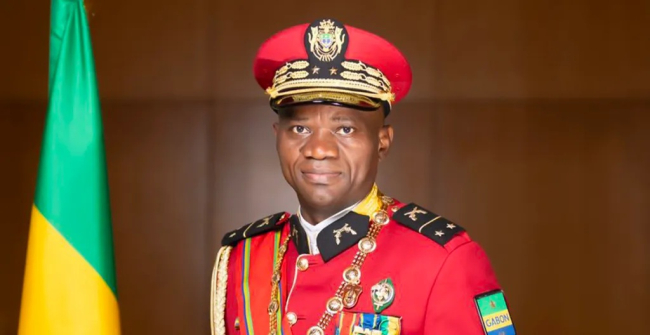
The Gabonese opposition diaspora in France has become politically influential. Diasporic actors criticize the Ali Bongo regime and the weak organisation of the Gabonese opposition. They could change the political destiny of the country.
The Potential of Digital Technologies for Centralized Electricity Systems in Sub-Saharan Africa
Affordable and reliable electricity access is a prerequisite for the economic development of sub-Saharan Africa.
France’s incoherent China policy confuses partners
On 21 July 2020, French Minister of Economy and Finance Bruno Le Maire participated remotely in the High Level Economic and Financial Dialogue with Chinese Vice Premier Hu Chunhua.
Prospects of a Hydrogen Economy with Chinese Characteristics
This study assesses the prospects of a hydrogen economy with Chinese characteristics. Against the backdrop of an escalating US-China trade war and the ongoing novel coronavirus (COVID-19) pandemic, key Chinese stakeholders become increasingly interested in moving the hydrogen economy agenda forward.
The Karlsruhe Court Judgment: A Thunderclap from a Clear Sky?
In its judgment of 5 May 2020, the German Federal Constitutional Court in Karlsruhe questioned the conditions under which the European Central Bank (ECB) had adopted a Public Sector Purchase Programme (PSPP), thus contradicting the position taken by the Court of Justice of the European Union in the same case.
Should We Forget about the Asia-Africa Growth Corridor?
The Asia-Africa Growth Corridor (AAGC), an Indian-Japanese collaborative vision regarding development, connectivity and cooperation between Asia and Africa, was announced in 2017.
L’inégalité du Collège électoral aux États-Unis : comment réparer la démocratie américaine ?
Since the start of the 21st century, the flaws of the Electoral College, which completes the election process of the president of the United States by indirect universal suffrage, are the target of stronger than ever criticism.
Technology Strategies in China and the United States, and the Challenges for European Companies
As international relations are increasingly reorganized around the US-China rivalry, the tensions between these two great powers are shaping a growing number of sectors, and the exchange of sensitive technologies in particular. This is a critical issue for European companies today.
German Economic Policy during the Corona-crisis. How Germany Intends to Support its Economy
Compared with other European countries, Germany’s management of the COVID-19 crisis has been efficient. Its health system has successfully coped with the challenge of the fight against the pandemic, the impact on employees has been mitigated thanks to allowances dedicated to furlough leave, business aids were important and quickly available, the government has been responsive.
The Renovation Wave: A Make or Break for the European Green Deal
European buildings are old and too often inefficient, past policies have not delivered and the amount of investment into energy efficiency must be scaled up dramatically to meet the 2030 targets and ultimately, the carbon neutrality objective.
The American Elections and Beyond
The next few years will be tumultuous ones in the United States. The dependency of foreign policy on domestic policy is unlikely to diminish. Whether in the rivalry with China or the predominance of Israeli interests in Middle East policy, for example, it is hard to imagine Biden taking a big step backward. Many Europeans want to believe that a victory by Obama’s former vice president will signal a return to the good old days of transatlantic consultation and multilateralism.
One Year of Zelensky’s Presidency: One Step Forward, One Step Back
The election of Volodymyr Zelensky as president of Ukraine created very high expectations in the society.
Turkey-China Relations: Ambitions and Limits of the Economic Cooperation
At first glance, China and Turkey have many interests to cooperate. The deployment of the Chinese Belt and Road Initiative (BRI), Turkey's colossal investment and financing needs, as well as President Erdogan's mistrust of the West, appear as many converging interests. Yet economic cooperation between the two countries is struggling to achieve its full potential. Political differences persist, particularly the question of the Uyghurs.
What Would Suga’s Indo-Pacific Strategy Look Like?
With the resignation of Prime Minister Abe, the future of Japan’s Free and Open Indo-Pacific strategy has been called into question. Abe was indeed one of the key architects of this vision and he devoted enormous energy to flesh it out.
Thirty Years after its Reunification, Germany's “European Moment”?
On October 3, 1990, after forty years of division, Germany once again became one state. Less than a year after the fall of the Berlin Wall, on November 9, 1989, the territories of the German Democratic Republic (GDR) became part of the Federal Republic of Germany (FRG) under Article 23 of its Basic Law.