

Media Interventions
Our researchers intervene in the public debate and bring their light to the French and international media. Discover all their media interventions.



Without a Pact with Mercosur, the EU risks leaving China free in South America
The agreement EU-Mercosur It has been a banner of the recent protest by French farmers, who denounced unfair competition on the part of South Americans. However, if Paris closes the door to this pact, the way will be left clear to China, warn politicians and analysts consulted by EFE.
Iran’s allies are attacking the West. What happens next?
From Jordan to Lebanon to the Red Sea, attacks on U.S. and European interests are increasing.Tensions are rising in the Middle East after Washington vowed to respond to the drone attack that killed three American soldiers on the 28th of January, sponsored by Iranian-backed militants.
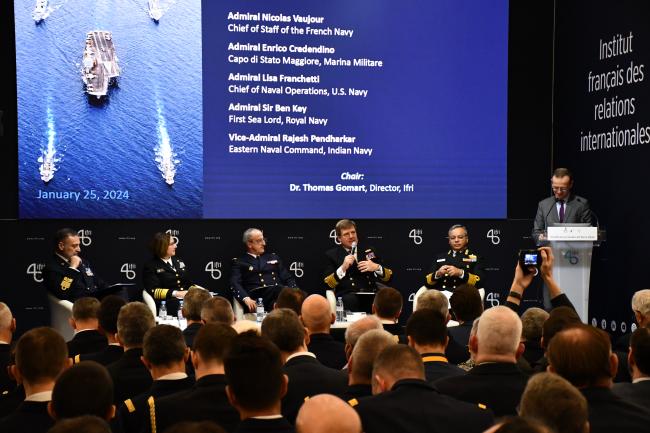
Replay - Paris Naval Conference 2024: The Evolving Role of the Carrier Strike Group
This second edition of the Paris Naval Conference, bringing together high-level speakers from France, the UK, the USA, Italy and India, and organized by Ifri and the French Navy, aimed to redefine the role of CSGs in a changing strategic context, particularly in terms of the future threats it faces.
Italy's BRI withdrawal shines light on ties ahead of EU-China summit
PM Meloni makes move after calculating that membership failed to yield benefits.Italy's decision to pull out of China's Belt and Road Initiative has placed a spotlight on the relationship between the two countries and comes at an awkward time for Beijing, a day ahead of a summit it is holding with Europe.
Cracks In Western Support Pose New Challenge For Ukraine
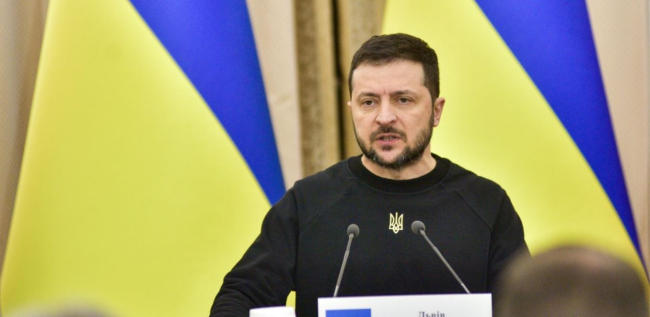
Ukraine faces growing diplomatic headwinds after its summer counter-offensive against Russia's forces faltered, with aid from vital backers in the United States and EU being increasingly called into question.

Israel-Hamas War Exposes Divisions in France
In a polarized France, President Emmanuel Macron must navigate the conflict in a way that doesn’t further inflame the public or advantage his political rivals.

'Joe Biden's economic record is not a good enough argument for the Democrats to win the next election'
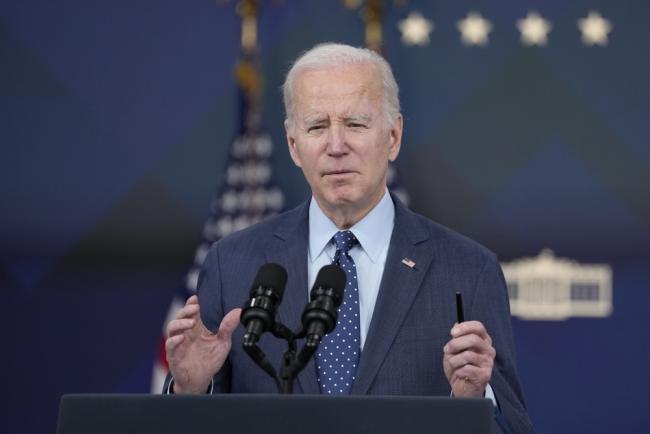
As the incumbent US president prepares to run for a second term, Americans are not convinced that the Biden administration has improved their lives, despite flattering macroeconomic data, Stéphane Lauer writes.


France in the World - Perspective from Paris on Geopolitics and Defence
France plays a major role in Europe as one of the leading nations of the European Union, plus being a founding member of NATO and a key Ally. Nevertheless French governments have often been critical of the Alliance through the years.


France Links Conversation in Russian to Star of David Graffiti
After more than 200 blue stars were stenciled on buildings in and around Paris, prosecutors say they are investigating whether a foreign intermediary paid a couple to spray paint them.
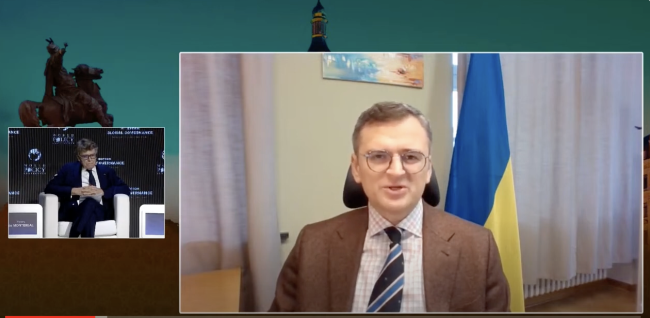
War in Ukraine: what prospects after the counter-offensive?
Interview between Dmytro Kuleba, Ukrainian Foreign Minister, and Thierry de Montbrial, Founder and Executive Chairman of the French Institute of International Relations, Founder and Chairman of the World Policy Conference.
Italy's Belt and Road blues highlight hopes for rival India-Europe corridor
Ship-to-shore cranes tower high above choppy waters and colorful containers on the Ligurian coast of northern Italy. Sailors coming in to dock are greeted with a smorgasbord of transportation industry names and logos, from Denmark's Maersk to Taiwan's Evergreen. Harder to spot is COSCO, the jewel of China's maritime business, which owns a 40% stake in the cutting-edge Vado Port System at Vado Ligure.
Gaza-Israel conflict: Opportunity and risk for Russia's Putin
The conflict between Hamas and Israel is both an opportunity and a risk for Russian President Vladimir Putin, who has been mired in pressing his invasion of Ukraine for the past 19 months.

Gaza-Israel conflict: Opportunity and risk for Russia's Putin
The conflict between Hamas and Israel is both an opportunity and a risk for Russian President Vladimir Putin, who has been mired in pressing his invasion of Ukraine for the past 19 months.

Gaza-Israel conflict: Opportunity and risk for Russia's Putin
The conflict between Hamas and Israel is both an opportunity and a risk for Russian President Vladimir Putin, who has been mired in pressing his invasion of Ukraine for the past 19 months.

The Nuclear Dispute Driving a Wedge Between France and Germany
The two nations have opposing ideas about atomic energy, threatening the EU’s transition away from fossil fuels.

Pétrole : l’attaque du Hamas contre Israël nourrit des craintes autour de l’Iran
Les Etats-Unis, alliés traditionnels d’Israël, pourraient être amenés à encadrer plus strictement l’application des sanctions contre Téhéran, pays qui représentait 4 % de l’offre mondiale de brut en 2022. Voire à les durcir s’il est avéré que l’Iran a aidé à planifier les actes terroristes du Hamas.

Can Politics and Business Align? Policy, Transparency and Logistics
Politics and business can be intertwined in many ways but also conflicting. This is especially the case regarding foreign investments and possible influence by third countries in Europe, for example.

Macron is not giving up France's role as a Pacific player
President offers 'alternative' for states squeezed between U.S. and China

Long-Term Operation Of Nuclear Plants Vital For Future Of Grid, Says Expert
Argument that reactors are expensive "does not hold any more", conference hears. Nuclear plants will be needed for the future stability of Europe’s grid, Marc-Antoine Eyl-Mazzega said.


After the success of its army in Mozambique, Rwanda expects economic rewards
Companies affiliated with the powerful Crystal Ventures holding company, the financial arm of Kigali's ruling party, are already present in Mozambique.

Ifri, a foundation recognized as being of public utility, relies largely on private donors – companies and individuals – to guarantee its sustainability and intellectual independence. Through their funding, donors help maintain the Institute's position among the world's leading think tanks. By benefiting from an internationally recognized network and expertise, donors refine their understanding of geopolitical risk and its consequences on global politics and the economy. In 2026, Ifri partners with over 90 French and international companies and organizations.
Titre container
In the News
Titre en savoir plus
View our latest interventions in the press
View our latest interventions in the press
Titre en savoir plus
You would like our research fellows to participate in interviews and debates with your media channels
You would like our research fellows to participate in interviews and debates with your media channels