





Fragilized Clean Tech Supply Chains, Weakened Industries: the EU under Pressure

Practical information
Accessibility
Themes and regions
Related centers and programs
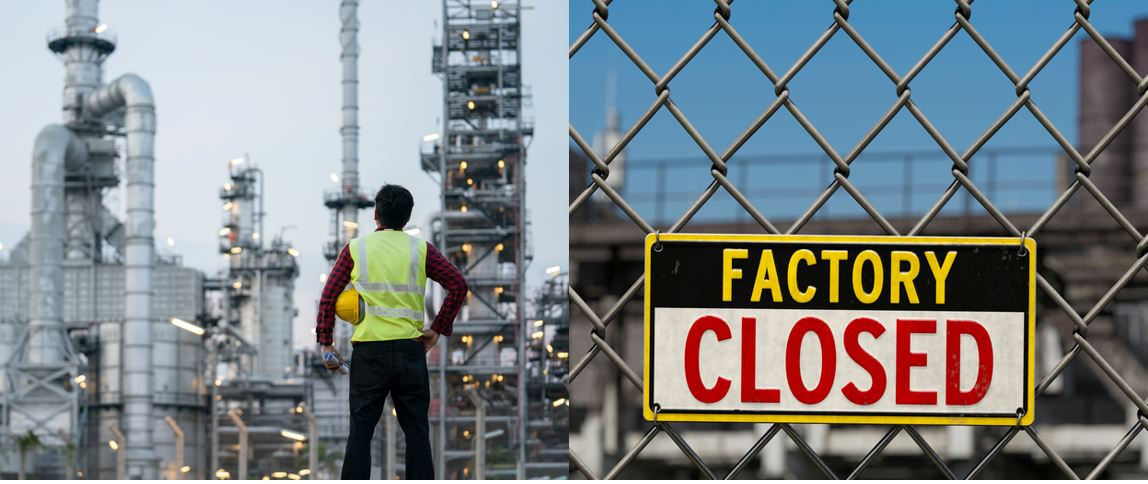
The Clean Industrial Deal will need to square the circle of industrial resilience, competitiveness, reindustrialization, innovation and decarbonization. The circular economy act can be paramount in this respect, alongside winning the battle of the electricity system expansion and decarbonization, and of supplying competitive low carbon molecules.
Stakes are high given that tacitly reducing industrial activity to reach climate targets would be a serious mistake in our brutal world and would lead to irreversible vulnerabilities and political and economic damage. New electric vehicles (EV) value chains appear to be much more fragile than thought while external pressures grow. What do next level policies look like, and what decisive actions are needed in a context of budget constraints and systemic economic challenges in order to respond to the urgency of the domestic economic situation, and sharply deteriorating external environment?
Program
Welcome & Coffee (8:30 am - 9 am CEST)
Introduction (9 - 9:10): The energy transition in times of war and geoeconomic confrontation
Marc-Antoine Eyl-Mazzega, Director, Center for Energy and Climate, Ifri
Panel 1: Winning the battles of a decarbonized and competitive electricity system and low carbon molecules uptake (9:10 – 10:15)
Paul Voss, Director General, European Aluminium Association
Jan Hensmans, Adviser external relations at Economie-Directorate General Energy, Belgium Federal Public Service
Pierre-Laurent Lucille, Chief economist, Engie
Gabrielle Gauthey, CEO representative to the EU institutions, TotalEnergies
Mariusz Kawnik, Energy counsellor, Polish Permanent Representation to the EU
Moderation: Diana-Paula Gherasim, Research fellow and Head of European Energy and Climate Policies, Ifri
Panel 2: Circular economy act – how to foster a more resilient, competitive and sustainable economy across all Member states? (10:20 – 11:30)
Diana-Paula Gherasim, Head of European Energy and Climate Policies, Ifri
Antoine Troesch, CEO, Demeter
Ilse Schoeters, Head of responsible sourcing, Glencore
Benoît Perreau, Markets & clients Director solid waste - Dep. VP plastic recycling, Veolia
Jan Tytgat, Director government affairs, Umicore
Moderation: Thibault Michel, Research fellow, Ifri
This event is public and will be held in English in a hybrid format (online or on-site in Brussels).
Contact
For additional information regading this event, please contact
Alexandra Bor, Center for Energy and Climate assistant: [email protected]
Find out more
The Troubled Reorganization of Critical Raw Materials Value Chains: An Assessment of European De-risking Policies
With the demand for critical raw materials set to, at a minimum, double by 2030 in the context of the current energy transition policies, the concentration of critical raw materials (CRM) supplies and, even more, of refining capacities in a handful of countries has become one of the paramount issues in international, bilateral and national discussions. China’s dominant position and successive export controls on critical raw materials (lately, germanium, gallium, rare earths processing technology, graphite, antimony) point to a trend of weaponizing critical dependencies.
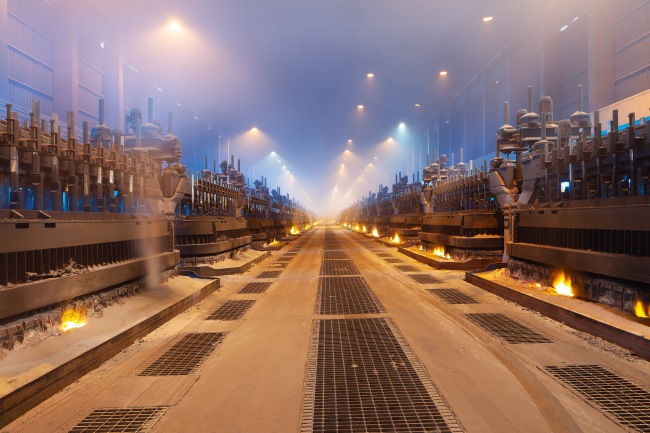
The Aluminum Value Chain: A Key Component of Europe’s Strategic Autonomy and Carbon Neutrality
The United States of America (US), Canada and the European Union (EU) all now consider aluminum as strategic. This metal is indeed increasingly used, especially for the energy transition, be it for electric vehicles (EVs), electricity grids, wind turbines or solar panels.

The Prospects of Indonesia’s Nickel Boom Amidst a Systemic Challenge from Coal
Indonesia is a country that is booming economically and demographically. This not only matters for regional, political, and energy security, but also increasingly, for the world’s energy transitions, due to Indonesia’s large metal reserves, as well as its equally important coal consumption in industry and for power generation.
Over the last 20 years, Indonesia’s economy has been characterized by very dynamic growth, massive increases in its electricity demand, and coal consumption and exports. Hence, its greenhouse gas (GHG) emissions are on a steady growth trajectory, although the country has committed to lowering them by 32% (unconditional) or 41% (conditional) by 2030.
With its Organization for Economic Cooperation and Development (OECD) membership application, occurring in the context of global energy transition requirements and geopolitical confrontations, Indonesia is today at a crossroads.
Related Subjects
Other events

France-Ukraine Forum 2026
More than four and a half years after the start of the full-scale war launched by Russia against Ukraine, the 2026 France-Ukraine Forum will bring together policymakers, experts, academics, and civil society representatives from both countries to discuss three main topics: the formats and conditions for a lasting diplomatic settlement; Ukraine’s Euro-Atlantic integration, encompassing both the EU accession process and closer ties with NATO; and the societal transformations of postwar Ukraine, as well as its prospects for reconstruction.

The EU in a World of Economic Warfare: Trade, Geopolitics, and the Battle for Economic Sovereignty
The international trading system has become a primary theatre of geopolitical competition. Tariffs, sanctions, and technology controls have replaced dialogue as the default instruments of economic relations.

The Road to 27 Electrification Action Plans: Planning and Investing in Europe’s Electric Future
The European Commission’s Electrification Action Plan places the continent on an electric path to structurally reduce dependence on fossil fuel imports and boost the energy transition in industry, transport and buildings.