


Quest for Strategic Autonomy? Europe Grapples with the US - China Rivalry

Building on the 2020 European Think Tank Network on China (ETNC) report, which assessed Europe’s positioning amid the strategic rivalry between the United States and China, this edition re-examines the geopolitical landscape in light of the Covid-19 pandemic, Russia’s war in Ukraine and Donald Trump’s return to the White House. This report features 22 national chapters and one dedicated to the EU, analysing the evolution of Europe’s relations with Washington and Beijing, the range of approaches to dealing the US-China rivalry and how these are expected to evolve.
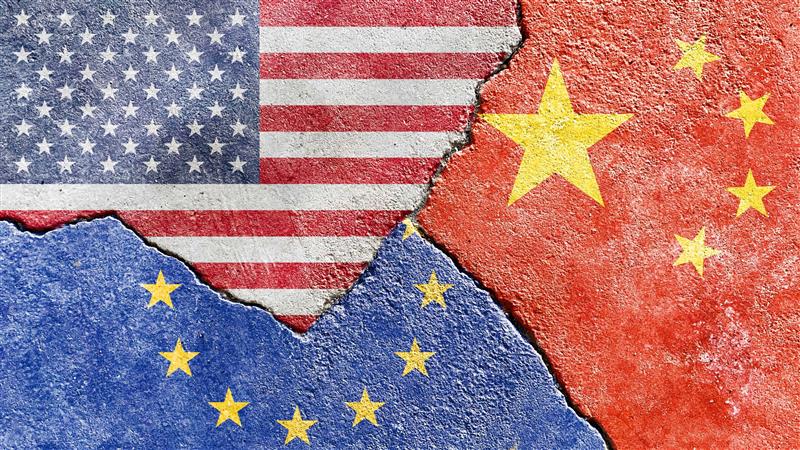
The 2025 ETNC report underscores how these developments have compelled Europe to reevaluate its strategic positioning. This new geopolitical context has broadened the debate on strategic autonomy across most countries surveyed. Although the pace and ambition of this shift differ, support for strategic autonomy is growing in most of these countries. At the heart of this discussion is the shared understanding that Europe must reduce its reliance on external powers in key areas such as security, economy and technology.
On the security front, defence cooperation with the US has deepened across most of the countries featured in this report, particularly in response to Russia’s invasion of Ukraine. However, the return of Donald Trump casts a shadow over this momentum, reviving concerns about the long-term prospects of transatlantic ties. At the same time, there is growing unease in European capitals about China’s impact on European security –fuelled in part by the perception that Beijing has enabled Russia’s war efforts in Ukraine–. Together, these developments are transforming the debate on European strategic autonomy into a more urgent and concrete policy agenda.
Economic security has also become a central focus, reflected in stricter national regulations and enhanced EU-level policy coordination. Nevertheless, national approaches to economic security –and the reassessment of dependencies on China and the US in particular– remain inconsistent, with some countries showing signs of scepticism or only limited engagement. The return of Trump to the White House has not been perceived uniformly across European capitals. Likewise, the ongoing reappraisal of economic vulnerabilities in relation to Beijing does not necessarily diminish the importance of China as a major market and partner in addressing global challenges. However, it adds to long-standing tensions over the fairness of trade with China, particularly as Europe’s trade deficit continues to widen. These concerns are now compounded by renewed US protectionism. Although the US remains a significant trade and investment partner, and recent years have seen general continuity in Europe’s economic relations with both the US and China, this apparent stability may be unsettled by the Trump Administration’s aggressive foreign and trade policy and the implementation of the EU’s emerging economic security agenda. The overall trend can therefore be summarised as increased distrust vis-à-vis the US, cautious and selective re-engagement with China, and a greater willingness to pursue strategic autonomy.
FRANCE: BETTING ON EUROPE WHILE MANAGING US-CHINA COMPETITION
Ifri’s John Seaman and Marc Julienne write that, as transatlantic relations enter a moment of profound crisis, France’s quest for a more autonomous, sovereign Europe now faces a moment of truth. For Paris, strategic autonomy was meant to be understood as a strategy to make Europe a more capable partner, better equipped to act on its own when necessary, but nevertheless firmly couched within a strong transatlantic partnership. As the bedrock of values and interests that have characterized the “West” is crumbling under Donald Trump’s leadership and the weight of American unilateral self-interest, France is not moving closer to Beijing, but rather seeing Washington move further away from French and European core interests. Indeed, Paris and Beijing have profound competing interests in the fields of trade and investment, not to mention antagonistic views of democracy and rules-based international order. Paris has looked to strengthen the EU as a global player while shifting towards deepening strategic partnerships with regional powers beyond the US-China dichotomy, such as Japan and India.
Discover this and all ETNC reports on the network's website: https://etnc.info/

Available in:
Themes and regions
Share
This page contains only a summary of our work. If you would like to have access to all the information from our research on the subject, you can download the full version in PDF format.
Quest for Strategic Autonomy? Europe Grapples with the US - China Rivalry

John SEAMAN
Research Fellow, Center for Asian Studies, Ifri

Marc JULIENNE
Director, Center for Asian Studies, Ifri


Center for Asian Studies
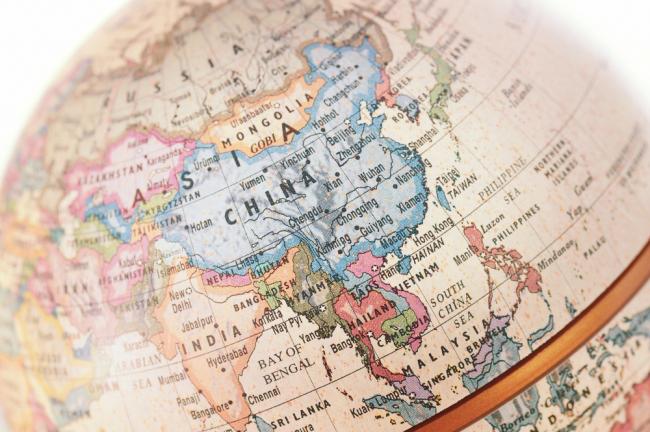
Asia is a nerve center for multiple global economic, political and security challenges. The Center for Asian Studies provides documented expertise and a platform for discussion on Asian issues to accompany decision makers and explain and contextualize developments in the region for the sake of a larger public dialogue.
The Center's research is organized along two major axes: relations between Asia's major powers and the rest of the world; and internal economic and social dynamics of Asian countries. The Center's research focuses primarily on China, Japan, India, Taiwan and the Indo-Pacific, but also covers Southeast Asia, the Korean peninsula and the Pacific Islands.
The Centre for Asian Studies maintains close institutional links with counterpart research institutes in Europe and Asia, and its researchers regularly carry out fieldwork in the region.
The Center organizes closed-door roundtables, expert-level seminars and a number of public events, including an Annual Conference, that welcome experts from Asia, Europe and the United States. The work of Center’s researchers, as well as that of their partners, is regularly published in the Center’s electronic journal Asie.Visions.
European Think-tank Network on China (ETNC)
The European Think-tank Network on China (ETNC) is a gathering of China experts from a selection of European research institutes. It is devoted to the policy-oriented study of Chinese foreign policy and relations between China and European countries as well as China and the EU. It facilitates regular exchanges among participating researchers with a view to deepening the understanding within the European policy and research community and the broader public of how Europe, as a complex set of actors, relates with China and how China’s development and evolving global role is likely to impact the future of Europe. The network’s discussions and analyses take a decidedly ‘bottom-up’ approach, accounting for the various aspects of bilateral relations between European countries and China, and the points of convergence and divergence among EU member states in order to examine EU-China relations in a realistic and comprehensive way. The views presented in ETNC reports are the sole responsibility of the signed authors and do not in any way represent the views of all members of the ETNC, its participating institutions, nor the institutions with which the authors are affiliated.

The Oceania Factor in France’s Evolving Indo-Pacific Strategy
This paper examines the two-way relationship between France’s Indo-Pacific strategy and developments in Oceania. Oceania was not a priority in the initial years of France’s Indo-Pacific strategy, as the region was largely treated as secondary to major strategic hotspots and key partnerships, while overseas territories were primarily handled as domestic issues and recipients of a top-down strategy.
France’s View: From Diplomacy to Public-Private Action
France has emerged as the EU’s IMEC forerunner, combining port infrastructure, diplomatic alliances and public-private cooperation. With Marseille Fos at its core, the country brings a strategic hub for logistics, energy and digital connectivity to the corridor.

Trump II, the Crisis of the Rules-Based Order and Europe’s Indo-Pacific Strategy
This article examines the implications of Trump II for Europe’s engagement in the Indo-Pacific. The piece contends that Trump II is accelerating the erosion of the rules-based order and undermining the relevance of the Free and Open Indo-Pacific (FOIP) concept, while forcing Europe to refocus on its own continental security amid US retrenchment. Paradoxically, these very constraints create conditions for a more autonomous, pragmatic, and explicitly interest-driven European engagement in the Indo-Pacific, rather than outright withdrawal.

China and Trade in Critical Raw Materials (CRMs)
Critical raw materials (CRMs) have become central features of a new dynamic in global power politics, with China now wielding considerable leverage. Amid rising regional and global uncertainty, resource security is back in the spotlight as a key determinant of sovereignty and national security for Europe, its allies and its partners. The very survival of key, even vital industries, from automotive to aerospace to health to energy to defense, is at stake.