3391 publications
The European Union as an emerging actor in space security?
Defence and Foreign Policy Under President-elect François Hollande
We know little about François Hollande's stance on wider foreign and defence policy issues. Though we are unlikely to see major changes from his predecessor, some clues from his successful campaign suggest that President-elect Hollande will adopt a more European and Gaullist approach.
France's Partner on a Pedestal: A View Driven by Pragmatism and Envy
This paper brings together contributions from a cross-section of EU member states and the Gallup World Poll survey on the question of how Germany is being viewed at this time of economic and political crisis.
France's Partner on a Pedestal: A view driven by pragmatism and envy
Since the fall of the Berlin wall and the end of the old world order, the French have, in their collective consciousness, associated Germany with the question of their own leadership. The awareness that Paris’ political and diplomatic influence on the international stage has been eroding did not lead to resignation, but rather to an aspiration to maintain strong influence on European integration and, in this context, to be on a par with Germany. The financial crisis has helped resurrect the spectre of a symmetrical Franco-German relationship, as it has become more evident that both countries have been drifting apart in terms of economic performance. In this regard, the discourse about Franco-German cooperation has to be understood as multi-tiered and as a reflection of a more general French malaise. Confidence and reliability generally mark French perceptions of its neighbour, but misunderstandings and irritation concerning the political system and Berlin’s expectations vis-à-vis European politics do occur.
Ukraine at the Crossroads: Between the EU DCFTA and Customs Union
After serious decline in the 1990s, Ukraine's economy finally started its recovery and systemic reform in early 2000. While the economy rapidly grew by 2008, its transformation remained unfinished. Ukraine has three possible roads to development.
China and Cleaner Coal: A marriage of necessity destined for failure?
For China, coal is a crucial source of abundant, indigenous and affordable energy and is a pillar of economic and social stability. From a logic of energy security, and because the industry itself maintains a formidable political presence through the sheer fact of its history and size, this resource will continue to play a central role in the country’s energy mix. But in order to respond to the growing need to reduce the burden of coal use on the environment and the Chinese population, and to prevent catastrophic climate change, both Chinese leaders and the industry itself have faced a certain reality - coal must become cleaner.
Turkey's re-imagined neighborhood policy after the Arab Spring
Joshua W. Walker was a speaker at the international conference on “The international consequences of the Arab Spring” held at Ifri on March 13th, 2012. This paper is a follow up on his oral intervention.
South Africa and the Arab Spring: opportunities to match diplomacy goals and strategies
This paper highlights how the Arab Spring magnified a two-dimensional gap in South Africa’s foreign policy. First that South Africa does not have a vision which reconciles demands for achieving the goals of protecting human rights, sovereignty, and multilateralism; second, that its strategies do not meet set goals. The paper then provides tentative explanations to this gap. It ends by elaborating what in the “African Awakening” and in the midst of the Arab Spring are opportunities for South Africa to overcome this gap.
Gas Routes to Europe: Real Needs and Political Jockeying
The Energy Roadmap 2050 released by the Commission in December 2011 says it all: we will need more gas until 2030. Gas represents the default solution for a transition to an energy system with less GHG emissions. It also has great value as a back-up for intermittent renewable power generation. Therefore, stating that Europe still needs large quantities of gas means checking if supply volumes are available to satisfy growing demand.
New Economic Development Opportunities for Taiwan in the Post-ECFA Era
The main aim of this paper is to analyze the new opportunities for Taiwan’s ongoing economic development in the era following the signing of the Economic Cooperation Framework Agreement (ECFA) between Taiwan and China.
Cruise Missiles and NATO Missile Defense: Under the Radar?
The purpose of this paper is to demonstrate that the threat of cruise missile proliferation is as equally challenging to NATO as the threat of ballistic missiles. Over the last two decades, the emergence of cruise missiles and UAVs as a threat has been slow, and governments, particularly the United States, have invested much less in cruise missile defenses than in ballistic missile defenses.
Prospects for 6-party talks: Nuclear weapons are a means of survival for Kim Jung Un
The most imperative duty of the third-generation Kim Jong Un is the “survival” of North Korea. This will require not only a smooth transfer of power from his father but also shoring up the national economy. This is because I feel the current regime will sooner or later come to the end of its tether unless North Korean economy breaks free of foreign dependence and begins to grow autonomously.
The Fukushima Nuclear Accident and a Long-Term Energy Vision for Japan
Ifri and the Canon Institute for Global Studies are launching a series of policy papers presenting the analyses of senior Japanese researchers on how the triple disasters that hit the archipelago last March have impacted Japan's economic, environmental and energy policies as well as country's crisis management system.
The European space industry, an endangered species?
The Democratic Party Under Obama and Beyond
The Democratic Party relies today on very different segments of the U.S. electorate, making it impossible for a Democratic President to sustain long-term public support. In the context of the current campaign, Prof. Nicol Rae provides an analysis of the Party's electoral strategy, since 2008 and beyond 2012.
Greece: How a State in Crisis Manages Its Migration Crisis
In the past 2 years, Greece has experienced its most severe economic crisis of the post-World War II period. While it appeared at first not to have been hit particularly hard by the global economic recession that started in 2008, the effects of the recession and the acute internal crisis of public finances became visible in late 2009.
A Victorious Anti-insurrection Strategy? The Insurrections of 2010 in the Jonglei State of South Sudan
On May 16 2010, a few weeks after its first elections, the government of the semi-autonomous province of South Sudan (GoSS) had to confront two rebellions in the Jonglei Province. South Sudan may appear unified behind the banner of the SPLM/A, but in fact it is nothing of the kind.
Consumption in an Uncertain Environment: The Paradox of the African Middle Classes
Three hundred million people belonging to the middle classes of Africa; three hundred million of potential consumers: an image of this kind is enough to make many an entrepreneur start dreaming. In fact, whereas for many years Afro-pessimism has dominated public opinion in the West, what seems to be the new trend in fashion, in both the media and economic circles, is now an exaggerated Afro-optimism.
Rare Earths and the WTO: Tougher case than it looks
Deepening their partnership, Ifri and the Canon Institute for Global Studies (CIGS) are launching a series of op-eds, written both by Ifri and CIGS experts. This new series aims at providing the European and Asian public with original and different visions on the rapidly evolving international affairs.
Dancing with the Bear: Managing Escalation in a Conflict with Russia
"Escalation", the tendency of belligerents to increase the force or breadth of their attacks to gain advantage or avoid defeat, is not a new phenomenon. Systematic thought about how to manage it, however, did not crystallize until the Cold War and the invention of nuclear weapons.
Post-War Sri Lanka: Roads to Reconciliation
The Center for Asian Studies of the French Institute of International Relations (Ifri) organized on 9 December 2011 a round table discussion regarding the future of the ongoing reconciliation process in Sri Lanka, entitled ‘Post-War Sri Lanka: Roads to Reconciliation'.
Jewish Activism in the United States: Is J Street a Passing Phenomenon?
Created in the Fall of 2008, the J Street movement seeks to represent those in the U.S. Jewish community who would like Washington to be more active in supporting a lasting peace in the Middle-East.
February Gas Pains in Europe - Coping Is Not Managing: the Italian Response to the Gas Crisis
The recent cold spell that gripped much of Europe was a test for the European gas network. In many countries temperatures fell dramatically to -10°C during the first week of February, even dropping a bone chilling - 22°C in some places.
As the European Commission(s Director General for Energy Philippe Lowe said during a speech at our Annual Conference last Thursday (February 16) in Brussels, Europe(s gas network was able to respond to the sharp increase in demand despite a simultaneous drop in supply from Gazprom.
The Recent Blossoming in Relations between China and Madagascar
The question of the Chinese presence in Madagascar is very accurate. It is an opportunity for us to portray the sino-madagarscan relations.
The Expanding Chinese Footprint in Latin America: New Challenges for China, and Dilemmas for the US
The physical presence of China in Latin America is entering a phase of significant expansion, as the logical consequence of the rapid growth over the past decade of its trade, investment, and infrastructure for doing business in the region.
The Economic Opportunities and Constraints of Green Growth: The Case of South Korea
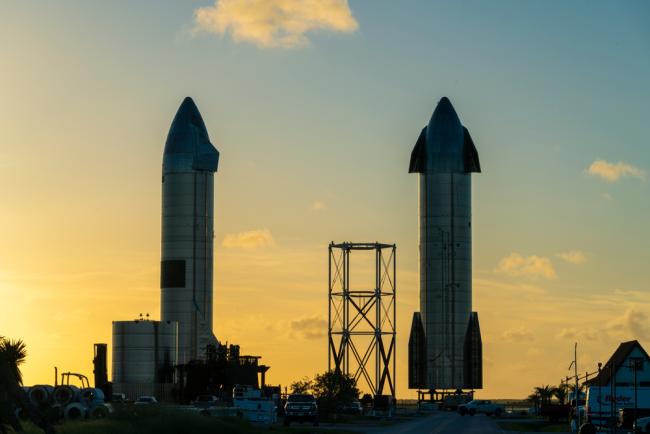
2012, a turning point for Europe in space
In 2012, several crucial decisions lie ahead, most notably at the ESA Ministerial Council next fall and regarding the status of space within the next MFF of the EU. These will reveal the degree of political will to pursue an ambitious ESP in times of economic and financial constraint.
Helicopter Warfare: The Future of Airmobility and Rotary Wing Combat.
Military helicopters have evolved into technologically sophisticated weapon systems. Originally designed to counter Soviet armor, attack helicopters now have to cope with a wide spectrum of threats, some of them bringing them back to their counterinsurgency roots.
Migration Policy and Irregular Workers in the United Kingdom
While public opinion and European governments usually present migrants as an outside threat for European societies, in this article, Danièle Joly and Khursheed Wadia focus on the local level to analyze the issue of migrants, in particular irregular workers, living in the UK.
Racial integration - Lessons from the U.S. Army
On Friday, the 13th of January, 2012, the Center for Migrations and Citizenship welcomed 3-star U.S. Army General Bostick as a speaker of its international conference: "Business and the State: Migration Policies, Diversity and Integration".
Linking Business and Migration Policy in the USA
On Friday, the 13th of January, 2012, the Center for Migrations and Citizenship welcomed Jesus 'Chuy' Garcia - Cook County Commissioner, Chicago (USA) - as a speaker of its international conference "Business and the State: Migration Policies, Diversity and Integration".
The 2012 State of the European Union: Austerity and Solidarity in Europe
Decoding Russia's WTO Accession
As Moscow and the WTO Member States have finally established terms on which Russia will accede to the organization, thoughts turn to the impact of this historic event and the potential for it to play a role in the modernization of the country’s economy. The process has been long, with Russia having to negotiate bilateral accession protocols with the more than fifty WTO member states.
Doors Wide Shut? An Update on FDI Regulations in China
The fears of a rise in economic nationalism in China have been fueled by a number of recent moves, such as changes in the law on indigenous innovation or the enactment of a national security review (NSR) regulation for M&As by foreign enterprises. The objective of the current paper is twofold: First is to provide an update on the investment environment in China in order to determine whether or not these provisions reflect a move in the direction of more protectionism, and second is to suggest ways for European countries to level the playing field for their firms wishing to invest in China.
Internet Companies in China: Dancing between the Party Line and the Bottom Line
With over 500 million Internet users and 900 million mobile-phone subscribers by mid-2011, the Chinese Internet is an enormous market that has produced the spectacular rise of many Chinese Internet companies and attracted substantial foreign investment. This paper argues that, despite a great degree of liberalization of its market over the past 15 years, the Chinese Internet remains authoritarian in nature. Not only did the central government actively shape the infrastructure and rules of China's information superhighways, but recently it has also vigorously built state-controlled Internet companies, including a national search engine.
Le conservatisme texan
Texas has its own particular brand of conservatism as a consequence of its history and geography. It emphasizes individual responsibility, distrust of government, strict morals and economic pragmatism. Its impact is important both on the state and federal level.
Libya: Old or New Picture? Risks of political uncertainty for the gas and oil business
Libya has an opportunity to get back on track. The end of embargoes and sanctions after the conclusion of the “February Revolution” is favoring a fast production growth.