





3463 publications
Saudi Arabia’s Policy in Africa : Vectors and Objectives
Until recently, Saudi Arabia was the country out of the Gulf countries that had the greatest number of diplomatic missions in Africa (27[1]).
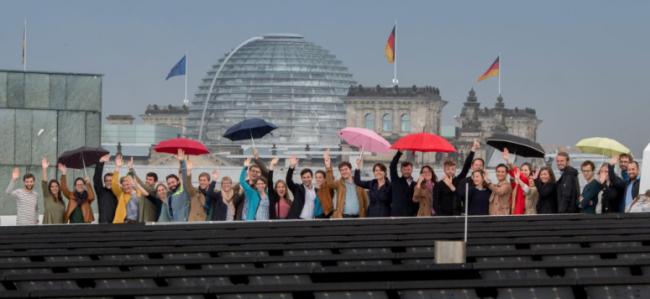
European Identity/ies
Europe is divided in many ways. Brexit and rising nationalism are striking examples of this existing fragmentation. But what unites us Europeans? The Franco-German Future Dialogue 2019 has met fellow Europeans in thirteen member states of the European Union to discuss questions of identity. Do farmers feel European? What role do languages play? Do European communities exist? Does the "Fridays for Future-Generation" feel European? How diverse are the institutions?

China and the New Geopolitics of Technical Standardization
China is rapidly emerging as a formidable power in the development of technical standards, transforming the international standard-setting landscape and reintroducing an element of geopolitics into what are too often considered as benign, technical processes.

Europe in the Face of US-China Rivalry
Navigating the mounting tensions between the United States and China is a geopolitical minefield. Is Europe up to the challenge?
Sanctions and the End of Trans-Atlanticism. Iran, Russia, and the Unintended Division of the West
Sanctions have become the dominant tool of statecraft of the United States and other Western states, especially the European Union, since the end of the Cold War.
Civilian nuclear energy’s strategic dimension
French stakeholders in civilian nuclear energy are making a full diagnosis of the industry in order to cope with disappointments and lay down the conditions for relaunching programs for building reactors.

Korea in Africa: Between Soft Power and Economic Interests
Through development assistance and economic engagement, South Korea has sought to project itself as a different kind of partner for Africa. In reality, it is not so unique.
The Future of Europe in the Context of Sino-American Competition - Foreword
In this special issue of Politique étrangère devoted to the proceedings of the conference organized by Ifri on April 10, 2019, in the Grand Amphitheater of the Sorbonne, on the occasion of its fortieth anniversary, discover the speech by Bruno Le Maire, Minister of Economy and Finance.