

Politique étrangère
The European Union to Ukraine’s Rescue
Recent events have provided the opportunity for the rekindling of relations between Ukraine and the European Union.
Syria: Ankara versus Tehran?
Turkish leaders would like to turn their country into the leader of the Middle East. However, they are in competition with another of the region’s key players: Iran.
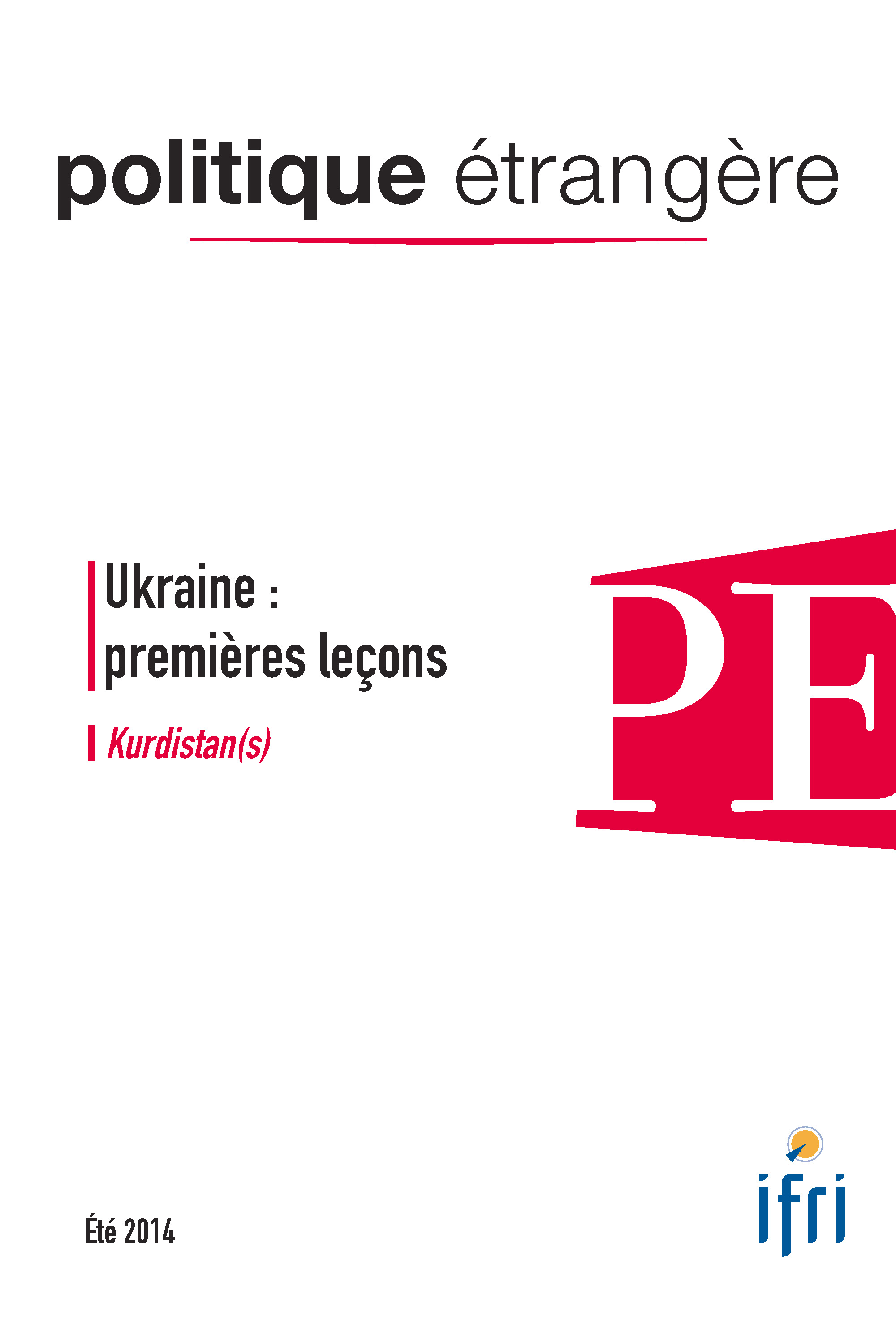
Kurds and the State Option
The Kurds in Iraq occupy what is practically a state. The Syrian civil war has resulted in the autonomization of the country’s Kurdish population. To Kurdish advantage, the JDP’s (Justice and Development Party – Turkey) ambiguous policy has cleared a new political space in Turkey.
Turkey: The Kurdish Movement in the “Peace Process”
While the peace process between the PKK (Kurdistan Workers’ Party) and the Turkish government is at a standstill, the latter is attempting to circumvent Turkey’s Kurdish actors by aligning itself with the KDP (Kurdistan Democratic Party), which dominates the Kurdish regional government in Iraq.
What Kurdish Policy Will the JDP Adopt?
The emergence of an autonomous Iraqi Kurdistan, the civil war in Syria, and the electoral ambitions of the JDP (Justice and Development Party) have led to new policy being formed by the Turkish government regarding the Kurdish issue.
The Paradoxes of the Kurdish Spring in Syria
Although the Kurdish population in Syria forms a very small and highly divided minority, the Kurds nevertheless have managed, thanks to the civil war, to gain relative autonomy in Northern Syria.
Ifri, a foundation recognized as being of public utility, relies largely on private donors – companies and individuals – to guarantee its sustainability and intellectual independence. Through their funding, donors help maintain the Institute's position among the world's leading think tanks. By benefiting from an internationally recognized network and expertise, donors refine their understanding of geopolitical risk and its consequences on global politics and the economy. In 2026, Ifri partners with over 90 French and international companies and organizations.