Thierry de Montbrial, Founder and President
|
|
|
|
|---|---|---|
Politique étrangère: vol. 75, n° 4 (Winter 2010)PUBLISHED ON JANUARY 7TH - Les murs : séparations et traits d'union - L'islam en Afrique, un acteur transnationalRead the Lectures |
Abonnement et vente au numéro : DILA Licence d'abonnement et pay per view : CAIRN Table of contents [afficher]
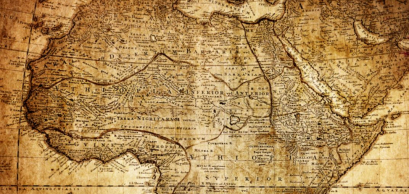
Editorial LES MURS : SEPARATIONS ET TRAITS D'UNION [afficher]Après deux décennies de rêve multilatéral, la vitalité neuve des « murs » nous rabat sur les classiques couples conflictuels. Le dossier que nous consacrons à ces coupures, à ces contingentements des espaces de conflit, décrit cependant toute la complexité de ces murs, la diversité de leurs statuts stratégiques. Ces murs sont en réalité tout sauf d'impénétrables séparations qui auraient pour fonction de régler, même provisoirement, les conflits dont ils sont l'emblème. [masquer] L'expansion des murs : le reflet d'un monde fragmenté ? - Frank NEISSE et Alexandra NOVOSSELOFF [afficher] Abstract LWalls built around the world since the end of the Cold War are intended as a response to “deterritorialization” and divisions that are in turn consequences of globalization and the emergence of new threats. Thanks to technological advances, these walls can now be “virtual”. However, regardless of their nature, they can only be an immediate fix – the short-term solution to a long-term problem. Walls contain problems but do not resolve them. Frank NEISSE travaille au sein du Secrétariat général du Conseil de l’Union européenne. Alexandra NOVOSSELOFF est chercheure-associée au Centre Thucydide de l’université de Panthéon-Assas (Paris II). Elle a co-écrit avec Frank Neisse le livre illustré Des murs entre les hommes (Paris, La Documentation française, 2007) dont les photos font l’objet de [masquer] From One Wall to Another: the Separation as Seen by the Israelis (2002-2010) - Cédric PARIZOT [afficher] Abstract Israel’s West Bank wall has not achieved its intended purpose of creating a territorial divide between Israelis and Palestinians. The wall is unfinished, yet its apparent length is deceptive because of the existence of various other checking devices (check points, electronic sensors, an earth-covered “trace road”, Israeli settlements, etc.). Based on an Cédric PARIZOT, anthropologue du politique actuellement affecté à l’Institut d’études et de recherche sur le monde arabe et musulman (IREMAM/CNRS), est chercheur associé au Centre de recherche français de Jérusalem (CRFJ). Il coordonne le pôle EuroMed de la Maison méditerranéenne des sciences de l’Homme. [masquer] United States/Mexico: from Intelligent Border to Internal Wall - Emmanuelle LE TEXIER (read the attached pdf) [afficher] Abstract During the campaign for US mid-term elections, an intense debate has taken place over immigration and security issues. The construction of the metal wall between the US and Mexico has become a symbol of a new management of security issues, de-bordering the border. The “smart border” has also been turned into an instrument of internal control and immigration management. Paradoxically, the increased militarization of the border has led to increased insecurity on the Mexican side and is confronted with a growing globalization and economic integration in the region. Emmanuelle LE TEXIER est maître de conférences à l’université Lille 3. Elle a notamment publié, avec Olivier Esteves et Denis Lacorne, Les Politiques de la diversité. Expériences anglaise et américaine (Paris, Presses de Sciences Po, 2010). [masquer] Cyprus: Between Partition and Reunification - Jean-François DREVET [afficher] Abstract From 1974 to 2003 the Cypriot border remained impassable. It remains to be seen whether Turkey’s new foreign policy will hasten unification. The US and the UK could play a more decisive role, but to do so their positions would have to be drastically modified. It is presumably up to the EU to help create a new legal and political framework within which the island can find a path to unity. Jean-François DREVET, normalien et agrégé de géographie, est ancien fonctionnaire européen. [masquer] Divided Cities: Minorities behind the Wall - Jon CALAME (read the attached pdf) [afficher] Abstract Divided cities (Belfast, Beirut, Nicosia, Jerusalem, Mostar, etc.) bear witness to more than the punctually unbearable aspect of inter-community conflict; they also represent the regrettable result of a wider failure of local governments, of the intolerance caused by sectarian entrepreneurs, or in short, the failure of the urban contract. Because of its high cost in both monetary and human terms, physical partition should be avoided, even though the mechanisms of such partition suggest that prevention is to some degree possible. Jon CALAME, urbaniste spécialisé sur les questions de division urbaine et de revitalisation post-conflit, a reçu le prix de Rome en 2009-2010. Il est un membre fondateur de l’Agence d’urbanisme Minerva Partners, et son dernier ouvrage s’intitule Divided Cities: Beirut, Belfast, Jerusalem, Mostar and Nicosia (Philadelphie, University of Pennsylvania Press, 2009). [masquer] ISLAM IN AFRICA, A TRANSNATIONAL ACTOR [afficher]Le citoyen du nord de la Méditerranée oscille souvent, dans sa vision du Sud, entre l’ignorance totale du développement de l’islam en Afrique subsaharienne et un réveil effaré face au diagnostic d’une « invasion »… L’affaire est, on s’en doute, plus complexe. Le fort développement de [masquer] Introduction - Alain ANTIL Islamic Financial Services in Africa - Mohamed FALL OULD BAH [afficher] Abstract The Islamic financial system has made its mark. Born from the awakening of political Islam, financial globalization gave Islamic banking a strong boost. Islamic banking is still poorly represented in Africa but it could easily undergo further expansion in the near future via investment banking and the accelerated development of microfinance. This would open up interesting prospects for sovereign wealth funds and foreign investment. Mohamed FALL OULD BAH, expert comptable et titulaire d’un doctorat en anthropologie, s’est spécialisé sur la finance islamique et la microfinance. [masquer] Madrassas in Mali – Bringing about Reform, Insertion and Transnationalizaton of Islamic Knowledge - Ferdaous BOUHLEL HARDY [afficher] Abstract This popular Sunni Islam, soon to be institutionalized, stems both from a rejection of the colonial order and a reform of Islamic education, as represented by madrassas, and has brought along new social norms and practices. Madrassas have been pivotal in the changes within Malian society, gradually creating a new Muslim identity – one that is open to exchange with other nations and that subtly influences Mali’s politics. Ferdaous BOUHLEL HARDY, chercheur au centre d’études et de recherches internationales (CERI/FNSP), prépare une thèse de doctorat en sociologie politique sur les mouvements de l’islam réformé au Mali, à Sciences Po Paris. [masquer] Tijaniyya – A Muslim Religious Order that Transcends Nations - Jean-Louis TRIAUD [afficher] Abstract Within Muslim societies, the strong presence of religion continues to be a determining factor in terms of civil and social organization; in this respect, religious orders play a key role. Influential from Maghreb to Western Sahel, Tijaniyya is one such religious order, and the most courted by politicians. The order’s positions and actions serve as unofficial guidelines for governments in the region, often transcending Jean-Louis TRIAUD, historien de l’Afrique et de l’islam en Afrique, professeur émérite à l’université de Provence et chercheur au Centre d’études des mondes africains (Cemaf/CNRS), est le fondateur et le directeur de la revue, puis série, Islam et Sociétés au sud du Sahara (Paris, Les Indes savantes). [masquer] Tijaniyya: Diplomatic Traditions of a Sufi Order - Bakary SAMBE [afficher] Abstract For Southern societies, religion remains paramount. It weighs increasingly in relations between states. Religion is also a significant channel of influence towards Sub-Saharan societies. In relations between Senegal and Morocco, for instance, the Tijani Sufi order is one such vector and has emerged as an undeniable actor. Similarly, religion is at the very heart of rivalry between Algeria and Morocco. Bakary SAMBE est chercheur à l’European Foundation for Democracy (Bruxelles) et associé au Groupe de recherches et d’études sur la Méditerranée et le Moyen-Orient (GREMMO/Maison de l’Orient et de la Méditerranée-université Lumière-Lyon 2). [masquer] SPECIAL REPORTS Arctic : a Strategic Crossover - Mathilde LE CLAINCHE et Frédéric PESME [afficher] Abstract Will the Great North be the battleground of 21st century territorial claims? The Arctic’s ever-changing landscape – as caused by global warming – is an environmental challenge, as well as the subject of territorial disputes relative to energy resources and international commerce. The partitioning of the Arctic’s potential resources to neighboring countries has been the topic of all-out disputes. If the current leaning towards militarization escalates to a new zone of conflict, regional strategic ambitions will have to be resolved by a specifically-created multilateral legal framework. Mathilde LE CLAINCHE, diplômée de l’Institut d’études politiques de Lille et de l’université du Kent, a travaillé sur l’Arctique dans le cadre de la Délégation aux affaires stratégiques, puis de l’Institut de recherche stratégique de l’École militaire (IRSEM). Frédéric PESME, colonel, est chargé de mission Amérique du Nord à la Délégation aux affaires stratégiques, ministère de la Défense. [masquer] Rivalry between India and Pakistan in Post-2001 Afghanistan - Isabelle SAINT-MEZARD [afficher] Abstract Afghanistan is the scene of a power struggle between Pakistan and India, with both countries attempting to protect their best interests in terms of security. India is determined to counter Pakistani influence, a task it has set out to accomplish through various programs. Pakistan’s goal is to prevent a Kabul/New Delhi axis that would put Pakistan in the back seat. The future of this rivalry is dependent on two factors, namely negotiations with the Taliban in Afghanistan, and the possible improvement of bilateral relations between Islamabad and New Delhi. Isabelle SAINT-MEZARD, spécialiste des questions de sécurité en Asie du Sud, est enseignante à Sciences Po Paris et à l’Institut national des langues et civilisations orientales (Inalco), et a contribué au Dictionnaire de l’Inde contemporaine (sous la dir. de Frédéric Landy, Paris, Armand Colin, 2010). [masquer] LIBRES PROPOS Geopolitics of Ageing Populations in the 21st Century - Gaylor RABU (read the attached pdf) [afficher] Abstract The key change in demographics will soon be the ageing of populations – a change that will affect both developed and developing countries. The ageing of populations will have a series of internal impacts on developed countries. The financing of social systems and budget arbitrage will be affected, as will the leanings of the electorate. This change in demographics will also modify power relationships between nations as their populations age prematurely, preventing them from reaping the benefits of their development. Gaylor RABU, titulaire d’un doctorat en droit privé et sciences criminelles (Aix-Marseille 3) et d’un master en Géopolitique de l’École normale supérieure (Ulm), est consultant à la Délégation aux affaires stratégiques (ministère de la Défense). [masquer] Precarious Democracy in the Netherlands: Geert Wilders and Islam - Jan Herman BRINKS [afficher] Abstract The accession of Geert Wilders’ Freedom Party (PVV) to government is a turning point in a traditionally democratic and multicultural country. The PVV has thrived on the social identity crisis the Netherlands seems to be undergoing. The difficult integration of Muslim populations, as well as the increasing rift between Dutch and European policy, have only weakened the democratic pact and increased wariness towards the country’s traditional political parties. Jan Herman BRINKS, spécialiste de l’histoire contemporaine de l’Allemagne et des Pays-Bas, a été chercheur associé à l’American Institute for Contemporary German Studies de l’université Johns Hopkins, à l’université de Bath et au Birkbeck College de Londres. Après [masquer]
|
|---|

Ifri - 27 rue de la Procession 75740 Paris Cedex 15 - France
accueil@ifri.org | Tél. : +33 (0)1 40 61 60 00 | Télécopie : +33 (0)1 40 61 60 60


Page top