





Repenser la fonction « Protection – Résilience »
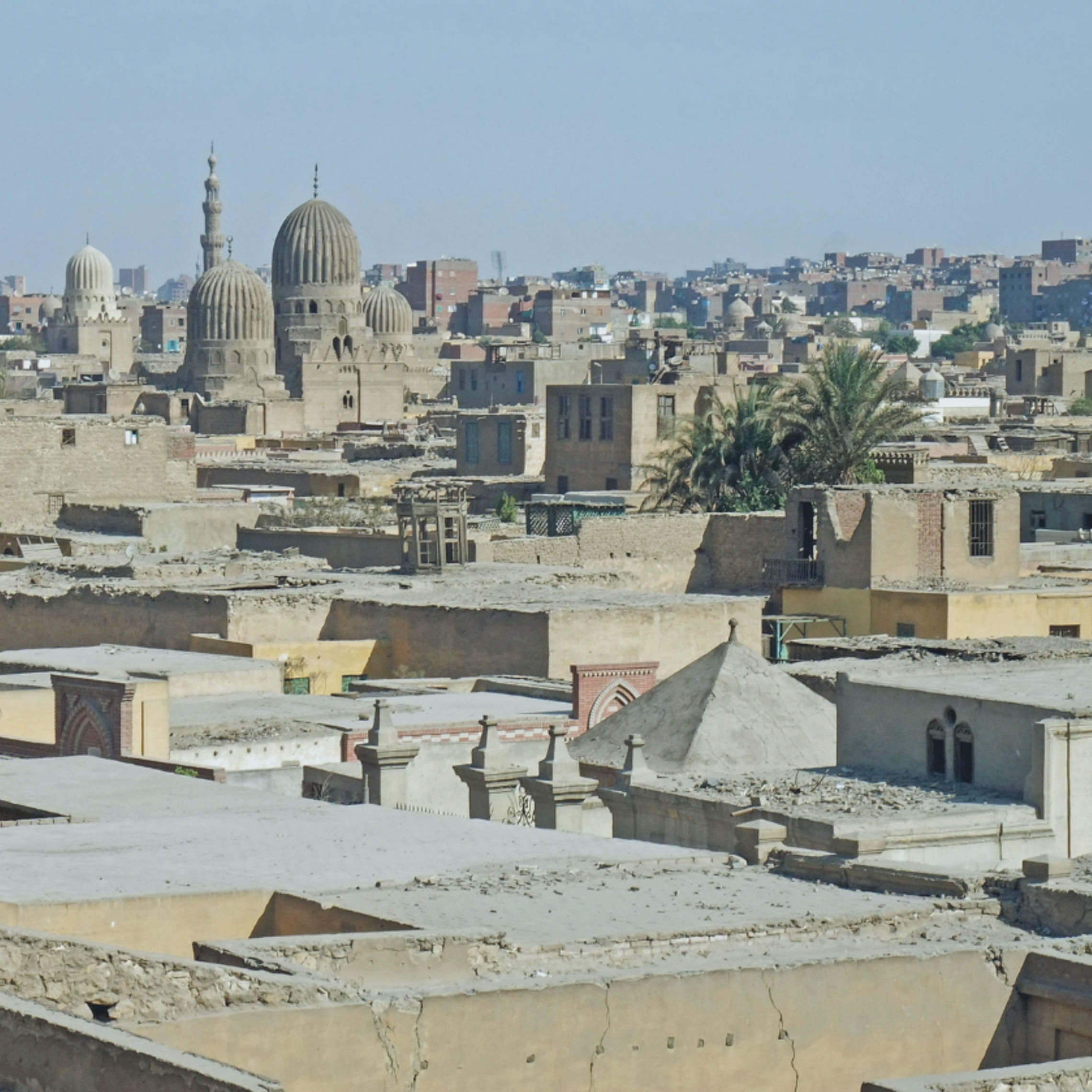
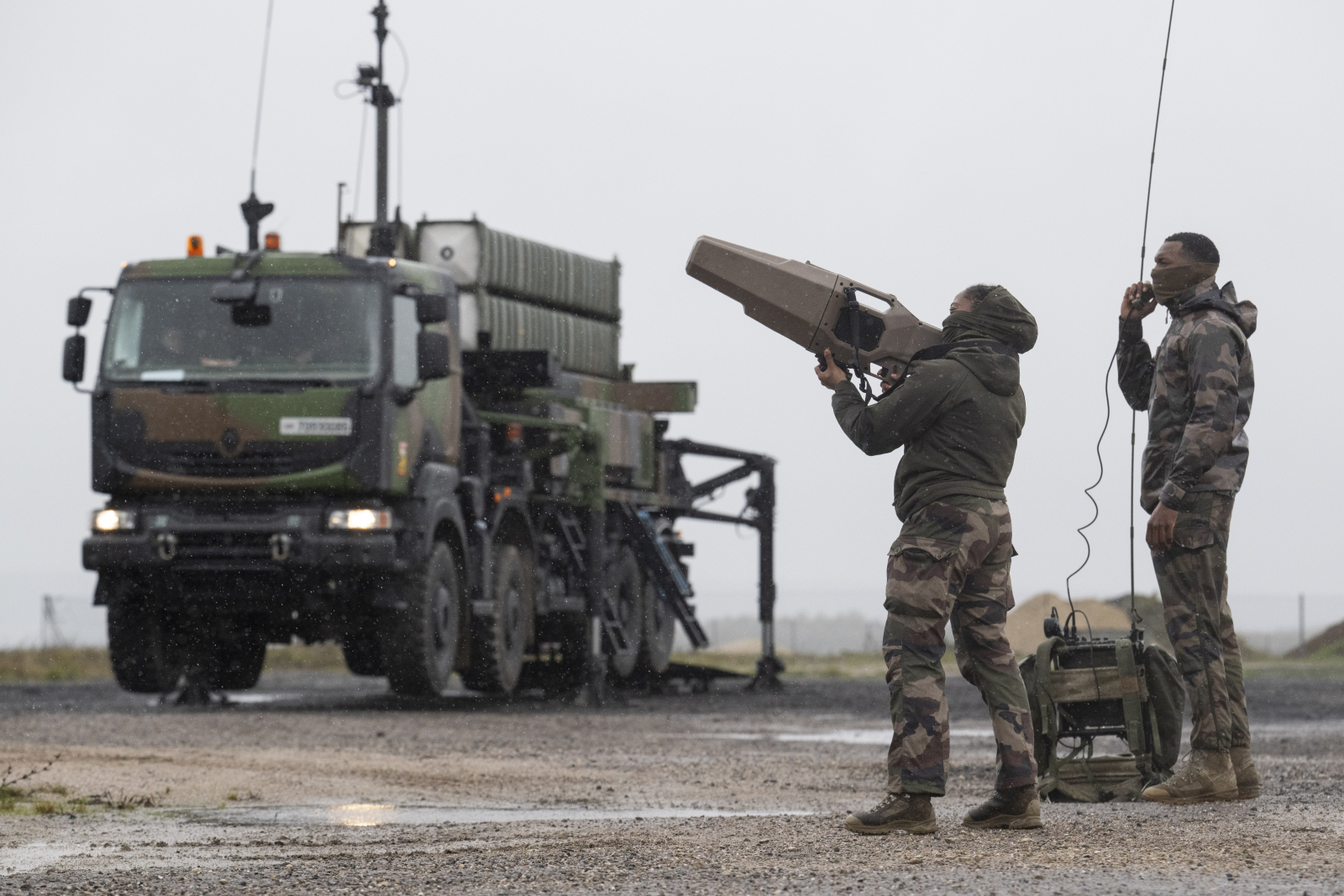
La France comme les autres pays européens est confrontée de manière directe, tout particulièrement depuis le début de la guerre en Ukraine, à une stratégie hybride de déstabilisation mise en œuvre par la Russie. Cette stratégie se matérialise dans l’ensemble des champs et des milieux possibles d’affrontement et a pour objectif, outre de saper le soutien occidental à l’Ukraine, d’affaiblir les pays européens avec lesquels la Russie se perçoit dans une confrontation systémique de long terme.
Titre bloc à la une
À la une
Voir toutes nos analyses

Les think tanks américains sous Trump 2. Le "blob" en péril ?
Principalement voués aux questions de politique étrangère, les think tanks de Washington jouent un rôle clé de réflexion et d’expertise au service du gouvernement fédéral, auquel ils fournissent par ailleurs des cadres d’élite à l’occasion des alternances politiques. Le trumpisme vient aujourd’hui en bousculer les codes et le fonctionnement.

Réformer les commandements de l’OTAN. Entre européanisation, émergence de nouveaux leaders et rôle des États-Unis
Au moment où le Sommet de l'OTAN se tient à La Haye du 24 juin au 25 juin 2025, la réélection de Donald Trump à la présidence américaine interroge profondément la nature du lien transatlantique. Si les garanties de sécurité de l’Organisation du traité de l’Atlantique nord (OTAN), article 5 et dissuasion nucléaire notamment, ne sont pour l’instant pas officiellement remises en cause ou amoindries, des projets de la nouvelle administration portent sur le désengagement de fonctions au sein de l’Alliance, en particulier le poste de SACEUR (Supreme Allied Commander Europe).

Turquie 2050 : textile turc ; démographie ; Erdoğan-Meloni
Repères sur la Turquie n°30 - Le programme « Turquie 2050 » développe une analyse prospective sur les thèmes de la diplomatie, de la politique intérieure et de l’économie turques afin d’y anticiper les dynamiques des trente prochaines années.

Les négociations États-Unis/Iran sur le nucléaire : les limites de la méthode Trump
Dans la nuit du 12 au 13 juin 2025, Israël a bombardé des cibles militaires et nucléaires en Iran, manifestant son impatience et son intransigeance devant la nucléarisation de la République islamique.
Le Congo-Brazzaville sur tous les fronts. Stratégies d’adaptation diplomatique dans un monde fragmenté
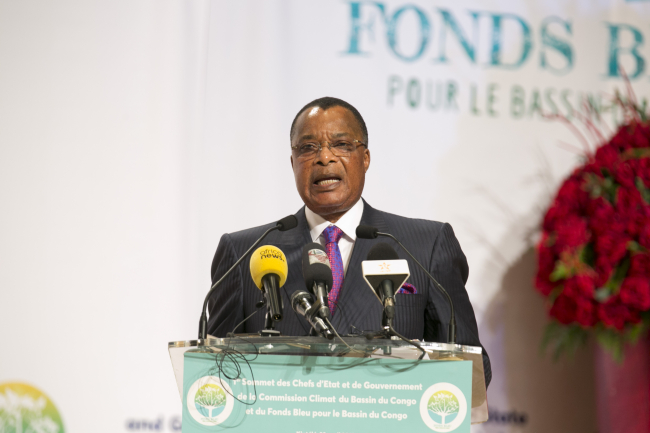
Dirigé par Denis Sassou-Nguesso depuis quatre décennies, le Congo développe une politique étrangère fondée sur le développement d’une stature de « président-médiateur » et sur une stratégie de « marchandage » (bargain) auprès des puissances internationales.

La guerre comme ascenseur social. L'impact socio-économique du keynésianisme militaire russe
Pour financer l’effort de guerre, l’État russe a dépensé des sommes considérables et mis en place une forme de « keynésianisme militaire », qui transforme la société sur les plans socio-économique et culturel. Il rééquilibre partiellement les importants écarts de richesse, de niveau de consommation et de prestige social de la société russe en accordant des avantages financiers et symboliques importants à la Russie périphérique, longtemps oubliée par le pouvoir central.
Dans les médias


Thomas Gomart : « Donald Trump réaffirme la centralité stratégique des Etats-Unis »
En bombardant l’Iran dans le sillage d’Israël, le président américain opère une démonstration de force à l’adresse de la Chine et de la Russie, explique, dans un entretien au « Monde », le directeur de l’Ifri.


Pourquoi l'armée chinoise n'est pas (encore) l'égale de celle des États-Unis
Malgré des percées technologiques dans plusieurs domaines, promues en fanfare sur les réseaux sociaux, les armes chinoises restent, pour le moment, à la traîne face à Washington.

Titre
En ce moment
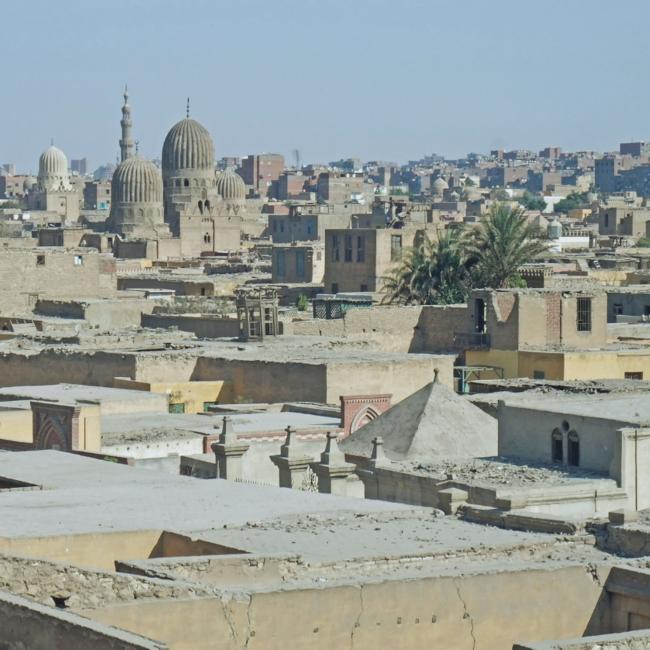

Titre
À regarder et écouter

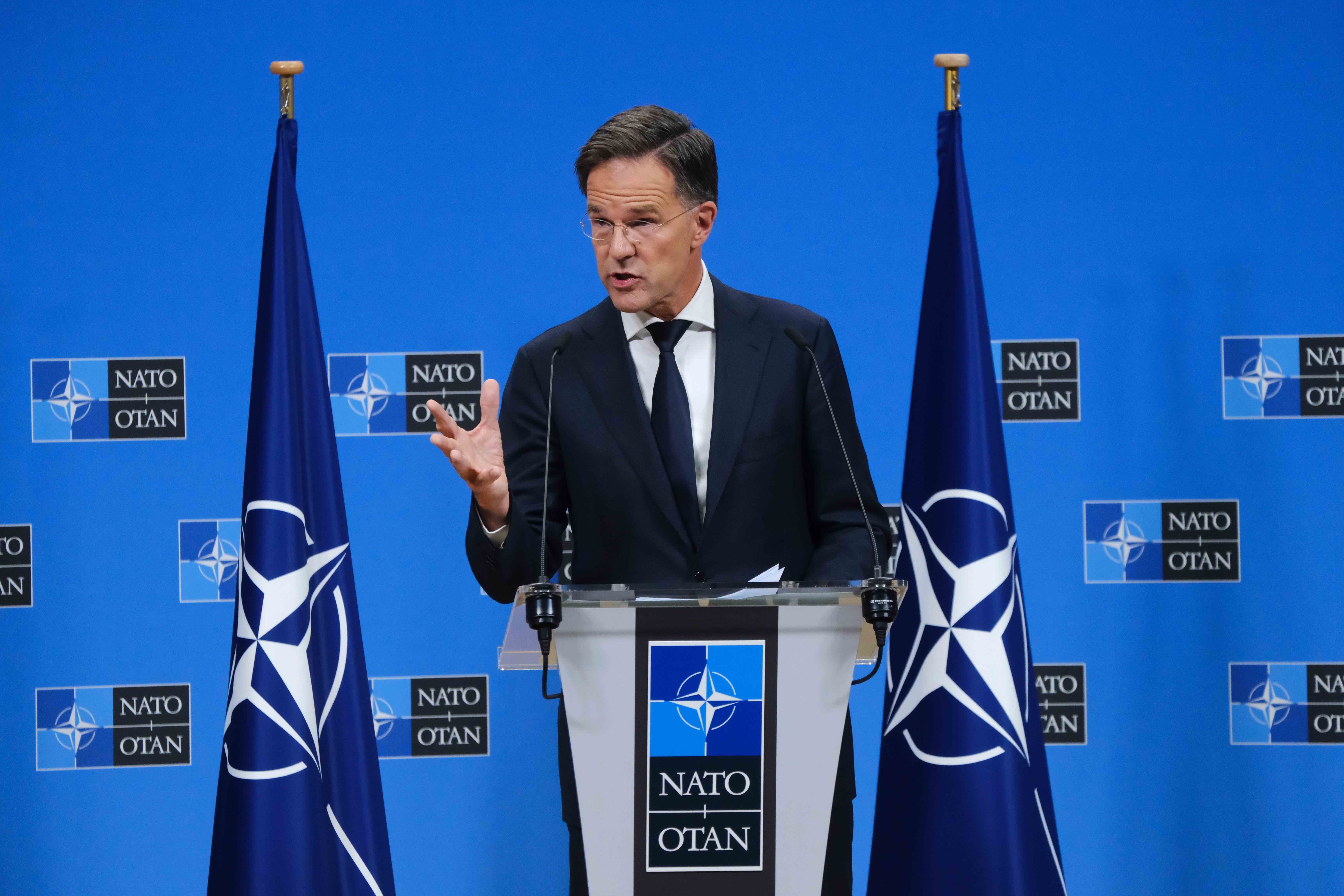
Le sommet de l'Otan dominé par les questions de dépenses
Le sommet de l'Otan de La Haye s'ouvre ce mardi en présence de Donald Trump.


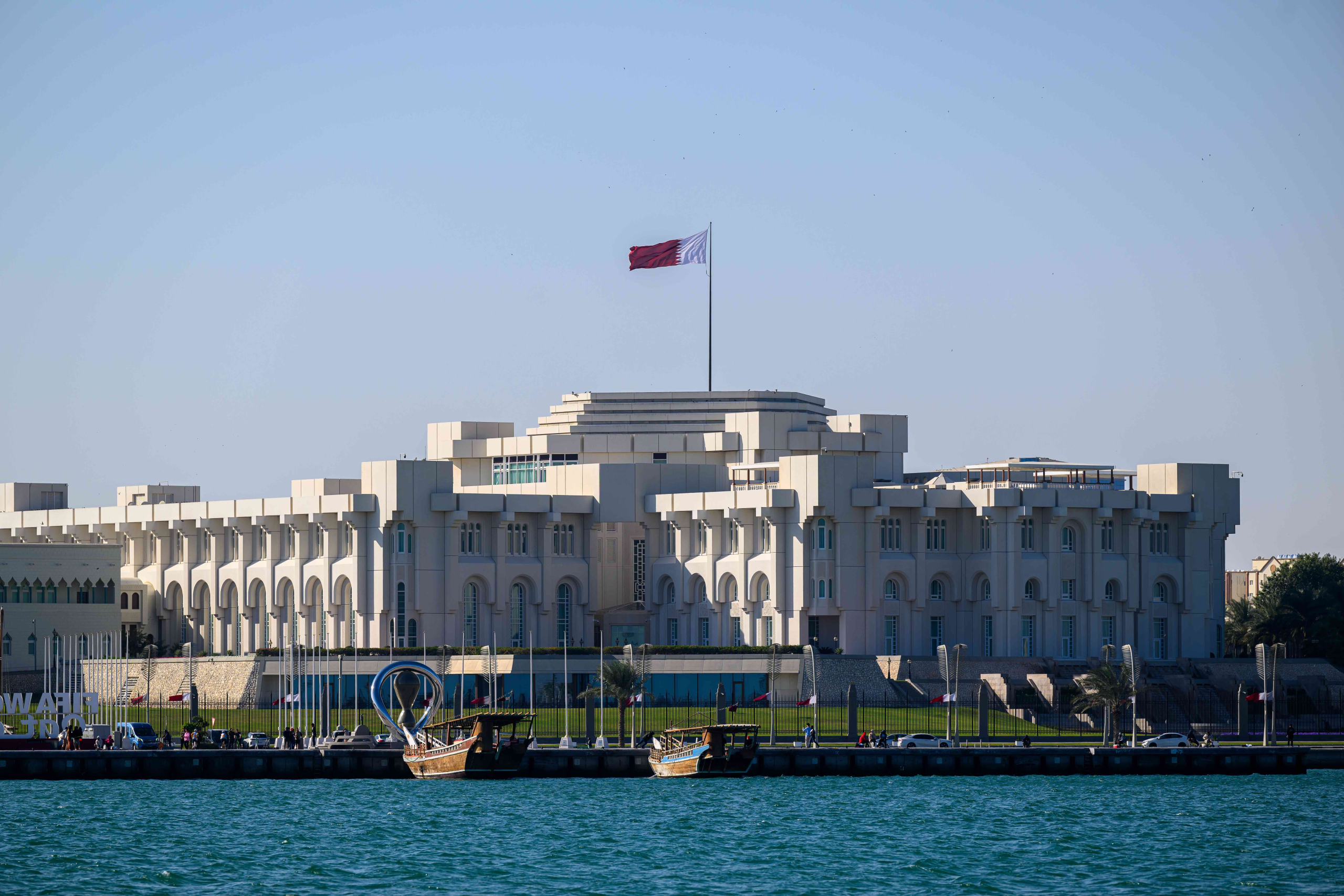
Quelles conséquences des frappes iraniennes sur les bases militaires américaines au Qatar ?
Hier soir, l’Iran a attaqué des bases militaires américaines au Qatar, en représailles aux frappes de dimanche soir. Jusqu’à présent, les relations entre Doha et Téhéran étaient plutôt cordiales, au vu d’une diplomatie d’équilibriste menée par le Qatar dans la région.


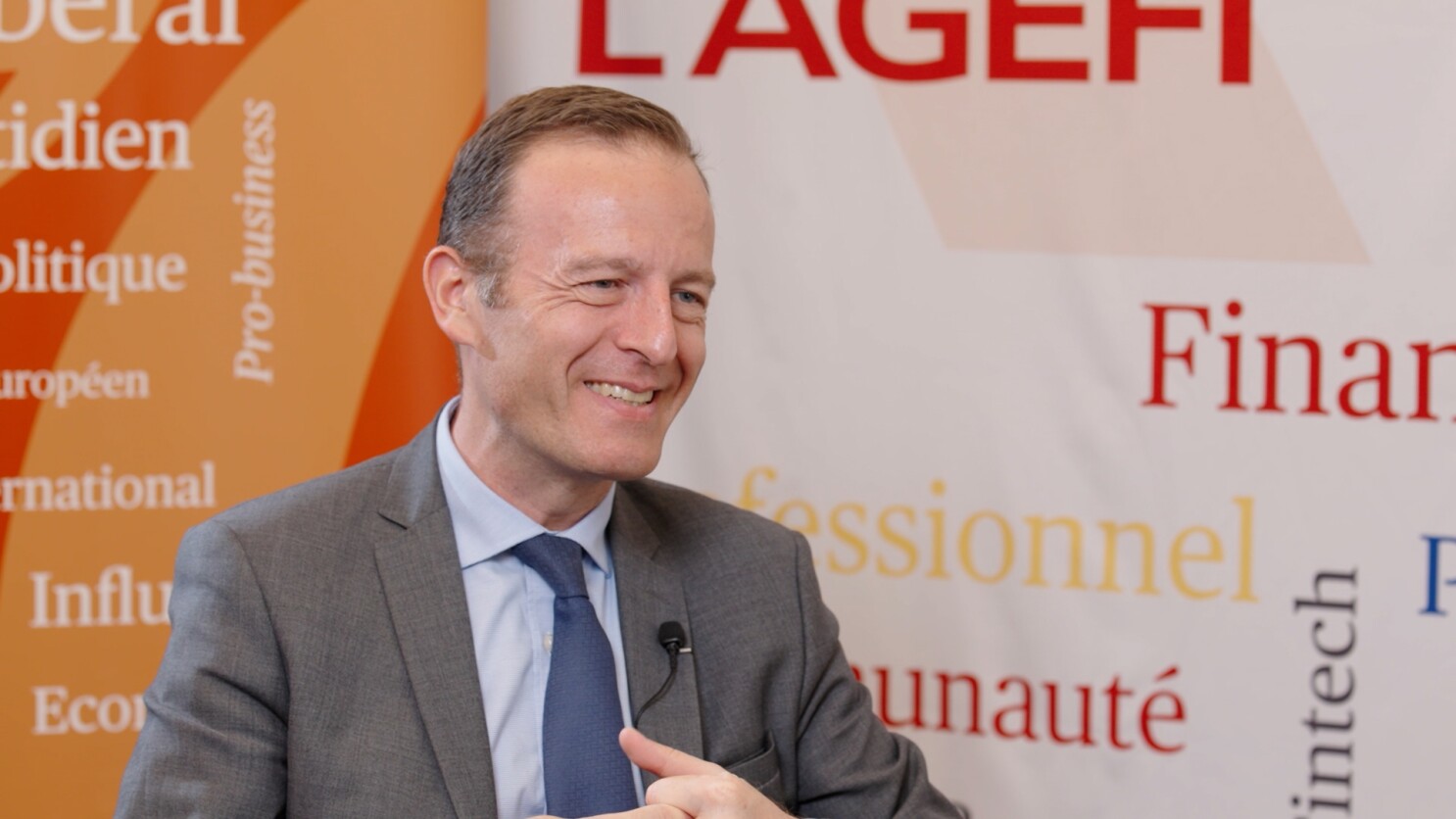
Thomas Gomart : « Les détroits sont des points névralgiques du commerce international »
Rémi Godeau, rédacteur en chef de l’Opinion, reçoit Thomas Gomart, directeur de l’Institut français des relations internationa

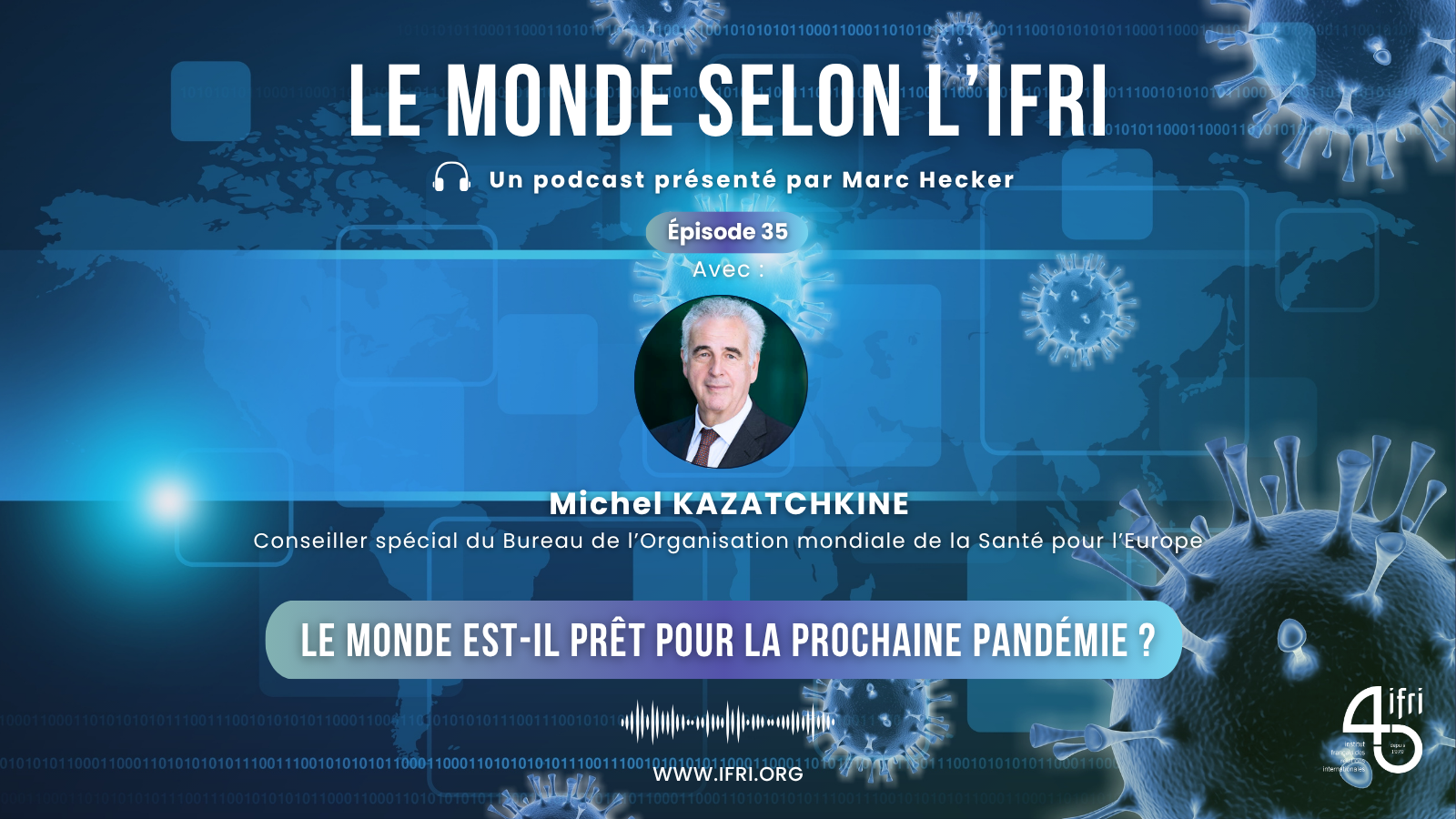
Le monde est-il prêt pour la prochaine pandémie ?
Dans ce nouvel épisode du podcast « Le monde selon l'Ifri », Marc Hecker, directeur exécutif de l'Ifri, accueille Michel Kazatchki

Titre mis en avant
Écoutez le podcast « Le monde selon l'Ifri » !
Présenté par Marc Hecker, directeur exécutif de l'Ifri, ce podcast livre des clés de compréhension des enjeux géopolitiques d'aujourd'hui. 2 épisodes sortent chaque mois.
Comprendre le monde d'aujourd'hui pour mieux préparer demain

Depuis plus de 45 ans, l’Ifri place les relations internationales au centre des discussions au profit de l’intérêt général.
Soutenez une recherche française indépendante
L'Ifri, fondation reconnue d'utilité publique, s'appuie en grande partie sur des donateurs privés – entreprises et particuliers – pour garantir sa pérennité et son indépendance intellectuelle. Par leur financement, les donateurs contribuent à maintenir la position de l’Institut parmi les principaux think tanks mondiaux. En bénéficiant d’un réseau et d’un savoir-faire reconnus à l’international, les donateurs affinent leur compréhension du risque géopolitique et ses conséquences sur la politique et l’économie mondiales. En 2024, l’Ifri accompagne plus de 70 entreprises et organisations françaises et étrangères.
Titre container
Deux publications phares
Titre en savoir plus
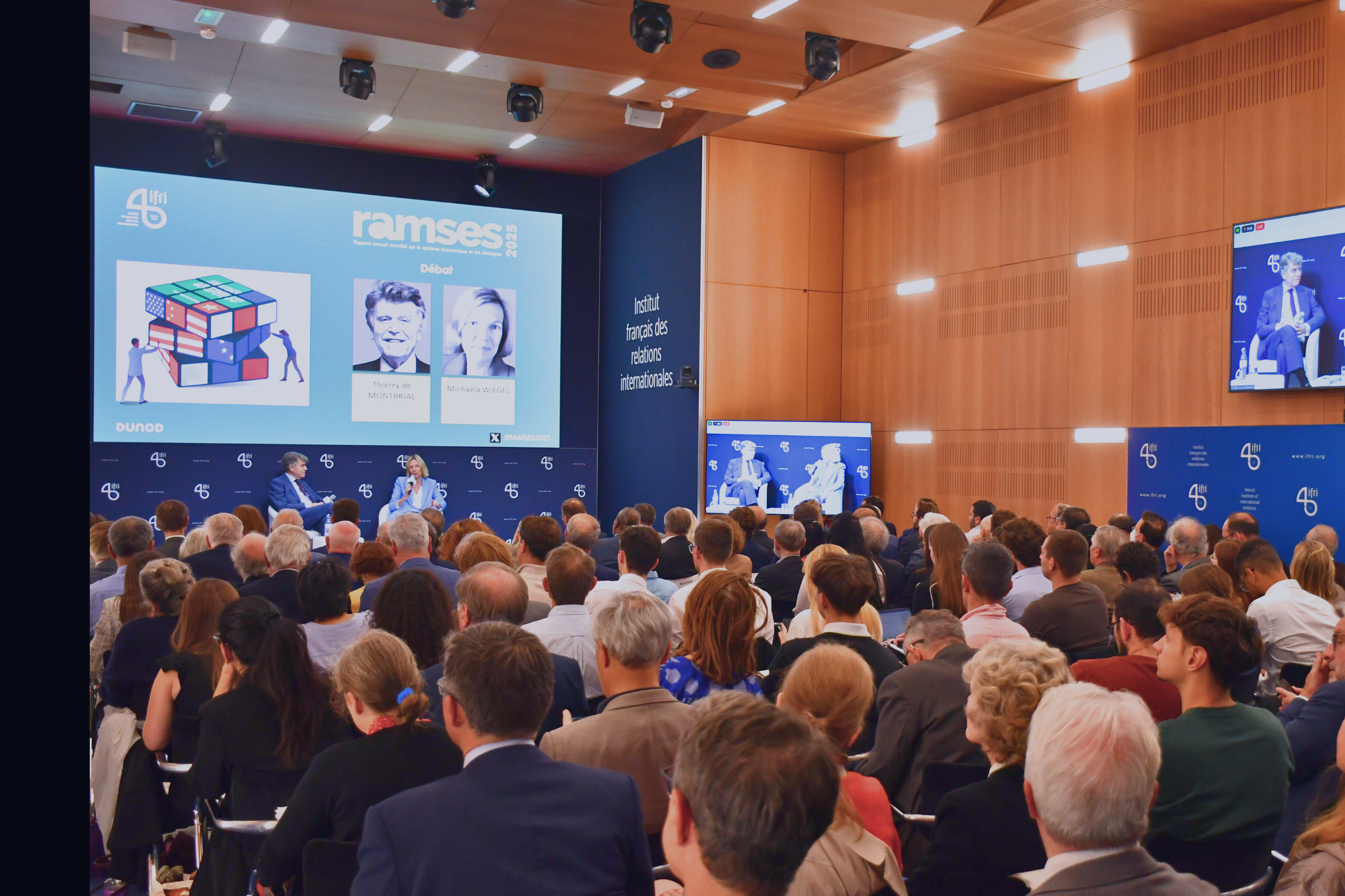
Ramses 2025
"Entre puissances et impuissance"
Ramses 2025
"Entre puissances et impuissance"
Chaque année, le Ramses donne les clés et repères indispensables pour décrypter les évolutions du monde. Ramses 2025, Paris, Ifri/Dunod, 384 pages, septembre 2024

Titre en savoir plus
Politique étrangère
Politique étrangère
La revue de débats et d’analyses sur les grandes questions internationales.
